
Why a Buggy Yard Still May Not Help Bats
A yard buzzing with insects but ringed by white floodlights and open lawn can still see no bat activity because the lighting and exposure override the food signal. I frequently visit community gardens where well-meaning stewards have installed expensive bat boxes, only to wonder why the local bats ignore their property entirely. They assume that attracting bats means simply putting up a wooden box or hoping mosquitoes disappear overnight. The reality of habitat stewardship requires a fundamentally different approach.
We have to look at food, water, darkness, shelter, and low-disturbance maintenance working together as a single, connected system. Most insectivorous bats forage within a few kilometers of a day roost. Therefore, the yard only matters if bats already commute through the surrounding area.
If no local bat population moves through the neighborhood, garden changes will not summon bats from a distance—the work makes an already-traveled corridor safer, not a new one. We must build tension between what we think wildlife wants and what they actually need to survive in human-dominated landscapes.
Think Like a Bat at Dusk
To understand what makes a space safe, you have to perform a dusk-to-night audit. Step outside during the peak observation window, which is the 30 to 60 minute interval after local sunset. This specific timeframe is when many species emerge to forage.
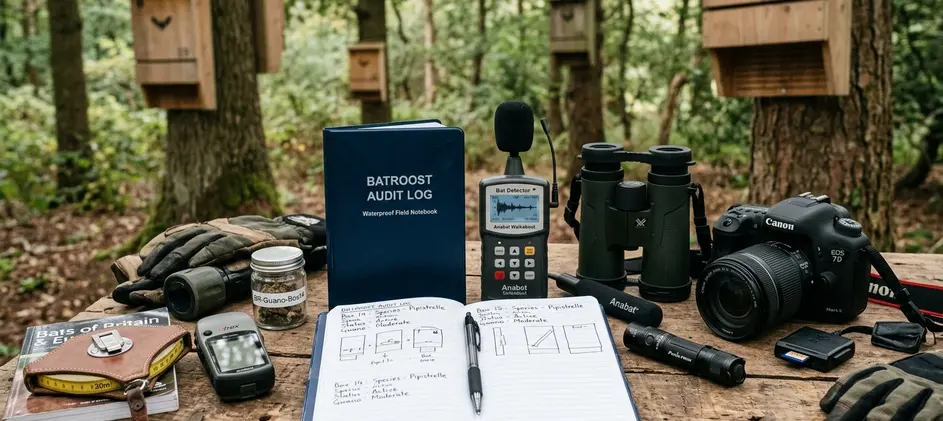
Look at your garden strictly from a bat's perspective. Trace the edge flight lines along tree canopies or tall hedges. Locate insect concentrations near vegetation and water. Check whether your security lighting cuts across these natural corridors. You are looking for five observable cues: edge flight lines, cover, dusk insect activity, water access, and structural roost possibilities.
Bats are wildlife with specific, complex habitat needs. They are not a deployable mosquito-control service—treating them as pest control sets up disappointment regardless of how the garden performs. We are designing a dusk-to-night habitat layer that complements the daytime pollinator garden many of us already understand. By shifting our focus to the night shift, we create a more robust habitat.
Plant for the Insects Bats Actually Follow
When we think about feeding bats, we are actually thinking about feeding moths, beetles, and flies. The planting approach must be sequenced carefully to avoid overwhelming the gardener. Instead of relying on a universal plant list, direct your attention to a regional native-plant filter first. Check with your local extension office or native plant society. A native plant that supports night insects in one region can be invasive or ecologically mismatched in another.
Quick Tip: Select three locally native plants with staggered bloom periods rather than redesigning the entire yard in one season.
You want to plant for continuous bloom and seed-head availability across roughly March through October in temperate regions. Adjust this timeline earlier or later depending on your local climate. Build distinct habitat layers. Incorporate native flowers, grasses, shrubs, trees, leaf-litter pockets, and unmowed edges. Night-blooming or evening-fragrant flowers serve as one helpful layer, but they are not the whole strategy. Diversity in plant structure creates diversity in insect populations.
Add Water, Darkness, and Safe Flight Space
Water, darkness, and flight space operate as one connected system rather than three separate add-ons. The decision to add water depends entirely on your surrounding geography. In a region with abundant natural ponds and streams, an added water feature offers little benefit and mainly adds maintenance burden. Conversely, in a dry suburban lot, it can matter considerably.
If you decide to add water, scale the option to your effort level. You might choose a shallow basin, a birdbath-style source with safe sloped edges, or a small pond.
Note: A water feature left unmaintained becomes a mosquito nursery and a net negative, so skip it entirely if you cannot commit to the cleaning schedule.
You must refresh and scrub shallow water features every two to four days in warm weather to prevent stagnation. Darkness is equally critical to this system. Aim motion lights downward and away from garden corridors. Warm-spectrum, shielded fixtures disrupt foraging less than broad white floodlights. Optimal flight space requires these dark, clear paths to allow bats to navigate and hunt without blinding glare.
What to Stop Doing Before You Add Anything New
Before you add anything new, you must stop practices that actively harm the habitat. Broad-spectrum insecticides remove the prey base that draws foraging bats in the first place. Eliminate these chemicals entirely. Sticky traps and bright decorative lighting also undermine habitat value.
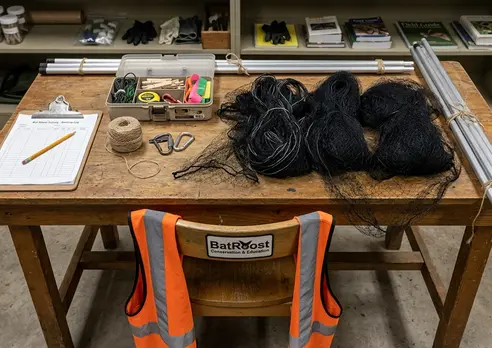
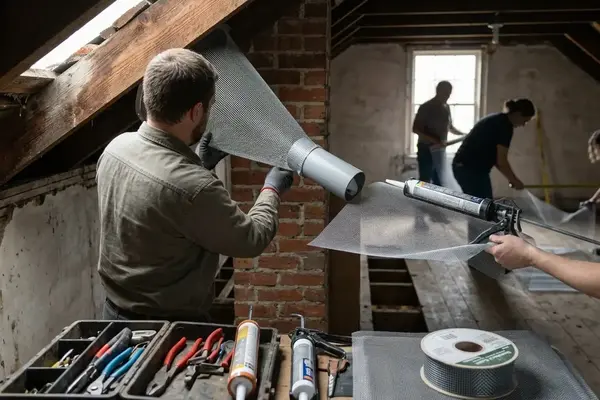
If you need to protect crops, pay close attention to your materials. Use taut, visible, well-secured mesh rather than loose draped material that can entangle bats and other wildlife.
In our programs, we teach integrated pest management principles. The order of operations is strict: identify the pest, tolerate minor damage, use physical barriers carefully, and choose targeted interventions only when necessary. Chemical use remains an absolute last resort. Reducing insecticide use helps the food base only when neighboring properties are not blanket-spraying the same flight corridor. Coordinate with neighbors where possible to protect the broader flight path. A single pesticide-free yard is a start, but a pesticide-free neighborhood corridor is a functional habitat.
Where a Bat House Fits and Where It Fails
A bat house can support roosting habitat only when placement, sun exposure, mounting stability, predator access, and surrounding habitat are suitable. A textbook-perfect bat house can stay empty for several seasons or permanently if no local bat population commutes within foraging range of the yard.
Favorable mounting height is typically 12 to 20 feet. The box needs several hours of direct daily sun and clear flight access to the entrance. In many temperate climates, the sun exposure target is roughly six to 10 hours daily. You will want darker box exteriors in cooler regions and lighter exteriors in hot regions.
We evaluate roosting behaviors across different suburban environments. The data is clear: occupancy is not guaranteed. It can take one to several seasons even with good placement, and many well-sited boxes are never occupied. Compare an open, sunlit mounting area near foraging habitat to a shaded, low, unstable box hidden deep in branches. The latter will likely sit empty no matter how well it is built. During my early field observations alongside researchers at the Cranbrook Institute of Science, I learned that bats prioritize thermal stability and safety above all else when selecting a roost.
A Seasonal Routine for a Bat-Friendly Garden
Maintaining this habitat requires a seasonal framework so disturbance-sensitive work never lands during active roosting or maternity periods. Spring is the time to plant native species, cut chemical use, inspect water features, and plan lighting changes.
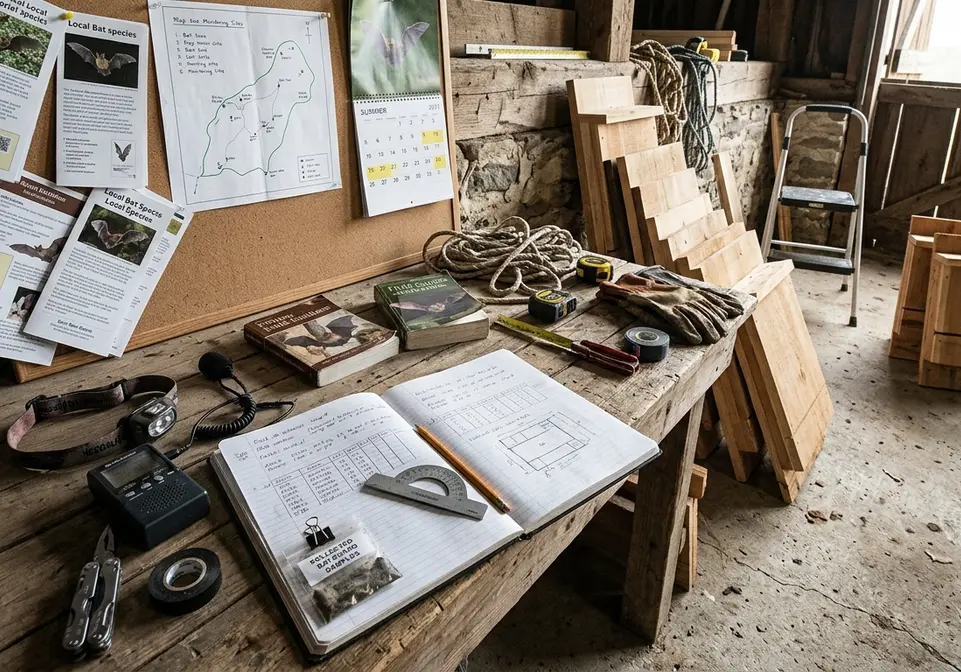
As summer arrives, keep water clean, observe insect activity at dusk, avoid disturbing possible roost areas, and maintain dark corridors.
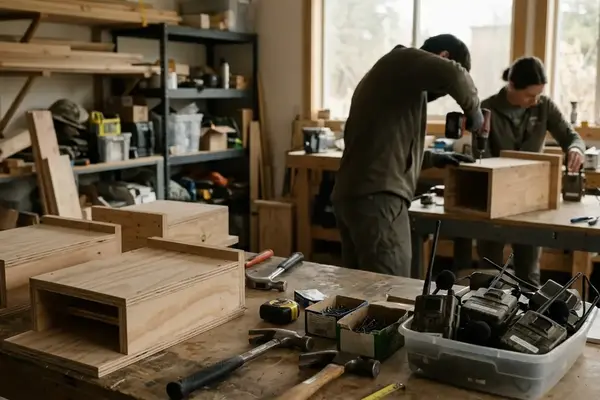
When fall approaches, leave seed heads, standing stems, and leaf-litter pockets to shelter overwintering insects. These insects form the crucial early-spring food base when bats return or wake from hibernation. Winter provides the maintenance window for cleaning empty features and repairing or improving bat houses. This work must happen generally when boxes are unoccupied in cold-climate regions. Never open or move a box during the maternity period, as doing so can kill flightless pups.
Limits, Safety, and Realistic Expectations
A bat-friendly garden improves habitat odds but cannot guarantee bats will move in. It is certainly not a promise of mosquito elimination. This guide covers home garden habitat choices. It explicitly excludes wildlife rehabilitation, exclusion from buildings, or species-specific recovery plans.
If you encounter a bat indoors, grounded, or in distress, never handle it directly. Contact local certified wildlife professionals or a permitted rehabilitator immediately.
Summary: While these habitat modifications reflect proven conservation practices, local microclimates and shifting insect populations mean individual yard outcomes will always vary. Focus on building a resilient, insect-rich environment, and let the local wildlife dictate how they use the space.


Join the Conversation
No comments yet.
Join the Discussion