
What If Backyard Bat Conservation Began With a Story?
Many people imagine backyard bat conservation begins with tools: a drill, a sheet of exterior plywood, a mounting pole, maybe a weekend plan for installing a bat house.
In the field, I usually see it begin earlier.
It begins when someone stops flinching at the word “bat.” It begins when a child asks why bats hang upside down, or when a gardener realizes the animals feeding over the yard at dusk are not pests but neighbors. That first moment matters because no amount of lumber advice can carry a homeowner past fear if the fear has never been addressed.
Bats are ecologically valuable, but they are also widely misunderstood. Public education has to work in that gap. Before a family can make careful choices about roost habitat, pesticide use, or maternity-season disturbance, they need a reason to see bats as living animals with needs, not as a problem to remove.
The Organization for Bat Conservation helped make that shift feel approachable. OBC paired public events, recognizable speakers, family learning, and practical habitat guidance in a way that invited people in before asking them to change what they did at home.
Summary: The sequence is not tools first. For uncertain audiences, curiosity and emotional connection often come before practical stewardship.
The OBC Moment: When Education Became an Invitation
The August 1, 2008 festival kickoff gives us a useful, bounded example. I am treating it that way on purpose: as one verifiable moment in OBC’s public education history, not as a stand-in for every program the organization ever hosted.
The anchors are clear. The date was August 1, 2008. The Organization for Bat Conservation served as the event sponsor. The format was a festival kickoff paired with a speaker session.
Why the host mattered
OBC was not simply a bat advocacy name on a flyer. Its role sat within a broader educational conservation legacy, the kind of work many people associate with community-facing science centers and public learning spaces such as the Cranbrook Institute of Science. That context matters because public trust is rarely built by a pamphlet alone. It grows when people can ask questions, see educators handle the topic calmly, and watch other families do the same.
A festival changes the posture of the room. Homeowners, gardeners, teachers, and volunteers do not arrive as if they are attending a technical workshop. They arrive for a shared experience. That lowers the pressure around conservation asks and makes room for a first conversation.
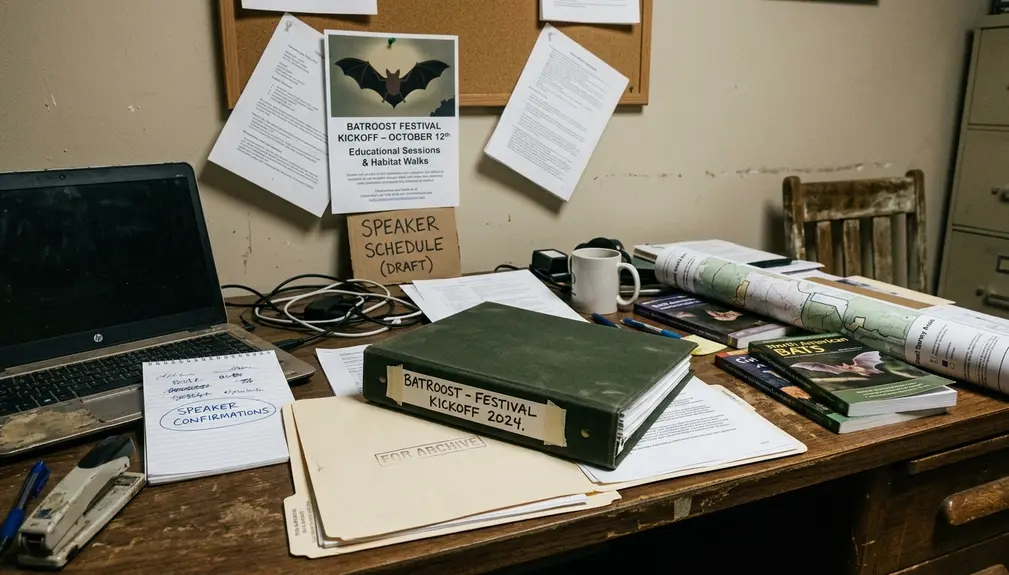
This bridge has limits. A festival booth can help a mixed-interest crowd meet bats with less fear. It cannot replace the regulatory detail needed by permit holders, wildlife rehabilitators, or property owners handling active structural conflicts.
Why Janell Cannon and Stellaluna Mattered
Janell Cannon’s role as a festival speaker mattered because she brought a familiar doorway into the subject. The featured title, Stellaluna, did not function as a scientific manual. It worked as a gateway.
That distinction is important. A fictional story should not be treated as evidence about bat biology. But a story can help an audience meet bats emotionally before educators ask for behavioral change.
The gateway effect for families
For families and educators, a known children’s book can soften the room. A child who has met a bat character on the page may be more willing to hear that real bats raise pups, seek safe roosts, and avoid unnecessary disturbance. An adult who arrived with old fears may listen longer because the conversation starts with recognition rather than correction.
I have seen this pattern in community engagement work: people rarely absorb practical guidance while they feel embarrassed, cornered, or scared. A story gives them a place to stand.
Still, this approach does not fit everyone. A story-led gateway that disarms a fearful family can feel patronizing to an experienced gardener already reducing pesticide use. That gardener may want details about insect habitat, roost timing, and placement conditions, not another reminder that bats are lovable.
Note: Stellaluna helped create an approachable entry point. It should not be asked to carry the scientific weight of a field guide or a wildlife management plan.
From Festival Curiosity to Backyard Decisions
The practical pathway is simple enough to draw: curiosity reduces fear, reduced fear surfaces questions, and questions drive habitat choices.
That is where education earns its keep. Inspiration is not the finish line. A homeowner who buys a bat house after an inspiring event but mounts it in deep shade or too low for safe access may end up with an unused box. Enthusiasm without biological guidance fails the bats it intends to help.
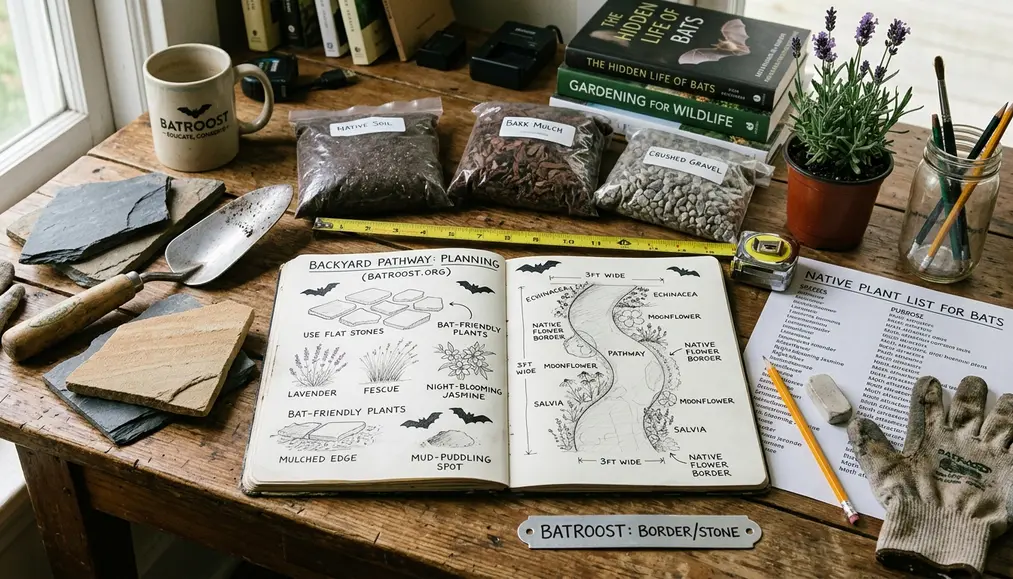
What the next steps look like
For BatRoost readers, the most useful backyard decisions usually fall into four areas:
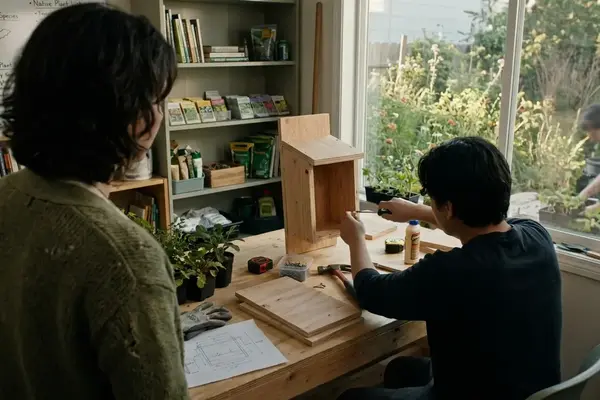
- Bat house placement: Choose a location based on local climate, sun exposure, mounting height, and safe flight access rather than convenience alone.
- Roost disturbance: Avoid exclusions, repairs, or sealing work during maternity season when flightless pups may be trapped inside. In many temperate regions, that sensitive window runs roughly from mid-May through mid-August.
- Pesticide reduction: Limit pesticide use so the yard can support the night-flying insects bats depend on.
- Garden planning: Use diverse plantings and evening-blooming habitat where appropriate to support insect life after dusk.
Bat house guidance also changes by region. A south-facing mount that helps a box reach adequate internal temperature in a northern temperate yard can overheat in a hot southern climate. Generic rules need a local check.
Good education gives people both permission and restraint: what to do next, and what not to do yet.
The Quiet Importance of Preregistration
Preregistration sounds like paperwork. In conservation programming, it can be part of the teaching design.
According to intake records, preregistration was a service type offered for the event. That does not let us claim it improved attendance, learning, or backyard outcomes. It does tell us something about the shape of the program: someone expected participants to commit before arriving.
Why a sign-up step can matter
A commitment-to-attend step gives organizers a window. They can send pre-event guidance, set expectations, explain what will and will not be covered, and help families arrive prepared with better questions. Without that follow-through, a form only collects names.
This is the kind of design detail volunteers sometimes overlook because it is not as visible as a speaker or a live presentation. But learning often improves at the edges. The reminder email, the note about bringing questions, the prompt to think about a backyard roost: these small pieces can turn passive attendance into intentional participation.
Quick Tip: If you host a bat education event today, use preregistration to prepare people, not just count them. Send one practical note before they arrive.
What Public Bat Education Changed—and What It Could Not Do Alone
This article stacks several credibility signals: OBC as host, Janell Cannon as speaker, Stellaluna as the featured title, a dated kickoff, and preregistration as part of the event structure. That is enough to discuss a meaningful public education pathway.
It is not enough to claim that one festival, one speech, or one book single-handedly changed backyard conservation.
On this narrow question, the evidence stays event-specific rather than outcome-measured. No attendance totals, percentage behavior changes, or measured conservation outcomes should be stated unless a real named source supports them. What we can say responsibly is more modest and still useful: public education created conditions for better backyard decisions by reducing mystery and making bat conservation more accessible.
Conditions are not outcomes
That distinction keeps the history honest. A family may leave a festival less afraid of bats. A teacher may bring a better story into the classroom. A homeowner may finally ask where a bat house belongs instead of buying the first one on a shelf.
Those are openings. They are not measured proof of long-term behavior change.
If a reader needs evidence that a specific event produced measurable conservation behavior, this article cannot supply it. That would require a sourced impact study with clear methods and follow-up.
The Legacy for Today’s Bat-Friendly Backyards
The lesson for today is not nostalgia. It is sequence.
Homeowners and habitat stewards still need education before action, especially now that bat houses are often marketed as quick fixes. A box alone does not create stewardship. It needs proper placement, patience, seasonal awareness, and a yard that supports insects without unnecessary chemical pressure.
Four principles worth carrying forward
- Lead with curiosity. Let people ask basic questions without shame.
- Respect bat biology. Match advice to local climate, roosting behavior, and seasonal timing.
- Avoid fear-based messaging. Fear may get attention, but it rarely builds careful stewardship.
- Connect enthusiasm to practice. Every inspired visitor should leave knowing one responsible next step.
These principles guide outreach and habitat messaging. They do not replace local wildlife regulations, which matter whenever exclusions, relocations, or structural work enter the conversation.
What makes the OBC education shift worth revisiting is the connection between pieces that are often treated separately: a public event, a children’s book, preregistration, and backyard habitat decisions. Together, they show how conservation can move from a story in a crowded room to a better choice at home.

Join the Conversation
No comments yet.
Join the Discussion