
What if the bats are there, but your survey misses them?
A station logs zero files on an active foraging night because the microphone faced a dense hedge instead of the open flight corridor 15-20 m away. This is the central tension of field acoustics. Bat echolocation generally falls between roughly 9 kHz and 120 kHz depending on species. This range sits well above the human hearing ceiling of about 20 kHz—meaning acoustic monitoring reveals activity we simply cannot hear.
However, a poorly planned setup can easily produce misleading silence. A clean recording proves a call occurred near the microphone. It does not establish how representative that single station is of the wider site.
I approach acoustic monitoring as a strict method, not a magic gadget. Useful results depend entirely on consistent placement, timing, settings, metadata, and cautious interpretation. This guide outlines a practical, replicable workflow suitable for homeowners, educators, conservation volunteers, and habitat stewards who want reliable data.
What acoustic bat monitoring actually records
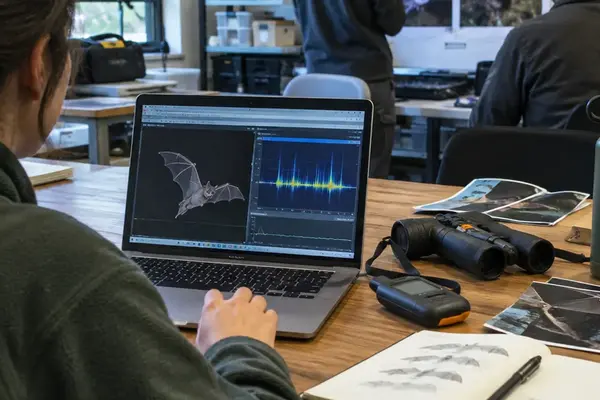
Detectors record ultrasonic echolocation calls and convert them into files that can be reviewed visually and acoustically. They store either full-spectrum recordings, typically WAV files sampling at 256 kHz or higher, or zero-crossing files. Zero-crossing formats discard amplitude data and produce far smaller files.
We must separate four concepts that are routinely conflated: bat presence, bat activity, call files, and call sequences. A single foraging bat can generate dozens of call files in one pass. Therefore, file counts drastically overstate the number of animals present.
Activity indices count passes, not individuals. Ten passes may be one bat returning ten times or several bats flying by once each. Acoustics alone cannot distinguish the two. These tools do not directly count individual bats or prove roost occupancy without supporting visual evidence.
Start with the monitoring question before choosing the detector location
The question shapes the method. Are you detecting general bat activity, comparing habitat features, documenting seasonal use, or evaluating a bat house area? You must define this first.
I recommend writing the question in a field log before deployment so later interpretation stays tied to the original purpose. Writing the question takes a few minutes but governs interpretation for the entire deployment. This deployment may span a single night or repeated visits across a season of roughly April through October in temperate regions.
Your question determines your controlled variables. You must fix the site type, detector height, microphone direction, survey dates, start and stop times, weather conditions, and equipment settings. If the question is purely exploratory, strict variable control is unnecessary. The catch is that exploratory data cannot later be retrofitted into a quantitative comparison.
Quick Tip: Always log your core question before touching your equipment. It prevents scope creep during data analysis.
Build a standardized acoustic monitoring field kit
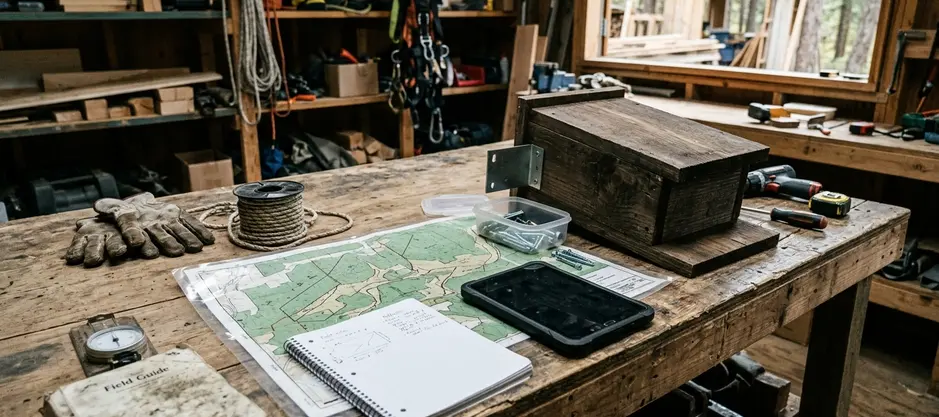
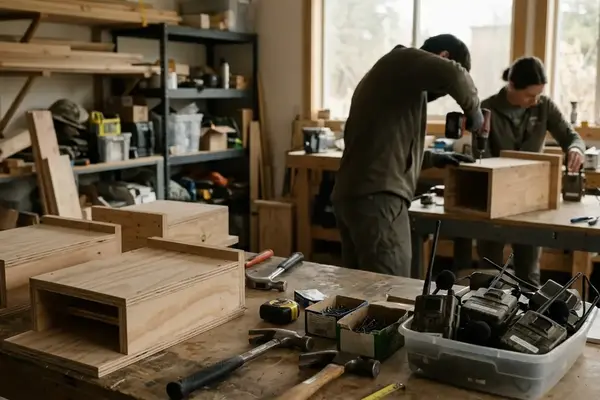
A proven field kit prioritizes reliability over complexity. The core tools include a full-spectrum or zero-crossing ultrasonic detector, a microphone, a mounting pole or tripod, weather protection, batteries, memory cards, a GPS or mapping app, a headlamp, and a field notebook.
Consistency matters more than having the most expensive equipment when the goal is repeatable observation. A modest detector used identically across nights yields more interpretable data than an expensive one configured differently—consistency is the true currency of field biology.
Always check battery capacity, memory card space, clock accuracy, microphone condition, firmware, and weatherproofing before leaving for the field. A high-sample-rate dusk-to-dawn deployment can fill an 8-32 GB card and drain alkaline batteries in a single night. Capacity should be checked against the planned recording window rather than assumed.
Finally, respect the stewardship constraint. Mounting hardware must never block a roost entrance or be driven into occupied structures, even when that position would improve call capture.
Place the microphone where bat calls can be detected cleanly
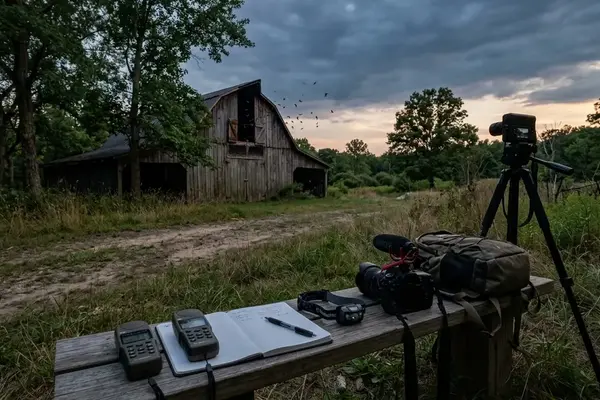
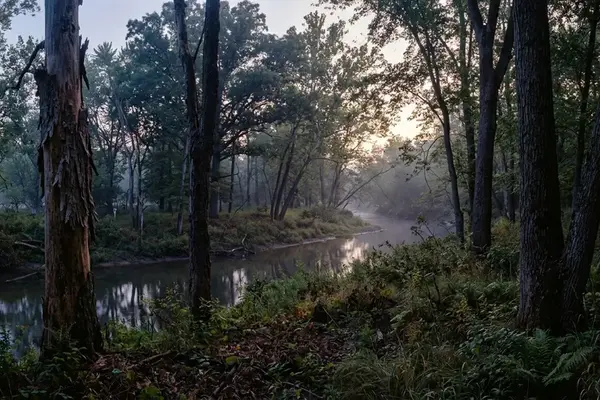
A replicable site placement protocol ensures a second observer can recreate your work. Choose the station, record coordinates, photograph the setup for reference, mount the detector securely, aim the microphone into a likely flight corridor, and document the surrounding habitat.
Document practical placement variables. Log the height above ground, distance from vegetation, proximity to water, nearby buildings, reflective surfaces, road noise, insect noise, and livestock or human activity. Plain-language habitat tags such as 'pond edge,' 'garden path,' 'woodlot opening,' or 'bat house pole area' anchor each station for repeat visits.
Early in my career, I tried mounting detectors high on exposed masts to maximize detection range. It failed because the clean audio misrepresented how bats actually used the sheltered parts of the habitat, so I switched to placing microphones closer to natural flight corridors. Finding the optimal microphone angle requires balancing exposure and context. Cluttered vegetation within a metre or two of the microphone can attenuate or echo calls, while overly exposed locations miss the reality of the habitat.
Control timing, weather, and repeat visits
Deployment timing heavily affects results. Tracking data shows that activity shifts across season and reproductive period. In temperate regions, deployments commonly run from spring emergence through autumn. Several nights per station rather than one gives a more stable picture.
Use a consistent dusk-to-dawn or defined nightly recording window when comparing nights or sites. You must also log specific weather conditions. Record the temperature trend, rain, wind, cloud cover, and unusual disturbances such as mowing, nearby events, or bright work lights.
One night of silence is not evidence of absence. Rain on the microphone or a cold front can suppress activity that returns the following night.
Lock the settings and document every change
Several settings commonly affect acoustic results. These include trigger sensitivity, gain, sample format, recording schedule, time zone, file naming, and microphone type. Use manufacturer-supported settings or a project protocol rather than changing settings casually in the field.
Settings should remain consistent across comparable deployments. Consider this scenario: two observers run what they believe is a comparison, but one set gain higher on the second night without logging it, so the pass counts cannot be pooled and the apparent activity difference is an equipment artifact rather than a habitat signal.
Time-zone and clock errors are among the most damaging mistakes. A station logged in the wrong zone shifts every timestamp, breaking dusk-referenced comparisons across nights. Capture per-deployment metadata: station ID, coordinates, habitat description, detector model, microphone orientation, start and end time, weather notes, and observer name. Changing gain or trigger sensitivity mid-project is permissible only if logged. The catch is that data before and after the change can no longer be pooled as if collected identically.
Retrieve files without losing the chain of evidence
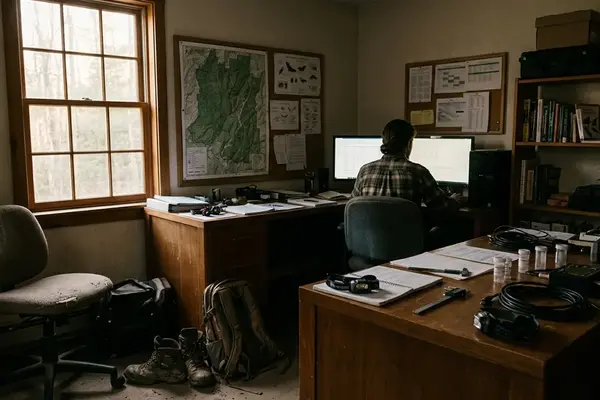
The post-field workflow protects your data integrity. Stop recording, remove the memory card, label files by station and date, copy files to primary storage, create a backup, and preserve the original folder structure when possible.
Check whether the detector recorded during the expected time window before deleting or reusing field media. No storage medium is guaranteed against failure in the field. Keep at least two copies, primary plus backup, and hold raw audio separate from any edited or reviewed subset so originals remain auditable.
Next, perform a quality-control review. Scan for empty files, constant noise, rain interference, microphone failure, wrong clock time, or unexpectedly low file counts relative to comparable nights.
Note: Software output should not be treated as final until recording quality is checked. A microphone that failed at 11 p.m. can still produce a file list that looks complete in a folder view.
Call review and interpretation
Assign explicit confidence levels rather than accepting classifier labels at face value. Acoustically similar species overlap in call structure, and automated classifiers function as triage, not confirmation. For genera with overlapping frequency-modulated calls, a classifier label alone is insufficient for a species-level claim.
Use honest reporting categories. Label calls as species group, probable species, or unidentified bat where call quality or species overlap prevents confident assignment.
Standardized continental programs emphasize comparable survey design precisely because results are only strong when methods match across time and place. For broader context on these standards, review the North American Bat Monitoring Program guidance.
Scope, limitations, and ethics
Acoustic monitoring has hard boundaries. It documents activity but cannot confirm colony size, reproductive status, exact roost location, or true absence. Documented limitations include weather, microphone obstruction, equipment failure, overlapping calls from multiple bats, quiet-flying species, similar call patterns between species, and habitat features affecting detectability.
Quiet-flying or low-intensity species can be present yet substantially under-detected. Therefore, low activity counts cannot be read as low abundance.
I have seen how crucial it is to respect these limits. Acoustic results may inform stewardship but must not drive exclusion or sealing decisions. Those actions require qualified wildlife guidance and, where applicable, compliance with protected-species law. Consult a certified wildlife professional before making structural changes based on acoustic data.
Repeatable workflow summary
The strongest dataset pairs consistent methods with clear field notes and explicit limits. This is what lets a future observer reoccupy a station and compare nights.
Follow this nine-step sequence: define the question, select the station, standardize equipment, document placement, control timing, lock settings, retrieve files safely, review calls cautiously, and report uncertainty honestly.
The workflow yields comparable data only when field notes are complete. A technically clean recording set with missing metadata cannot be confidently reused by anyone else. While acoustic monitoring provides robust activity indices, it cannot definitively count individual bats in a colony.
Summary: Treat your acoustic detector as a scientific instrument, not a casual recorder. Document every variable, respect the limitations of the technology, and prioritize consistency over complexity.


Join the Conversation
No comments yet.
Join the Discussion