

Why Bat Week Outreach Needs More Than a Handout
What if a five-minute conversation at a library table changed how a neighborhood treats bats for years?
That is the question I carry into Bat Week planning. Bats draw people in fast. Someone stops because they love them. Someone else stops because they found one in a bedroom once and still feels unsettled. A child points at the bat house sample and asks whether bats are blind.
Outreach can help in that moment, or it can accidentally harden the wrong idea. If we lead with fear, the visitor remembers fear. If we lead with spectacle, the visitor expects bats to perform. If we lead with a pile of facts, we may lose the person before we reach the one action they can actually take at home.
In our programs, I have found that a short opener works better than a fact list: “Bats are wild neighbors. Our job is to give them space, protect habitat, and know who to call when one turns up where it should not be.”
Bat Week arrives at a useful time. It is observed annually in the last week of October, roughly October 24-31, just before many North American bats enter hibernation or migrate. People are already thinking about fall gardens, home repairs, school events, and Halloween. That attention can become practical stewardship: better habitat choices, safer bat house decisions, and calmer responses to bats around homes. The key is giving people a next step before they walk away.
Summary: A Bat Week table or event works best when it pairs curiosity with one clear action, not when it tries to teach everything about bats in one sitting.
Criteria for Choosing These Bat Week Outreach Ideas
I chose these ideas for the kinds of groups that often ask me, “What can we do with a small team and a modest budget?” That includes schools, libraries, garden clubs, parks, volunteer teams, and small community groups.
Each idea had to pass five filters:
- Low disturbance to bats: no touching, crowding, entering roosts, or shining bright lights at animals.
- Accessible to non-experts: a teacher, librarian, gardener, or trained volunteer can run the core activity.
- Affordable or scalable: the same idea can work for a table of ten visitors or a room of families.
- Educational rather than sensational: the event corrects myths without turning bats into props.
- Connected to stewardship: visitors leave knowing one responsible thing to do next.
Good Bat Week outreach does not promise that every bat house will attract bats. It does not invite people to handle bats. It does not send volunteers into roosts. Groups doing rehabilitation, research handling, nuisance control, or disease assessment need permitted protocols beyond the scope of a community event.
For readers who know bat outreach through the Organization for Bat Conservation (OBC) and education settings such as Cranbrook Institute of Science, this may sound familiar. The strongest programs I have seen do not make bats seem tame. They help people respect bats as wildlife.
You can find national event framing and seasonal materials through the official Bat Week resources, then adapt the activity to your local species, weather, and audience.
Bat Week Outreach Ideas You Can Run Without Disturbing Bats
1. Lead a Dusk Bat Walk With a Listening Station
A good bat walk feels quiet before it feels exciting. I like to begin at a park, schoolyard, garden, pond edge, or open field 15-30 minutes before sunset. That gives people time to sign in, hear the ground rules, and let their eyes adjust before the first movement appears over the trees or water.
Keep the walk simple. Use red-light flashlights, not bright white beams. Ask participants to keep voices low, stay on the trail, and avoid pointing lights into trees, bridges, or buildings. A group of 10-15 people per guide is much easier to manage than one large crowd.
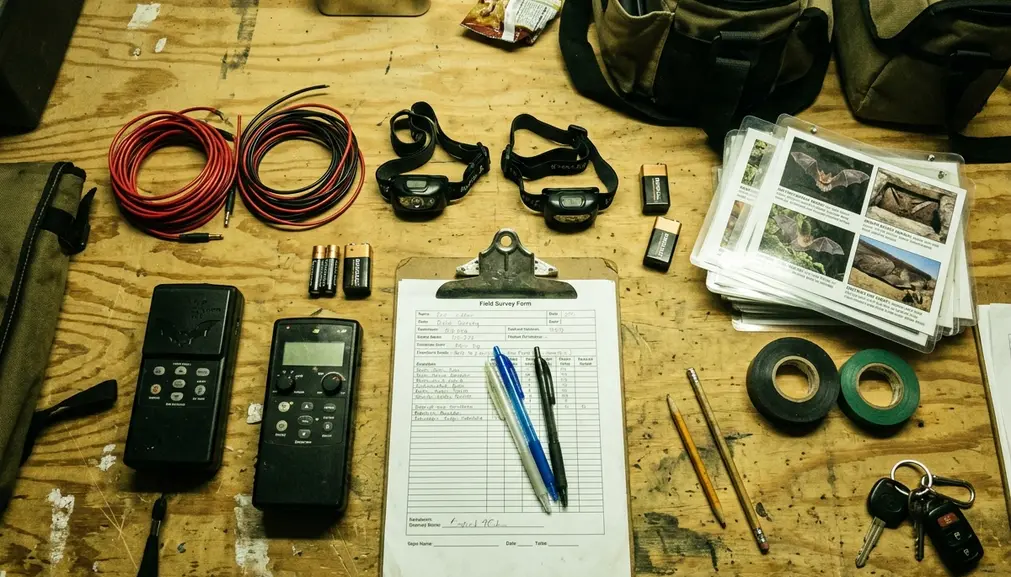
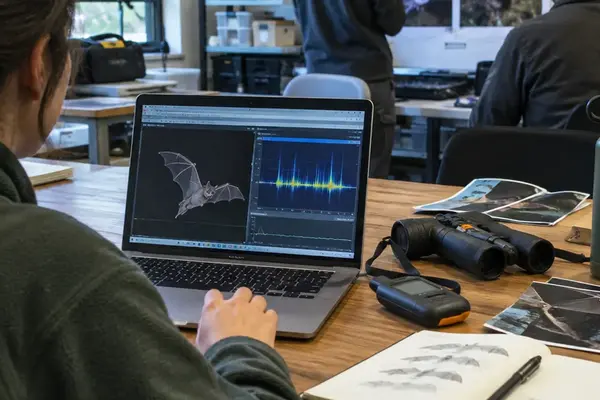
The listening station can be as basic as a sign, a guide, and a few minutes of stillness. If you have access to an acoustic bat detector, treat it as a demonstration, not a promise. Cooler or windy nights may be quiet. Emergence timing also shifts with latitude and season.
That is not a failed walk. It is field observation. Sometimes the lesson is that wildlife does not run on our schedule.
2. Set Up a Myth-Busting Bat Booth
A booth works when it gives people permission to ask the question they were slightly embarrassed to ask. Set up at a farmers market, library lobby, school open house, native plant sale, or nature center entrance. Bring four to six laminated FAQ cards and at least one physical bat house sample so visitors have something to look at while they talk.
Choose two open-ended prompts instead of a long lecture. Try: “What is one thing you have heard about bats?” or “Where do you think bats spend the day?” Then listen.
Correct the big myths carefully. Bats are not blind. Most healthy wild bats avoid people. Bats should never be handled. That last sentence matters because reassurance can go too far. A bat that approaches people or lies grounded in daylight may be sick, so the safe message is: keep distance and call the appropriate local authority.
Note: Myth-busting should reduce fear without making bats seem safe to touch. Respect and distance belong in the same sentence.
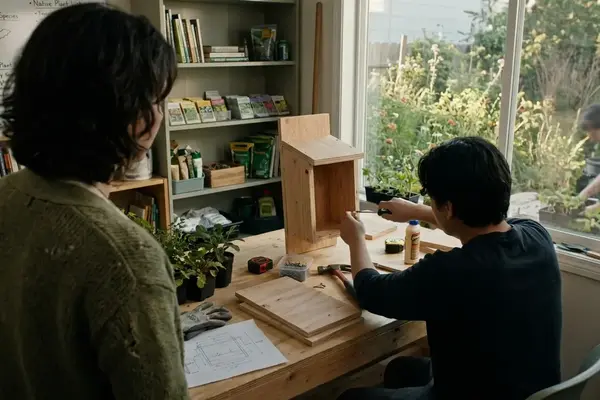
3. Host a Bat House Stewardship Clinic
A bat house clinic should focus on stewardship, not sales. The most common problem I see is the idea that a bat house is a guaranteed occupancy device. It is not. It is a habitat tool, and even a well-built, well-placed box may never attract bats.
Start with placement. General guidance is to mount boxes 12-20 feet high on a pole or building, away from bright night lighting and dense branches that can help predators. Sun exposure matters. Many placements call for six or more hours of direct sun, but climate changes the answer. A dark, fully sun-exposed bat house in a hot southern climate can exceed lethal roost temperatures, killing the bats it was meant to help. That is the clearest proof I know that uniform advice fails across regions.
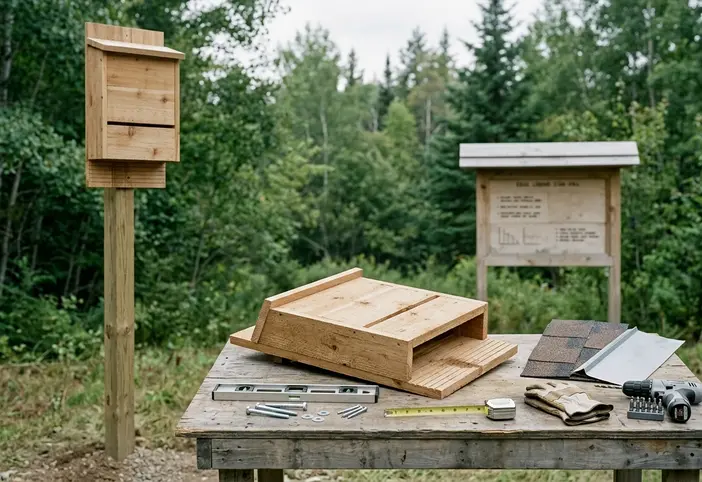
Ask participants to bring photos of their proposed site. Troubleshoot from the images rather than inspecting occupied boxes. Cover mounting stability, maintenance, predator avoidance, and patience. Set expectations plainly: occupancy can take one to three seasons, and many boxes remain unused.
That honesty builds trust.
4. Run a Native Night Garden Demonstration
This event works best when you talk about food webs instead of promising bats. A garden cannot be sold as a bat magnet. Insect and bat responses to a backyard garden are diffuse, slow, and shaped by the surrounding landscape.
Still, homeowners can support healthier night habitat. Build the demonstration around three levers: native plant selection, reduced pesticide use, and layered habitat structure. Put plant tags on a table and compare them. Which plants support local insects? Which bloom at different times? Where might shrubs, flowers, leaf litter, and mature trees fit together?
Give people a small task. Pot one to three native seedlings, or sketch a single moonlight garden bed they could plant next season. Small commitments get completed more often than grand plans.
Before a volunteer planting day, confirm the species list with the local land manager. A plant native to one part of the country can be inappropriate a few hundred miles away.
5. Create a Library or Classroom Story-and-Science Hour
For children and families, I start with story. A five- to ten-minute bat-themed reading gives young listeners a character, a setting, and a reason to care. Then the science activity lands more gently.
Follow the reading with one 15-20 minute hands-on activity. Echolocation can become a sound-and-listening game. Roosting can become a matching activity with trees, caves, bridges, and buildings. Nocturnal food webs can become a yarn web that links insects, plants, water, and bats.
Keep the language accurate but not frightening. Avoid saying “all bats carry disease,” because that is both inaccurate and unhelpful. Avoid live bat expectations unless a qualified permitted organization leads that portion. Most classrooms do not need a live animal to have a strong bat program.
Send each child home with one takeaway: a habitat pledge card, a backyard checklist, or a “never touch a bat” reminder for the refrigerator.
6. Invite the Community Into a Bat Art and Roost Design Challenge
Art brings in people who would skip a technical workshop. That is why it works for youth clubs, scout troops, after-school programs, and community centers.
Keep the challenge specific. Ask participants to draw a bat-friendly neighborhood, design a responsible bat house location, or create a poster that corrects one bat myth. Give them a quick fact sheet first, especially younger participants. Without that grounding, bats often become blind, tangled-in-hair cartoon creatures again.
Judge entries on accuracy, creativity, and stewardship message, with accuracy as the gate. A beautiful poster that repeats a harmful myth should not win. A simple drawing that shows distance, habitat, and respect may do more good.
7. Organize a Community Science Night Without Sharing Roost Locations
Community science can deepen a Bat Week event, but it needs guardrails. Public roost-location sharing should be a hard no. Publicized roosts can attract disturbance, trespass, and vandalism.
Partner with a naturalist, extension educator, or qualified local program leader if you want the observations to have value. Record four basic fields: time, weather, habitat features, and general activity level. Do not geotag protected roosts. A notebook is fine. An app can work too, if the privacy settings match the conservation goal.
Use the same 45-60 minute post-sunset window as the dusk walk. Explain that casual counts without consistent methods add little usable value. Careful observation, even by beginners, is the point.
8. Turn Awareness Into a Habitat Volunteer Day
Some communities do not need another table. They need a workday that turns concern into muscle memory.
Choose one project from a short menu: invasive plant removal, native shrub planting, pollinator garden improvement, trail sign installation, or riparian litter cleanup. Get land-manager permission before you recruit volunteers. Well-meaning habitat work can create new problems when people plant the wrong species, remove the wrong cover, or place signs where they do not belong.
Plan the basics well: gloves, water, tools, a safety briefing, and a five- to ten-minute opening talk on local bats and their habitats. The talk should be brief because people came to work. The conservation message will stick better when their hands are already in the task.
9. Offer a Calm “Bat in the House” Safety Session
This is not the most festive Bat Week idea, but it may be the most useful one for homeowners.
Keep it short, about 10-15 minutes. Cover three general rules: do not handle bats barehanded, keep people and pets away from the animal, and contact local public health or wildlife authorities for situation-specific direction. Do not turn the session into a medical protocol. Public health guidance varies by jurisdiction and circumstance.
Be especially clear about possible contact. Any potential bite, scratch, or contact, especially involving a sleeping person, child, or pet, requires immediate contact with local public health authorities. That message can be delivered calmly. Calm does not mean vague.
10. Build a Partnered Evening Program With Defined Roles
Partners can strengthen an evening program, but only when the roles are clear before the flyer goes out. A list of names alone can confuse attendees. They need to know who is answering habitat questions, who handles safety questions, and who manages venue or permit issues.
Possible partners include parks departments, nature centers, garden clubs, libraries, schools, university extension programs, wildlife rehabilitators, and public health educators. Assign at least three explicit roles: habitat speaker, safety or health contact, and permit or venue manager.
Then promote the event. Not before.
This is where trust becomes practical. People are more likely to ask the right person the right question when the program tells them who that person is.
Scope, Safety, and Local Permission
Bat Week outreach sits close to several regulated activities, so the edges matter. These are outreach instructions, not a permit map for every county.
Get prior approval before using public land, installing structures, hosting night events, or involving live animals. This article does not cover bat handling, exclusion work, rehabilitation, disease assessment, or scientific capture. Those activities require the appropriate training, permissions, and local contacts.
Adapt every recommendation to local species, climate, habitat, and current public health guidance. Optimal bat house color in one region may be unsafe in another. A suitable native planting list in one ecoregion may not belong across the state line. A safe response to a bat in a home depends on the details of the situation and the public health guidance where you live.
Quick Tip: If an activity puts people near bats, inside roosts, on public land after dark, or in contact with live animals, pause and ask who has authority to approve it.
A Simple Action Plan for Your First Bat Week Event
If this is your first Bat Week, narrow the plan. Do not try to run a walk, booth, clinic, classroom program, and volunteer day in the same week. Choose one audience, one setting, one stewardship action, and one safety message.
- Choose one audience: families, homeowners, gardeners, students, or volunteers.
- Choose one setting: library, school, park, market, garden club, or community center.
- Choose one stewardship action: reduce pesticide use, protect mature trees where safe and appropriate, learn proper bat house placement, or improve native habitat.
- Choose one safety message: never handle bats, keep distance from grounded bats, or contact local authorities for bats in living spaces.
The follow-up card matters. A one-off conversation with no printed action card rarely changes behavior. Give visitors something small enough to use: three home actions, one local contact, and one reminder that bats are wildlife.
Protecting mature trees can help where those trees are safe and appropriate to keep. Hazardous or diseased trees near structures require a separate management decision. Conservation advice should never ask a homeowner to ignore a safety risk.
The best Bat Week events I have joined did not feel grand. They felt attentive. A volunteer listened closely. A parent asked a better question. A child left knowing that bats are not monsters or pets, but wild neighbors with a place in the night.
That is enough momentum to start.

Join the Conversation
No comments yet.
Join the Discussion