

Abstract
Bats are widely credited with mosquito control, but the useful question is narrower than the slogan. The evidence has to separate consumption from population suppression: a bat can eat mosquitoes without measurably reducing mosquito bites in a garden.
The best-supported claim is straightforward. Many bats can and do eat mosquitoes. Guano prey-remains work and DNA metabarcoding have detected mosquito prey in bat diets, and field observations show bats feeding on night-flying insects near water, woodland edges, and open spaces. The weaker claim is the one homeowners usually want answered: will a bat house make the backyard noticeably less buggy?
That evidence is thinner. Mosquitoes are usually one part of a broader insect diet that can include moths, beetles, midges, flies, and other taxa. Bats support nocturnal insect ecology and deserve protection for conservation reasons. They should not be treated as a stand-alone mosquito-management tool.
Research Question and Scope
When I review mosquito claims around bat houses, I start by tightening the question. “Do bats eat mosquitoes?” is easy to answer. Yes, many do. The harder question is whether bats reduce mosquito abundance or mosquito-borne disease risk in home landscapes.
This article uses the second question as its frame. The scope includes gardens, suburban yards, small farms, parks, ponds, and roost-adjacent landscapes where people may install bat houses. That scope matters because a bat using a bat house near a pond may forage over adjacent woodland while the biting mosquitoes in the seating area breed in neglected containers across the property line.
This is a research-paper-style summary for homeowners, educators, and habitat stewards, not a new field experiment. I am not assigning mosquito-control percentages, disease-risk reductions, or bat-house success rates. The evidence does not support that kind of precision for most backyards.
Summary: The practical question is not whether bats ever eat mosquitoes. It is whether their feeding reliably changes mosquito pressure where people live, garden, and gather.
Methodology
I use an evidence hierarchy here because mosquito-control claims get noisy fast. Direct diet studies come first. Field ecology comes next. Public-health mosquito-control guidance helps translate the evidence into household action.
How guano analysis informs the question
Guano analysis means researchers examine bat fecal samples to infer recent diet. Older approaches looked for recognizable prey remains, such as insect fragments. Newer approaches may test fecal material for prey DNA.
DNA metabarcoding can detect mosquito DNA in bat diets. That is useful. It does not show how many mosquitoes disappeared from a specific yard, nor does it measure whether biting pressure changed after bats fed. For this backyard question, the evidence is patchy at the property scale.
Interpretation depends on bat species, local insect availability, season, wetland proximity, roost location, and sampling method. A late-summer guano sample collected during peak insect availability may underrepresent mosquito intake compared with an early-season sample. A big brown bat, which often takes larger beetles, may also produce a different mosquito-DNA profile than a little brown bat feeding over open water.
Key Findings
Finding 1: Bats can and do eat mosquitoes
This is the strongest claim. Modern diet methods have detected mosquito DNA in guano from some bat species, and older prey-remains work also supports mosquito consumption in bat diets. Wray et al. in the Journal of Mammalogy remains one of the primary bat-diet references for this general line of evidence.
Finding 2: Mosquitoes are usually part of a wider prey mix
Bats are not flying mosquito filters. They forage opportunistically, responding to insect abundance, flight patterns, prey size, and habitat structure. In garden and pond-adjacent settings, their diets may include moths, beetles, midges, flies, mosquitoes, and other night-flying insects.
That breadth is conservation-relevant. It also limits the mosquito-control promise. A bat may spend the evening taking insects that are more abundant, larger, easier to catch, or more profitable than mosquitoes.
Finding 3: Consumption does not equal property-scale suppression
Confirmed mosquito consumption and reliable mosquito suppression require different evidence. Diet studies tell us what bats ate. Yard-scale suppression studies would need to show what happened to mosquito abundance afterward, in the same landscape, with other mosquito sources accounted for.
Note: A bat house occupied successfully near a pond can still fail to reduce biting mosquitoes if the bats forage mainly over nearby woodland and the biting population comes from unmanaged containers elsewhere.
Why the Mosquito-Control Claim Persists
A true observation can travel badly. “Bats eat mosquitoes” becomes “bats control mosquitoes,” then “install a bat house and solve mosquitoes.” Each step adds certainty that the evidence does not provide.
The claim persists because it fits what many gardeners want: a natural pest-control answer that avoids broad-spectrum insecticides. That instinct is understandable. It is also where conservation messaging can overreach.
Historical bat education often emphasized ecosystem services because fear of bats was, and still is, a barrier to protection. Groups and institutions involved in public bat education, including the Organization for Bat Conservation (OBC) and Cranbrook Institute of Science programming, helped move public conversation away from fear and toward ecological value. That shift mattered. The next step is to keep the message accurate.
Feeding observations, localized foraging records, and guano detections all have value. They do not automatically predict real-world outcomes across a neighborhood, pond edge, or small farm.
Comparison With Integrated Mosquito Management
Integrated mosquito management works at the mosquito life cycle. Bat predation acts on adult insects after they emerge. Source reduction acts earlier, at breeding habitat, which makes it more direct for household nuisance control.
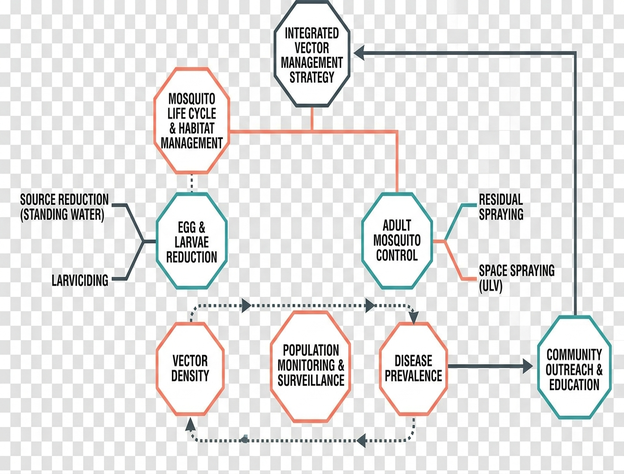
What acts directly on mosquito breeding habitat
- Remove standing water from buckets, saucers, tarps, toys, and unused containers.
- Maintain gutters so water drains instead of pooling.
- Refresh or manage water features so they do not become mosquito nurseries.
- Use targeted larval control where appropriate and consistent with label directions.
Where bats fit
Bats fit as part of a healthier nocturnal ecosystem. They may consume mosquitoes while also feeding on other night-flying insects. That is valuable, but it is less predictable than removing the water where mosquitoes develop.
For household planning, I would place source reduction first and bat support alongside native-plant habitat, reduced pesticide pressure, and safe roost stewardship. The EPA mosquito control guidance also emphasizes practical steps that address mosquito breeding sources and appropriate control methods.
Quick Tip: If mosquito annoyance is high, walk the property after rain before buying anything. Containers, clogged gutters, and shallow pooled water often explain more than the absence of bats.
Implications for Bat House Stewardship
Present bat houses as habitat support first. Mosquito control, if it occurs, belongs in the secondary-benefit category.
That framing changes the design conversation. Instead of asking whether a bat house will clear a patio, ask whether the site can safely support roosting bats. At a high level, placement considerations include sun exposure, mounting height, a clear flight path, proximity to suitable foraging habitat, and avoidance of disturbance.
Stewardship also includes restraint. Check for occupancy signs from a distance. Do not handle bats. Maintain structures safely, especially when mounts loosen, boxes weather, or guano accumulation creates a sanitation concern near human-use areas.
A bat house should not be installed solely because mosquitoes are annoying. The conservation rationale needs to stand on its own before any pest-control hope enters the discussion.
Limitations
Diet evidence has a narrow meaning
Diet studies reveal what bats ate, not how many mosquitoes remained in the landscape afterward. DNA detection can identify prey presence, but it does not translate cleanly into prey quantity, population impact, or public-health benefit.
Space complicates the backyard claim
A bat seen over a yard may not feed there all evening. A bat using a yard or bat house may forage elsewhere. Mosquitoes biting people in one location may originate from several breeding sites, including sites outside the property boundary.
Time complicates the claim too
Mosquito availability changes with season, weather, rainfall, and local habitat shifts. Bat diet also changes with reproductive stage and prey availability. A single guano study, even a careful one, cannot support year-round claims for a specific garden.
Conclusion
The cleanest decision framework separates three ideas: ecological benefit, diet evidence, and homeowner expectation. Bats contribute to insect predation and may eat mosquitoes. Diet studies support that. Homeowners, however, should not market or install bat houses as dependable mosquito-control devices.
Install and maintain bat houses when the site can support bats safely and the conservation value makes sense. Use mosquito-source reduction for nuisance control. Treat any mosquito consumption by bats as a limited secondary benefit, not the core promise.
Sources
- Wray et al., bat diet research published in the Journal of Mammalogy.







Join the Conversation
No comments yet.
Join the Discussion