
Halloween gives bat educators a rare opening. People who ignore bats in March will stop at a table in October because they saw wings, fangs, or a black paper cutout in a classroom window. That attention can help. It can also recycle the same old fear.
This guide is for families, educators, gardeners, and conservation volunteers who want the seasonal fun without turning real animals into monsters.
Table of Contents
- The Halloween Problem: Curiosity Can Turn Into Fear
- Start With the Frame: Bats Are Neighbors, Not Props
- Use “Adopt a Bat for Halloween” as a Symbolic Conservation Invitation
- Tell One Ambassador Story, Then Widen the Lens
- Replace Fear Phrases With Accurate, Calm Language
- Keep the Science Simple: Roosts, Food, Habitat, and Boundaries
- Show Care in Action: Habitat Enrichment and Responsible Stewardship
- Safety and Scope: What Fear-Free Education Should Not Promise
- Ready-to-Use Scripts for Halloween Outreach
- A Better Halloween Invitation
The Halloween Problem: Curiosity Can Turn Into Fear
Halloween makes bats visible. That is the gift and the trouble.
From late September through October 31, bat outreach tends to cluster around decorations, vampire imagery, and spooky language. I do not treat that seasonal spike as a nuisance. I treat it as a doorway, because October reaches people who may not choose a bat program during the other eleven months.
Still, the doorway has a draft. Three patterns show up again and again: bats as vampires, bats as omens, and bats as hair-tangling pests. Each one flattens a living animal into a prop.
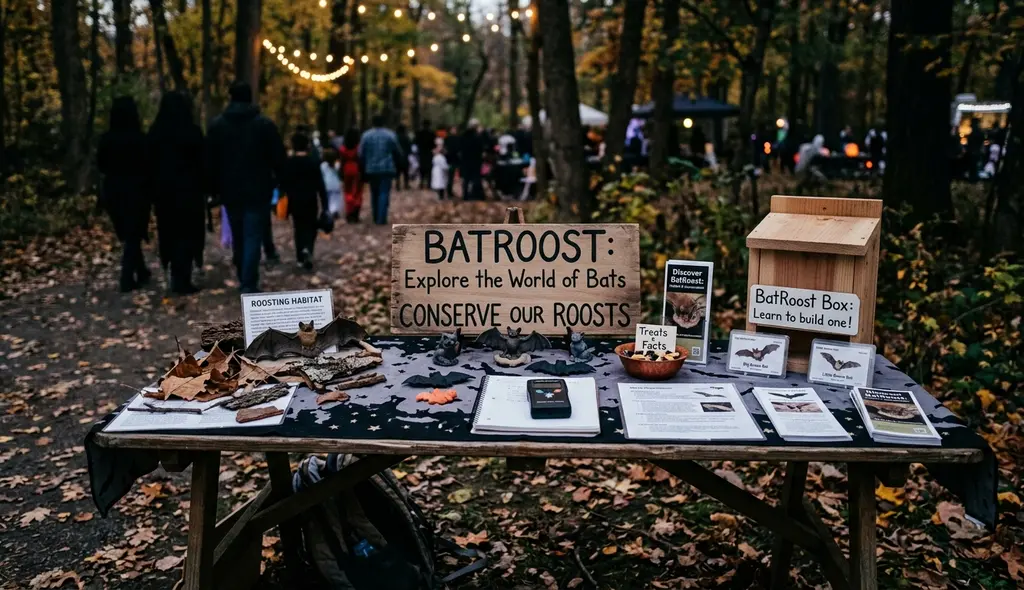
The practical question is simple: when a child points at a bat decoration, what do we do with that attention? We can pile on the joke. Or we can turn the moment toward respect, distance, and habitat.
Summary: Halloween visibility is useful only if the message moves people from spooky symbols toward real bat stewardship.
Start With the Frame: Bats Are Neighbors, Not Props
The first sentence matters more than most volunteers expect. People often remember the emotional frame before they remember the fact.
So I avoid opening with a startle line. I do not begin with fangs, disease, or a joke about bats flying into hair. A better first sentence is calmer and more accurate: “Bats are wild animals with specific roosting needs.”
That sentence does several jobs at once. It names bats as wild animals. It gives them needs. It points the conversation toward habitat instead of panic.
What a neighbor-first frame sounds like
- “Bats are nocturnal wild neighbors.”
- “Bats need safe roosts and respectful space.”
- “Bats belong outside, and people can help by protecting habitat.”
Seasonal education can still be playful. A table can have pumpkins, paper wings, and a child-friendly activity. The difference is that the fun does not ask bats to play the monster.
Use “Adopt a Bat for Halloween” as a Symbolic Conservation Invitation
Adoption language needs care. At a busy seasonal table, families may hear the word literally unless we define it right away.
A symbolic bat adoption is not ownership of a wild animal. It is support for education, care, or conservation work. Say that plainly at the point of offer, not later in fine print.
Use mission language, not pet language
The phrase I would put on a sign is: “Your adoption helps people learn how bats roost, feed, and survive.”
The phrase I would avoid is: “Take home a bat.”
That small wording choice changes the expectation. The family is not acquiring an animal. They are helping a conservation mission explain why bats need roost habitat, food sources, and distance from human handling.
Note: Outreach materials should state plainly that the public should never handle, capture, house, or relocate bats.
Tell One Ambassador Story, Then Widen the Lens
One named animal can do what a long fact sheet cannot. It can hold attention.
For this article, I would use Congo as the anchor: a straw-colored fruit bat, Eidolon helvum, and an educational ambassador. Straw-colored fruit bats are native to Africa, and that detail matters because it keeps the story rooted in a real species, not a generic Halloween silhouette.
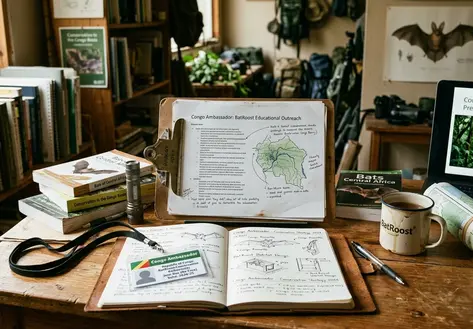
The story should stay focused. I would not turn Congo into a mascot for all bats everywhere. A trained ambassador in a qualified setting does not represent how wild bats behave around people, and it should never imply that wild bats tolerate close contact.
That is the pivot. Start with one animal. Then widen the lens: bats are diverse, their needs vary, and wild individuals deserve space.
This is where the Organization for Bat Conservation legacy and the Bat Zone setting at Cranbrook Institute of Science offer useful context. They connect ambassador education to a broader public learning environment, rather than presenting a bat as entertainment on its own.
Replace Fear Phrases With Accurate, Calm Language
A volunteer who corrects a child’s myth with a long, embarrassing rebuttal at a booth usually loses the family’s attention. I have watched shoulders tighten when the correction sounds like a lecture.
Correct the myth, not the person.
Brief, calm language works better because it gives people a replacement sentence they can use immediately. It also keeps the conversation moving.
Fear Phrase to Calm Phrase Swaps for Outreach
| Setting | Avoid This | Say This Instead |
|---|---|---|
| Halloween adoption table | Take home a bat for Halloween | Symbolically adopt a bat to help fund roost education |
| Classroom question | Bats attack people | Bats avoid people and need space |
| Social post | Creepy bats | Nocturnal wild neighbors |
How to correct without shaming
- Start with the person’s concern: “A lot of people have heard that.”
- Offer the accurate sentence: “Bats avoid people and need space.”
- Move to stewardship: “The best way to help is to protect roost habitat and avoid handling bats.”
Quick Tip: Keep myth correction short. A calm replacement phrase often does more than a detailed debunking.
Keep the Science Simple: Roosts, Food, Habitat, and Boundaries
At a booth or in a classroom, a full bat curriculum can overwhelm people. I narrow the science to three points.
Three points worth repeating
- Bats need safe roosts. Roosting habitat gives bats places to rest, raise young, or shelter seasonally, depending on the species.
- Bats are diverse. A fruit bat ambassador and a local insect-eating bat may share the word “bat,” but they do not have the same diet, range, or care context.
- Bats should not be handled by the public. Respect includes distance.
This is where BatRoost’s broader focus on roosting habitat and bat house stewardship fits naturally. People often want something helpful to do. Give them a grounded option: learn how bat houses work, reduce disturbance around roosts, and talk about bats as wildlife rather than decorations with wings.
Many bat species face habitat pressure. We do not need to invent a number to make that point matter.
Show Care in Action: Habitat Enrichment and Responsible Stewardship
Care becomes believable when people can picture it.
In qualified managed settings, habitat enrichment may include non-toxic, zoo-grade plants and vines that support natural movement and add complexity. That kind of detail helps visitors see that responsible care is not about cuddling an animal. It is about building an environment around the animal’s needs.
But the same sentence can become harmful if it lands in the wrong context. Enrichment guidance that makes sense in a managed Bat Zone setting becomes dangerous if a homeowner hears it as permission to house or feed a wild bat.
The homeowner version is different
- Protect known roost areas from unnecessary disturbance.
- Learn careful bat house placement and maintenance before installing one.
- Never attempt to keep, feed, or relocate a wild bat.
The Bat Zone at Cranbrook Institute of Science gives a concrete educational context tied to the Organization for Bat Conservation legacy. For public-facing outreach, though, the message must stay scoped: qualified care settings manage ambassador animals; homeowners practice stewardship from a distance.
Safety and Scope: What Fear-Free Education Should Not Promise
Fear-free education does not mean risk-free interaction.
That sentence belongs in the article because ambassador stories, adoption offers, and institutional history can sound stronger than intended when they sit side by side. Bats are wild animals. They should not be touched.
If a bat is found indoors, or if direct contact may have occurred, the next step is not a social media thread or a classroom handout. Contact local wildlife professionals or public health authorities. For public health context, refer readers to CDC guidance on bats and rabies.
This guide is written for public-facing education, not for licensed rehabilitation, veterinary care, or public health case management. That scope keeps the promise honest.
Keep in mind that symbolic adoption supports education and stewardship messaging. By itself, it does not solve habitat loss or disease risk.
Ready-to-Use Scripts for Halloween Outreach
Scripts help when the room is noisy, the line is moving, and a child has just asked whether bats want to bite people. I like to open with a question because it lets the visitor name the concern first.
Halloween table script
“What have you heard about bats? You can symbolically adopt a bat to help people learn why bats need safe roosts and respectful space.”
Classroom script
“What have you heard about where bats live? Bats are wild animals with specific roosting needs, and we help them most by protecting habitat and giving them space.”
Social post script
“This Halloween, try calling bats nocturnal wild neighbors. Celebrate them, protect roost habitat, and remember that wild bats should be admired from a distance.”
Each script avoids threat language. Each one ends on habitat and distance. That is the rhythm I want volunteers to practice until it feels natural.
A Better Halloween Invitation
October is not the whole conservation season. It is the opening conversation.
A good Halloween bat message does three things. It defines adoption as symbolic support. It uses an ambassador story carefully, without turning one animal into a stand-in for every bat. It gives people practical word swaps they can use with children, neighbors, and community groups.
The call to action is steady and simple: celebrate bats, respect boundaries, and help others talk about them responsibly.
That is fear-free education at its best. Not soft. Not careless. Just clear enough that curiosity has somewhere better to go.

Join the Conversation
No comments yet.
Join the Discussion