
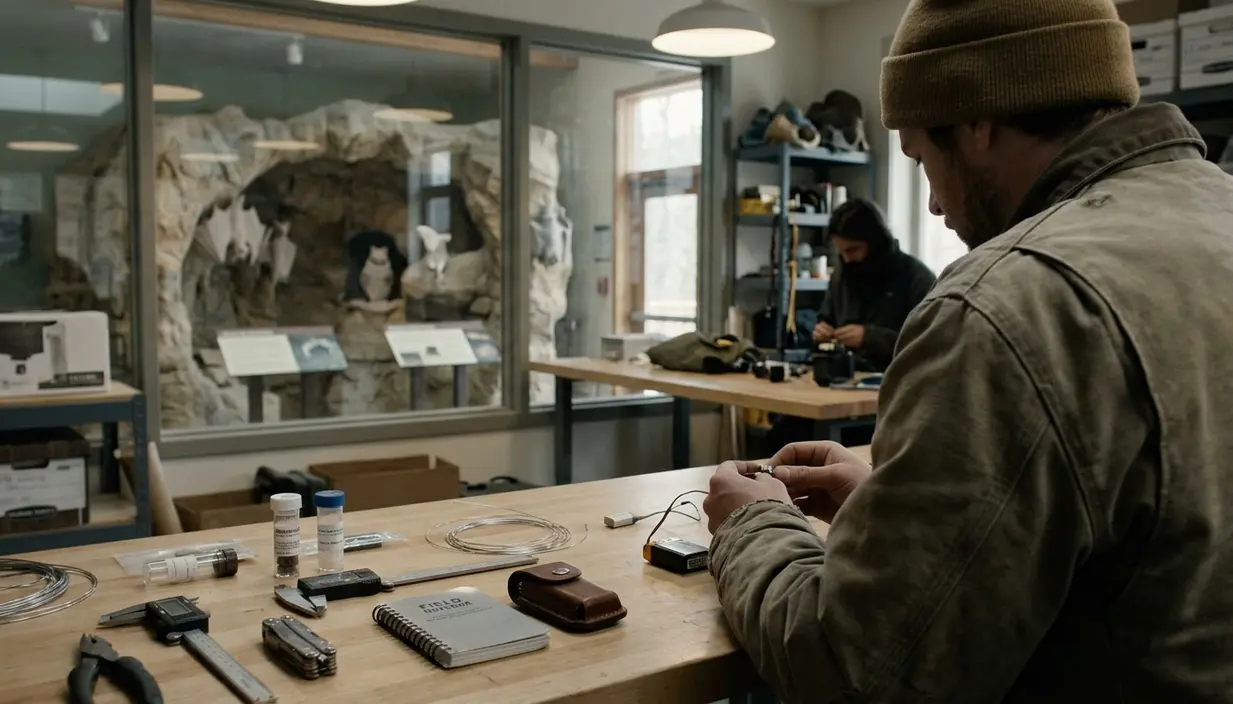
What Happens to Bat Education When an Organization’s Work Outlives the Organization?
Can conservation knowledge survive a leadership change, an institutional transition, and a fresh round of public misinformation?
That question sits underneath this case study. The Organization for Bat Conservation, often known as OBC, operated as a Michigan-based education group whose public-facing programming wound down during the 2018-2019 transition period. Its deeper work, though, was never just a calendar of programs. It was a way of teaching people to see bats as living neighbors with specific habitat needs.
That kind of teaching can travel, if we handle it carefully.
For this article, I am treating legacy as a transferable education framework, not as a tribute to one organization. The focal setting is the Cranbrook Institute of Science, a long-running natural history museum in metro Detroit founded in the 1930s. I use Cranbrook here as an illustrative public-learning setting, not as evidence of an active OBC-Cranbrook program.
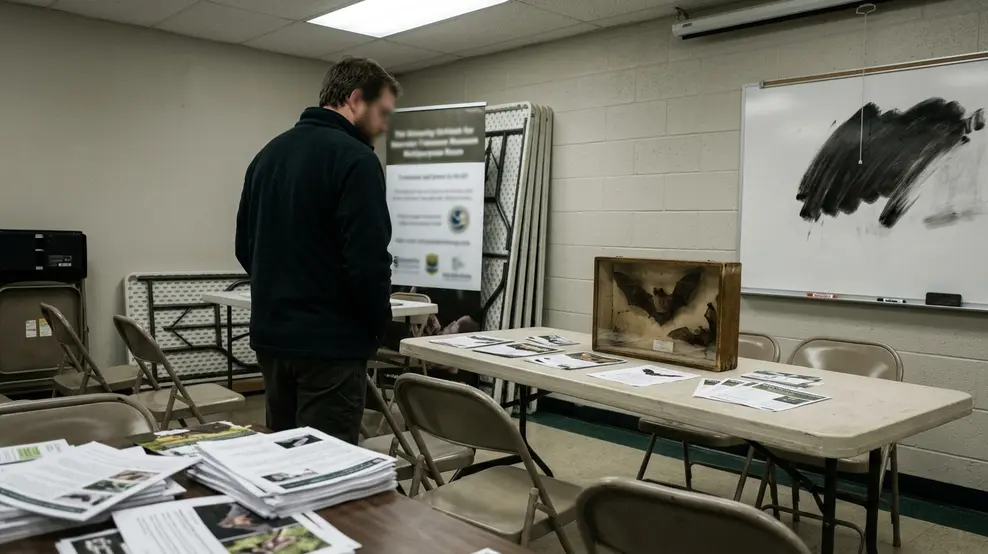
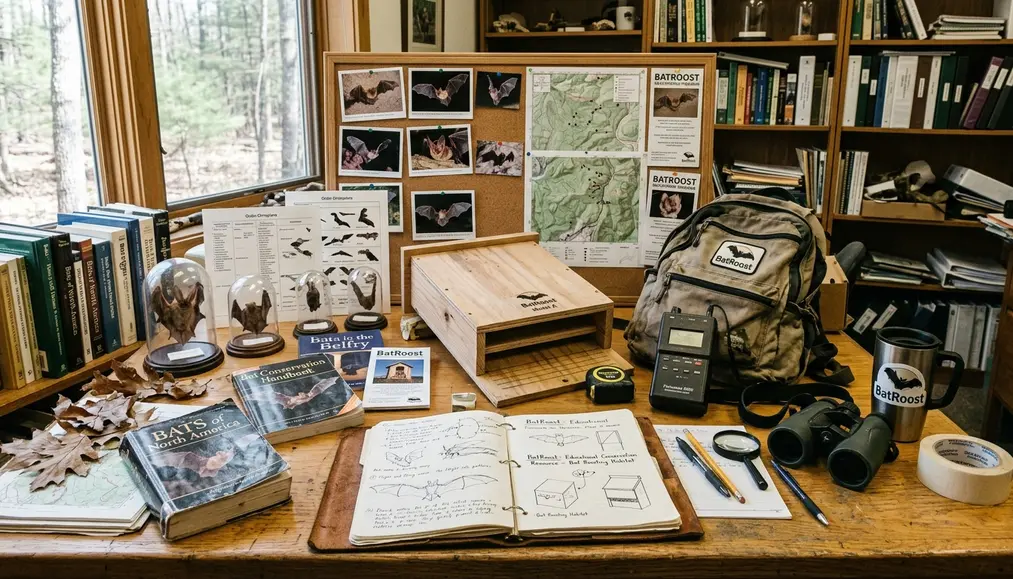
How I frame the case
The practical question is simple: when a trusted conservation message loses its original home, where can it keep doing useful work? A science museum offers one answer. Visitors arrive expecting evidence, objects, and patient explanation. That matters for bats because admiration alone does not protect roosts, improve yards, or prevent unsafe human-wildlife contact.
The Challenge: Keeping Bat Conservation Knowledge From Becoming Institutional Memory
When a specialized conservation organization changes or closes, the first loss is rarely a single brochure. The bigger loss is the habit of explanation.
Teaching materials scatter. Trusted spokespeople move on. Volunteers remember the animals, but not always the sequence of decisions that made the outreach useful. A person may recall meeting a bat educator years ago and still forget why maternity-season timing matters, why roost disturbance can harm pups, or why a bat in a bedroom requires a different response than a bat house in a yard.
Public misconceptions tend to cluster in familiar places: fear of disease transmission, overgeneralizing from one rabies-positive encounter, and confusing support for bats with handling bats. Those are not small misunderstandings. They change behavior.
Note: Bat conservation education should never blur the line between stewardship and contact. A bat found inside a living space, or any possible contact with a person or pet, belongs in the public-health and professional-response category.
In temperate North America, maternity-season concerns often become especially important in early summer, when flightless pups may be present. Local rules vary, so educators should point people toward state wildlife agency guidance rather than offer a one-size instruction.
The challenge, then, is not nostalgia. It is continuity.
Why a Science Museum Is a Strong Home for Bat Learning
A museum does something a one-time advocacy event cannot do as reliably: it slows people down.
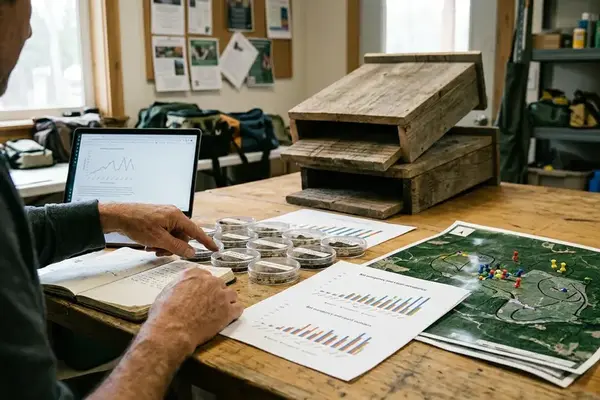
That may sound modest, but it changes the conversation. A visitor can look at a bat-house cutaway, compare roughened interior baffles, ask why a shaded tree mount creates problems, and then connect that object to a real decision at home. Passive signage rarely carries that much weight on its own.
Objects make the message harder to flatten
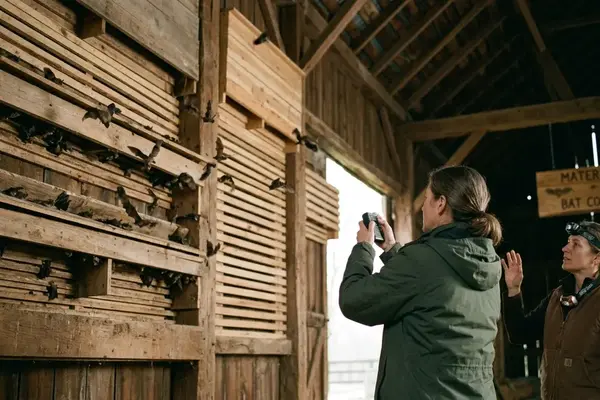
Bat education benefits from physical anchors. A cutaway box shows that chamber depth and interior texture matter. A habitat diorama can show open flight approach better than a paragraph can. A garden-habitat discussion can connect insects, native plants, water, and reduced pesticide use without promising instant bat occupancy.
Cranbrook’s value in this case comes from the museum setting itself: natural history, public education, and regional curiosity can meet in the same room. Visitors do not have to begin as bat advocates. They only need enough curiosity to ask the next question.
For this topic, the strongest lesson is about education design, not measured population change.
The Solution: Turn Bat Advocacy Into a Step-by-Step Learning Pathway
The best bat education pathway does not begin with the bat house. It begins with the bat.
That order matters. If a visitor starts with a product-shaped answer, every problem begins to look like an installation problem. If the visitor starts with biology and roosting ecology, the bat house becomes one possible habitat tool, not a magic box.
A practical teaching sequence
- Bat biology: Explain insect feeding, seasonal movement, reproduction, and why bats use different roosts at different times.
- Roosting ecology: Show how warmth, shelter, predator access, and flight approach affect roost choice.
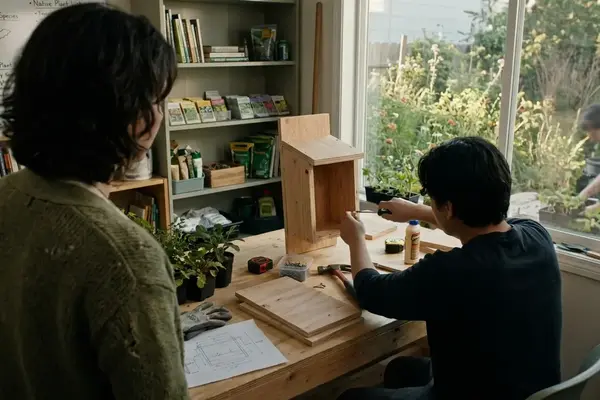
- Human-built roost options: Compare bat-house materials, chamber design, mounting locations, and maintenance needs.
- Safe coexistence boundaries: Teach when to call professionals, when to contact health officials, and when not to interfere.
This sequence moves people from curiosity to judgment. It also reduces the temptation to oversimplify. A visitor can leave with a sharper question: does my site actually offer the heat, height, clearance, and surrounding habitat a bat could use?
That is more useful than enthusiasm by itself.
Implementation Choices: What the Public Needs to See, Touch, and Question
Good hands-on education uses safe objects, not live animals. That boundary should stay firm.
The strongest learning stations let visitors examine inert materials: bat-house chamber cutaways, mounting-scenario boards, sample checklists, and seasonal timing prompts. People can touch roughened baffles. They can compare a pole mount with a tree mount. They can ask why open flight space matters before they buy lumber or hardware.
One example worth staying with
Picture a bat house mounted on a shaded tree trunk at roughly eye level. It stays empty for years. The homeowner concludes that bat houses do not work.
The teaching moment is not to scold the homeowner. It is to separate the idea from the placement. A shaded tree can invite predators, reduce warmth, and clutter the flight approach. Low mounting adds another problem. In that case, the empty box may say less about bats than about the site decision.
A museum station can make that visible. Place the same box in three model settings: shaded tree, low fence line, and open pole or building mount with better sun and clearance. Ask visitors which one gives a bat the best chance to use the structure and why.
What belongs on the checklist
- Local bat species context and whether those species use crevice-style roosts.
- Sun exposure, with attention to regional climate and overheating risk.
- Mounting height, open flight approach, and predator access.
- Nearby water and insect-supporting habitat.
- Seasonal timing, especially avoiding disturbance when pups may be present.
- Clear instructions for indoor bat encounters: stop, contain if safe, and contact the proper professional or health authority.
A dark box that suits a cooler northern yard can overheat in a hotter southern climate. That single contrast teaches a larger point: conservation advice needs geography.
Results: The Legacy Is Measured in Better Conservation Decisions
This case does not have published institution-specific metrics in hand. So the honest results section has to stay qualitative.
That does not make the outcomes vague. It simply keeps the claims in bounds.
The clearest signs of useful legacy education are observable in the questions people ask. A weaker question sounds like, are bats dangerous? A stronger question sounds like, what sun does my yard get in summer, and is my proposed mounting spot too cluttered?
That shift matters. It shows the visitor has moved from fear or fascination into decision-making.
What better continuity looks like
- Visitors distinguish bat conservation from bat handling.
- Homeowners expect patience rather than instant occupancy.
- Educators can explain why placement affects bat-house use.
- Volunteer trainers preserve the original conservation message while updating local guidance.
- Families leave with safer responses to indoor bat encounters.
If official records become available, useful metrics would include named program dates, attendance from official records, documented exhibit periods, and cited educator materials. Without those, the case should not pretend to measure population impact.
The legacy is smaller than that, and still important: clearer public choices.
Scope and Limitations: What Museum-Based Bat Education Cannot Promise
Education has edges. Good programming names them.
A museum exhibit or workshop cannot replace licensed wildlife rehabilitation, professional exclusion work, public-health rabies guidance, or local permitting requirements. It can prepare people to recognize which lane they are in.
Summary: Bat houses do not guarantee bats, and an empty house after a season or two is not automatic proof that the conservation effort failed.
That point deserves plain language. A bat house may sit empty because the local species do not use that style of roost, because better natural roosts exist nearby, because the site runs too cool or too hot, or because bats simply have not found it. Patience belongs in the lesson, but so does humility.
Public safety also stays separate from habitat encouragement. If a bat appears inside a living space, especially where contact with a person or pet may have occurred, the correct teaching response is referral, not improvisation.
That boundary protects people and bats.
What Educators and Habitat Stewards Can Take From the Cranbrook Case
The Cranbrook case points toward a replicable model for any public-learning venue: preserve the message, refresh the science, teach decisions instead of slogans, and be honest about uncertainty.
That model does not belong to one institution. A nature center, library program, classroom, or volunteer training day can use the same sequence if it keeps the same discipline. Start with bat biology. Build toward roosting ecology. Treat bat houses as habitat tools. End with safety and local rules.
Before Installing a Bat House: A Pre-Decision Checklist
- Identify which bat species live in your region and whether they commonly use crevice-style roosts.
- Confirm that the proposed location has suitable sun for your climate.
- Check mounting basics: height, stability, open flight approach, and predator access.
- Look at the surrounding habitat, including water, insects, and pesticide pressure.
- Review local safety guidance, exclusion rules, and legal requirements before acting.
Quick Tip: Before installing a bat house, learn the species context, roosting needs, placement basics, and local safety considerations. The box is the last step, not the first.
The transferable lesson from OBC’s legacy is not that every community needs the same program. It is that bat conservation education works best when it turns admiration into careful habitat choices.
That is how a message outlives an organization: not by freezing it in memory, but by teaching the next person how to make the next better decision.
Join the Conversation
No comments yet.
Join the Discussion