
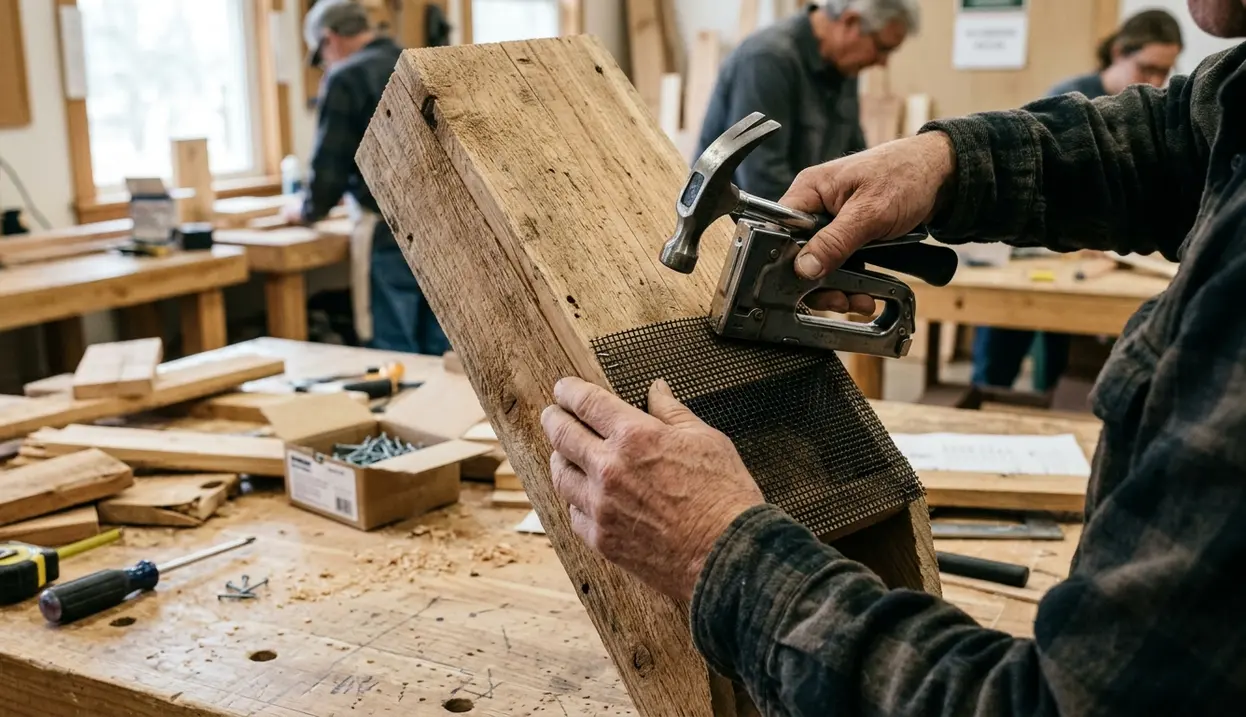
The Hard Truth: A Bat House Can Be Well Built and Still Fail
A bat house can meet the usual design expectations and still sit empty for a full first season.
That is the siting lesson I return to most often in the field. The box may have suitable chamber spacing, useful ventilation, and solid exterior construction, yet the location asks bats to accept shade, cluttered flight access, predator pressure, or daily disturbance. Good carpentry cannot compensate for a poor roost site.
The central decision is not simply, “Where will this look tidy in the yard?” It is: where can this structure function as safe roost habitat without creating conflict for people? That question uses three evaluation lenses from the start: bat comfort, human safety, and long-term maintenance access.
Summary: A responsible bat house location does more than attract interest. It reduces the chance of heat stress, predator access, disturbance, and human frustration after bats arrive.
What Makes a Bat House Location Responsible?
A responsible location supports six things at once: sun exposure, mounting height, obstruction clearance, nearby habitat, conflict risk control, and upkeep access. No single factor carries the whole decision.
This is where many installations get too simple. People hear that bats like warmth, so they choose a hot wall. Or they hear that water helps, so they mount a house near a pond under heavy branches. Both instincts can point in a useful direction, but neither is a complete site assessment.
Treat the house as habitat infrastructure
A bat house is not yard decoration. It is a fixed wildlife structure exposed to sun, wind, seasonal shade, predators, guano drop zones, and human routines. The placement needs the same seriousness you would give a nest box, a pollinator planting, or a streambank repair.
BatRoost’s approach follows the practical education tradition that helped shape public bat conservation work through the Organization for Bat Conservation (OBC) and outreach settings such as the Cranbrook Institute of Science. That legacy matters because bat houses often sit at the boundary between conservation interest and everyday household decisions.
One qualifier belongs here: these principles describe a roosting option, not a read on colony demand. Even a carefully chosen site may remain unused if no local bats are looking for new space.
Start with Sun, Warmth, and the Site’s Microclimate
Warmth matters because roosting bats, especially maternity groups, use heat to conserve energy and support young. But warmth is not a license to mount a box where it bakes through the hardest part of the afternoon.
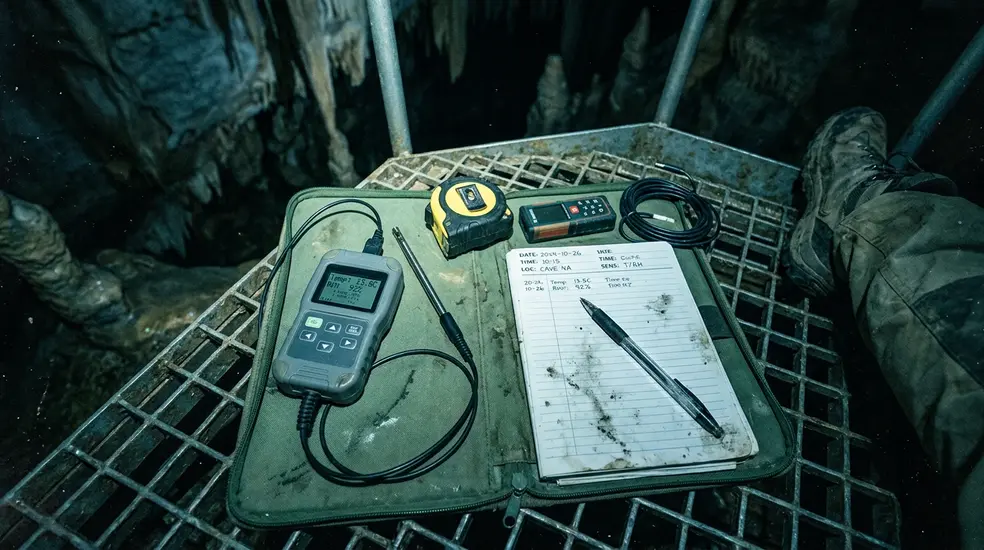
Before drilling, I want a candidate site watched across a full daylight cycle: early morning, midday, and mid-to-late afternoon. A single noon glance misses the way shade moves, wind cuts across open ground, and building surfaces store heat.
Compare the common exposure types
- Open sunny yard edge: often gives clean flight access and useful light, but wind exposure can reduce comfort on some sites.
- South- or southeast-facing structure wall: can provide warmth and stability, especially where the wall buffers wind.
- Shaded woodland edge: may look natural, yet dense canopy can make the house too cool and hard to approach.
- Windy exposed pole: offers control over height and clearance, but may need a more sheltered placement to avoid constant weather stress.
Regional judgment changes the answer. Cooler northern climates often need maximum sun exposure on a south-facing surface. Hot-summer southern sites face the opposite risk and require more caution around afternoon heat. The same orientation advice can flip by region.
Note: A site scouted in winter or early spring can read as full sun, then fall into heavy shade once deciduous trees leaf out by early summer, exactly when maternity-season use peaks.
Give Bats a Clean Approach: Height, Clearance, and Open Flight Space
Think first about the approach. A bat leaving the house needs room to drop, gain speed, and turn without weaving through branches, wires, patio umbrellas, or stored equipment.
That mental flight path changes how you judge mounting surfaces. A freestanding pole can give strong control over height and clearance. A building wall can add warmth and stability. A barn or garage may work well when the wall faces open space. A tree usually ranks lower because it brings shade, moving branches, predator access, and difficult maintenance.
Survey below and around the box
Before selecting a spot, look at what sits beneath the likely entrance: patios, doors, children’s play areas, garden seating, walkways, parked cars, and outdoor lighting. A technically useful roost position can still be irresponsible if normal bat activity drops guano where people eat, play, or enter the house every evening.
The tree example is the one I use when training site selection. A house mounted on a tree’s east face may look warm during scouting. By early summer, neighboring branches leaf out, afternoon sun disappears, squirrels and cats gain routes upward, and the entrance sits behind moving clutter. The structure remains sound. The site does not.
Avoid the Places That Invite Predators, Disturbance, or Human Conflict
Responsible siting prevents conflict before anyone is tempted to move an occupied house.
Reject placements beside bright exterior lights, over busy doorways, near frequently used decks, within climbing reach of cats, beside dense vines, or against unstable fencing. These locations either expose bats to disturbance and predators or place people in a daily irritation loop they could have avoided.
Plan the guano drop zone first
Guano beneath a roost is normal. Surprise guano beneath a back door is a siting mistake. The better question comes before installation: if bats use this house, will the droppings land somewhere acceptable and easy to manage?
Humane conflict prevention also means not placing a bat house where normal bat behavior will be treated as a nuisance. If a site guarantees complaints from the people who use that space, choose another location.
Note: Do not handle a sick, grounded, or unusually approachable bat. Contact local wildlife rehabilitation or public health resources for guidance.
Read the Surrounding Habitat Before You Mount
A bat house works best as one part of a larger habitat picture. It is not a stand-alone fix for a landscape with poor insect availability, heavy chemical drift, and no practical flight corridors.
Inventory the nearby features that tend to support insect activity: native plantings, gardens, meadows, ponds, streams, treelines, and pesticide-conscious landscaping. Then watch the site at dusk during the 30–45 minutes after sunset across a few clear evenings. Existing local bat activity does not promise occupancy, but it tells you the property sits within used airspace.
Water nearby may help. So can a meadow edge or a garden that supports night-flying insects. Still, those features cannot substitute for warmth and clear access. A cold, cluttered house in a rich landscape remains a poor offer.
Quick Tip: If the only open location is far from insect-rich habitat and directly under bright lights, improve the site conditions before mounting the house.
Choose a Mounting Surface You Can Maintain for Years
The mounting surface is a maintenance decision, not just an installation shortcut.
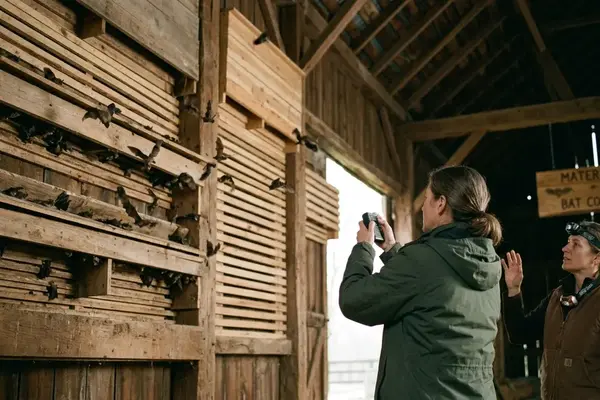
A freestanding pole often gives the most control over clearance, orientation, and predator avoidance. A building wall can provide warmth and a stable backing surface. A barn or outbuilding may be a strong rural option when the wall faces open flight space. Tree mounting should be treated as a last-choice option in many settings.
Plan hardware before placement
Use sturdy brackets, weather-resistant fasteners, and secure backing. Avoid flimsy garden posts that twist, lean, or vibrate in wind. The house needs to stay stable through several seasons of sun and weather exposure.
Maintenance access matters just as much. Plan for ground-level inspection with binoculars, and reserve ladder access for repairs rather than routine curiosity. If you cannot safely inspect the exterior area, clear vegetation, or repair weather damage, the location is not ready.
When the Best Choice Is Not to Install Yet
“Do not install yet” is a responsible outcome, not a failure of enthusiasm.
Some properties have no suitable bat house site without changes. Heavy shade across every candidate spot, unavoidable high-traffic placement, unsafe mounting access, intense night lighting, regular pesticide drift, and unresolved human-wildlife conflict concerns all justify waiting.
On a high-foot-traffic commercial property, for example, every plausible location may fail the conflict and disturbance screen. In that case, declining to install protects bats and people better than forcing a symbolic project into the wrong place.
Fix what is fixable
- Reduce or redirect exterior night lighting away from the candidate roost area.
- Relocate the plan to a better pole position with improved sun and clearance.
- Improve nearby habitat with pesticide-conscious landscaping and native plant structure.
- Resolve household concerns about guano, pets, and access before bats arrive.
A bat house should not be promoted as a remedy for habitat loss. It also should not be used as a tool to exclude bats already roosting in a building. Exclusion is a separate, regulated process that requires different timing and expertise.
Pre-Installation Site Walkthrough
The field sequence keeps the decision disciplined. Evaluate two or three candidate sites instead of defaulting to the first open space.
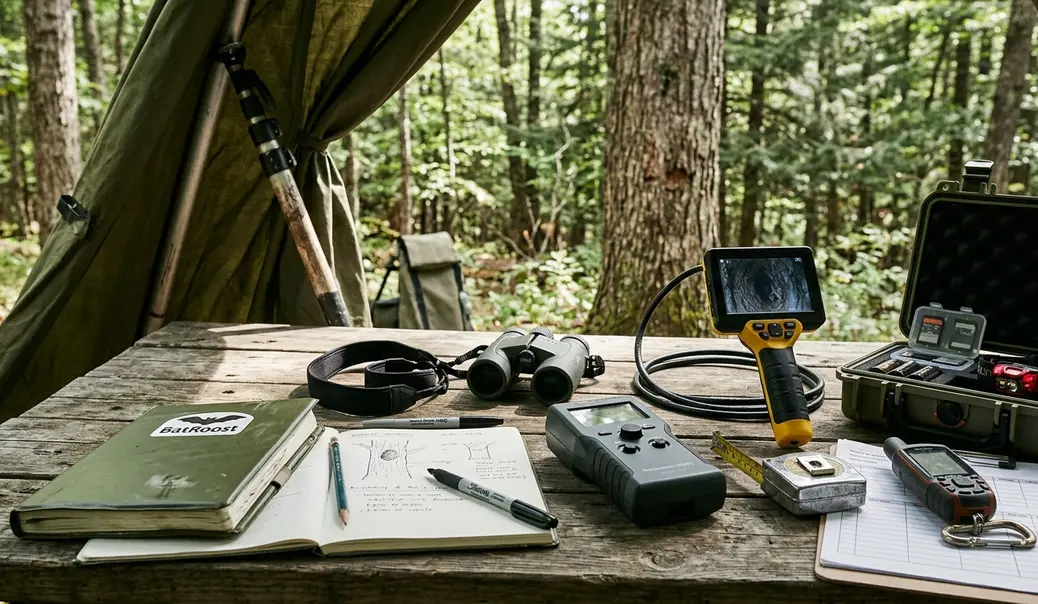
- Identify two or three candidate sites. Include at least one option that gives open flight access and one that offers warmth from a structure or sheltered edge.
- Observe sun and shade. Check morning, midday, and mid-to-late afternoon across at least one daylight cycle.
- Account for summer canopy. Look for deciduous branches that may shade the house once leaves emerge.
- Screen the approach path. Check branches, vines, wires, fences, lighting, patios, doors, play areas, walkways, parked cars, and seating.
- Confirm maintenance access. Choose a site that allows safe installation, seasonal inspection, exterior cleanup when needed, and repair after weather exposure.
Document the chosen location and installation date. That fixed baseline matters later when you compare shade, vegetation growth, weathering, and dusk activity across seasons.
After Installation: Monitor Before You Move Anything
Restraint is part of responsible stewardship.
Do not relocate a bat house simply because bats are absent during the first season. Occupancy can lag installation, and repeated moves erase the very stability a roost structure is supposed to offer.
What to record
- Date and weather during each observation.
- Visible dusk activity near the house.
- Changes in shade, especially from growing vegetation.
- Maintenance issues such as loose hardware, leaning posts, blocked entrances, or new lighting nearby.
- Seasonal photos taken from the same angle to track site change over a full year.
Reserve relocation for clear structural or conflict problems: deep summer shade, active human conflict, unsafe hardware, or a flight path that became blocked. Otherwise, let the site mature and keep watching. Responsible bat house location is not a single afternoon decision. It is a commitment to keep the roost safe, usable, and compatible with the people who share the property.


Join the Conversation
No comments yet.
Join the Discussion