

What If the “Scary Bat” Is the Lesson?
A child points at the twilight sky and calls the fluttering shape creepy. They might call it dangerous, or dirty, before learning what the animal actually does. Most North American bats begin foraging in the 20-40 minute window after sunset. This is the exact moment a backyard sighting tends to happen.
Halloween-season imagery peaks across late September through October. In our programs, educators report the most spontaneous bat questions from children during this period. We can use this fear-to-curiosity framing to teach conservation. It assumes the child has had at least one real or media exposure to bats. A child who has never noticed a bat needs a sighting prompt first, not myth correction. Adults can teach bat conservation without making bats seem like pets, toys, or animals to approach.
Start by Letting Kids Name the Bat Myths
Ask first, correct second. Use a simple discussion prompt: “What have you heard about bats?” Two myths surface most often in classroom settings. Children believe bats deliberately fly into hair, and they believe bats commonly attack people. Both can be addressed in a single discussion.
Separate fear-based ideas from facts in a calm, non-shaming way. Bats use echolocation precise enough to detect objects thinner than a human hair. This serves as the proven factual anchor for retiring the tangled-in-hair myth. Explain that most fear comes from not seeing bats clearly because they are active at dusk or at night.
Note: The non-shaming approach works in small groups. In a class of 25-30, you may need to collect myths on paper first so quieter children contribute before the loudest fear takes over the room.
Explain Their Jobs in Nature Without Overloading the Science
Break ecological roles into four child-sized categories: insect eating, pollination, seed dispersal, and food-web balance. Attempting a taxonomy overwhelms the core message. Clarify that not every bat species does the same job. Avoid implying that all bats pollinate or all bats live in the same habitat.
Insectivorous species dominate temperate-zone bat fauna. For most U.S. backyards, the relevant role to teach is insect consumption. The U.S. Geological Survey overview of why bats are important details these varied ecological contributions. Nectar- and fruit-feeding bats that pollinate and disperse seeds occur mainly in the desert Southwest and tropical regions. Pollination and seed-dispersal roles apply mainly to nectar- and fruit-feeding bats of the desert Southwest and tropics; teaching these as universal bat traits in a northern temperate classroom plants a misconception the educator must later correct.
Use concrete examples children can picture. Describe a bat flying over a pond, a garden, a meadow edge, or a wooded backyard at dusk.
Activity 1: Watch for Bats at Dusk, Not Up Close
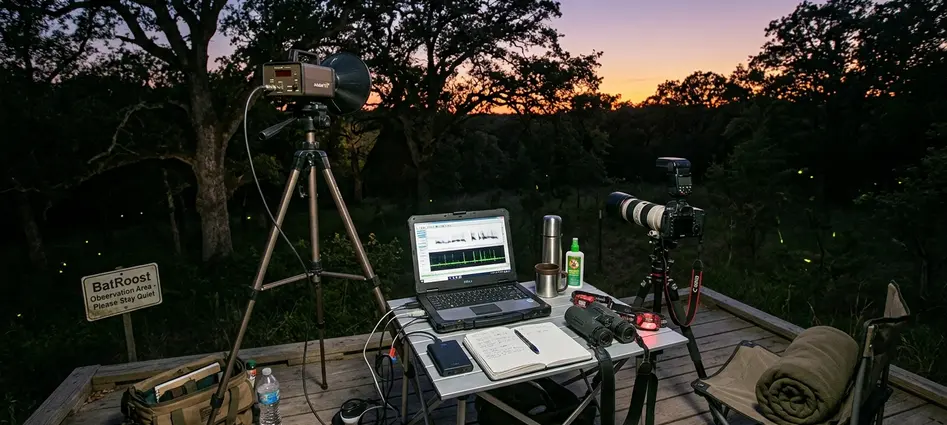
Design a safe observation activity for families, nature clubs, or classrooms. Sit quietly near a garden, pond edge, tree line, or open yard at dusk. We pick sit-and-watch over any approach-based exercise because the entire conservation message collapses if the activity encourages chasing wildlife.
Plan the session to start 10-15 minutes before sunset and run 30-45 minutes. This covers the emergence window without keeping young children out past attention limits. Position observers with open sky as a backdrop. Bat silhouettes are far easier to spot against light sky than against trees.
Teach children what to look for. Watch for quick, fluttering flight patterns and repeated passes over insect-rich areas. Use a notebook, pencil, and simple prompts rather than bright lights or loud searching. A cool, windy, rainy dusk suppresses flying insects, so the bats that follow them stay roosted—children may watch a full 30-45 minute window and see nothing, which is normal weather behavior, not activity failure.
Activity 2: Turn a Backyard or Schoolyard Into a Habitat Map
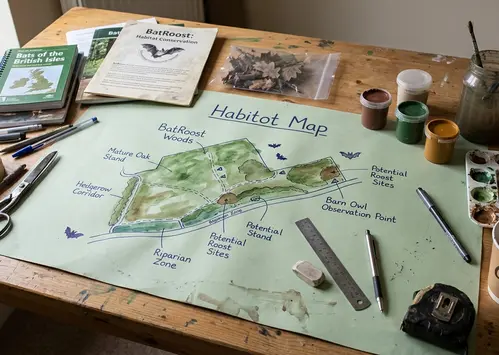
Have children draw or mark real habitat features. Include trees, shrubs, water sources, garden beds, outdoor lights, fences, sheds, and possible roosting structures. Guide them to think like habitat stewards rather than animal collectors. Bats need safe roosting places, insect-rich foraging areas, and reduced disturbance.
Have children mark at least three feature types. A water source, a foraging zone such as a garden or meadow edge, and any outdoor light fixtures drive most backyard bat activity. Discuss how night lighting can affect wildlife behavior without making absolute claims that every light harms every bat in the same way.
Quick Tip: A single porch or security light left on through the 30-40 minute emergence window can measurably shift where some species forage, making it the easiest feature for a child to flag and an adult to adjust.
Native-plant and reduced-lighting recommendations support insects broadly. Whether bats actually appear depends on roost availability nearby. A habitat map cannot conjure a roost that the surrounding landscape does not already support.
Make Safety Part of the Conservation Message
Teach children that respecting bats means giving them space, not trying to rescue or hold them. Fold safety into the conservation message rather than isolate it in a scary disease section. Fear-based disease warnings tend to undo the curiosity the earlier lessons build.
The operative rule is simple enough for a 5-year-old: no touching any bat, ever, even one that looks hurt or dead. Explain that any bat found on the ground, indoors, or behaving unusually should be handled only by a trained wildlife professional or appropriate local authority. Avoid fear-based language around disease. Be factual and calm. Wild animals can carry health risks, so no-touch rules protect both people and bats.
Adults should establish the no-touch and stay-with-the-group expectations before stepping outside, not during the activity. Keep a local wildlife or animal-control contact accessible for the duration of any dusk session. The instruction to call a professional assumes a reachable local authority exists. In rural areas where wildlife services are limited, adults should identify the correct contact in advance rather than improvise when a grounded bat is found.
Adjust the Lesson for Different Ages
Tier the lesson by what each age group can do with information rather than by how much information they can absorb. Young children get concrete contrasts because abstraction fails them. Upper elementary students can handle systems thinking.
For ages roughly 4-7, cap the lesson at four memorable facts. Bats are wild, fly at night, eat insects, and need safe homes. For upper elementary students, introduce habitat, food webs, observation journals, and myth-versus-fact discussions.
For middle school students, add local species research and human-wildlife conflict scenarios. Introduce source-tier comparison. Evaluating a scientific agency versus a conservation nonprofit versus a story versus a social post doubles as a media-literacy lesson. Responsible bat-house stewardship belongs in the middle-school tier only where an adult will maintain the structure year-round. Handing younger children a bat house as a project sets up disappointment when it stays empty.
Age-Tiered Bat Lesson Planner
| Age range | Core focus | Recommended activity | What to avoid |
|---|---|---|---|
| Ages 4-7 | Four facts: wild, nocturnal, insect-eating, needs safe homes | Dusk silhouette watching with simple prompts | Taxonomy, disease detail, any handling |
What This Lesson Should Not Promise
Teaching children about bats does not mean bats will use a yard, school garden, or bat house. Bat-house occupancy is never guaranteed. Many properly built houses remain empty for one to several seasons or permanently, depending on local roost competition and habitat.
Conservation advice shifts with region, species, climate, roost availability, and local wildlife regulations. These five variables make any single universal instruction unreliable. While field observation informs these educational frameworks, protocols remain subject to local species variations.
Treat this lesson as a foundation for respectful behavior, not a wildlife management plan. Decisions about roost structures, exclusions, or handling grounded bats require region-specific guidance and compliance with protections for bat species.
Focus on a Single Closing Action
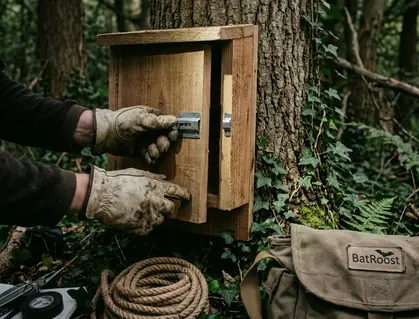
Close with exactly one selectable action rather than a list. A single committed action outperforms a menu that children skim and abandon. Offer a dusk log, a poster, or a light-off night. Each suggested action fits in a single evening or sitting.
Praise should target the behavior, not the outcome. Careful observation, patience, and respectful distance matter most. A child can do everything right and still see no bats.
Summary: The emotional arc from fear to responsibility lands best when the adult resists demanding affection for bats. A child who learns not to harm bats has met the goal even if they never come to like them.


Join the Conversation
No comments yet.
Join the Discussion