

The Stakes of a Live Encounter
Fear weakens support for local ecosystems. Misunderstanding drives communities to destroy vital roosting habitats and exclude native wildlife from their neighborhoods. A constructive encounter with a misunderstood species influences how visitors respond to roosts and habitat at home. Meeting a living bat can fundamentally change the decisions a person makes later in a yard, school, garden, or community space.
The Bat Zone operated as a dedicated facility under the Organization for Bat Conservation, focusing its scope entirely on pairing live-animal ambassadors with immersive education during its active years. Historical records from the Cranbrook Institute of Science describe a facility where visitors could look, listen, and ask questions. The yard-level decisions this educational model asks readers to make follow a strict biological calendar. Habitat assessments and bat-house mounting require completion in the late-winter to early-spring window. This critical period runs roughly from February through April in temperate North America. Completing the physical work during these months ensures structures weather properly before bats return from hibernacula. It also ensures the habitat is available long before pups are born in the June to mid-August maternity period.
Replacing Fear With Observation
Seeing a live bat at close range replaces an imagined threat with observable behavior, anatomy, and individuality. Most temperate insectivorous bats emerge roughly 15 to 30 minutes after sunset. They forage in intense bouts through the first several hours of darkness. A daytime facility encounter provides the only sustained look a visitor will ever get at an animal that usually appears as a frantic blur over a porch light.
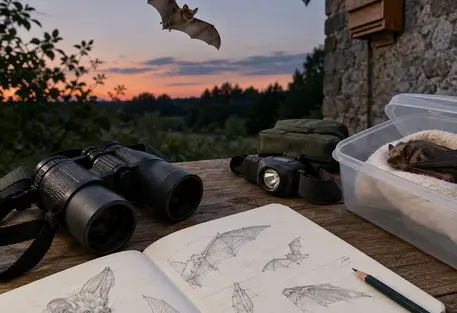
Visitors standing at a safe viewing distance can observe the delicate translucency of the wing membrane. They can see the specialized thumb claws used for climbing rough surfaces. They can examine the complex ear structures evolved for precise echolocation. The educator connects the immediate animal encounter to broader roosting ecology and the practical needs of local populations. Direct observation can correct specific misconceptions.
People see firsthand that bats have functional eyes alongside their echolocation capabilities, contradicting the pervasive myth of blindness. They learn these animals belong to the order Chiroptera, a distinct evolutionary lineage entirely separate from rodents. Longevity often surprises visitors. Several North American species regularly live past 20 years. Banded little brown bat records show individuals exceeding 30 years in the wild. Understanding this longevity transforms the animal from a disposable pest into a long-term neighbor requiring stable habitat.
Mapping the Stewardship Pathway
The intended impact pathway moves systematically from a live encounter to increased curiosity. Curiosity leads to corrected misconceptions. Corrected misconceptions build a greater willingness to protect local populations. This willingness ultimately translates into concrete habitat action beyond the visit. Attitude shifts connect directly to relevant stewardship choices, such as tolerating safe roosts and reducing avoidable disturbance.
While facility-based education models carry inherent limitations in tracking long-term behavioral shifts across broad populations, the available evidence for this specific program falls into three distinct categories. First, the documented source material confirms the institutional operator, the live-animal component, and the immersive setting. Second, the educational model was designed to influence specific, measurable household behaviors. Third, visitor totals, attitude survey results, and regional effect sizes remain unquantifiable from the available material.
Household Stewardship Targets
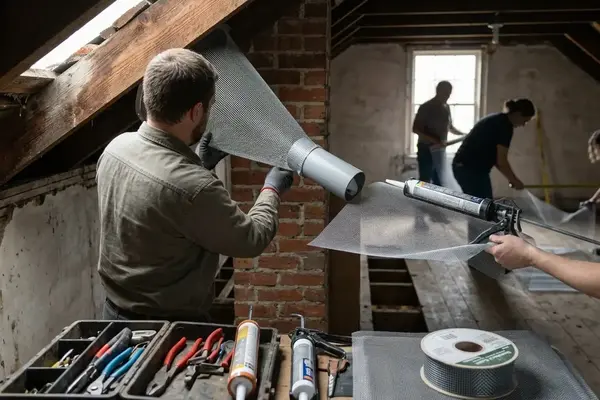
- Leaving an established attic or barn roost undisturbed outside of a lawful exclusion window.
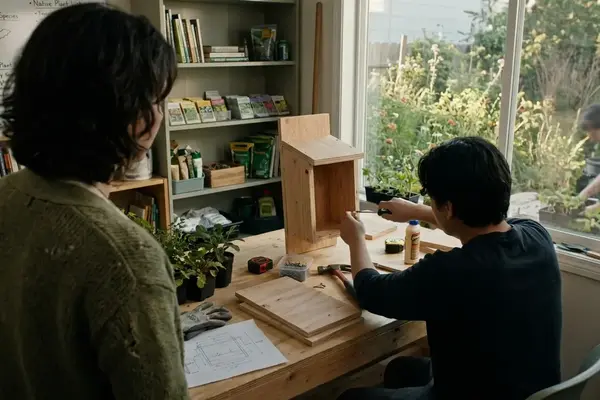
- Mounting a bat house 12 to 20 feet above ground on a pole or building.
- Ensuring the mounted structure receives six or more hours of direct sun.
- Verifying roost chambers measure exactly 3/4 to 1 inch wide.
- Avoiding pesticide practices that strip the essential insect prey base.
- Correcting persistent bat myths in casual conversation.
Diffusion runs on a slow, seasonal clock. A bat house put up after an educational visit is commonly occupied within its first one to two summers. Houses that remain empty past the second season usually need repositioning for better sun exposure or height. They rarely benefit from mere patience.
The Daily Reality of Ambassadors
Live-animal education requires continuing stewardship rather than a one-time exhibit installation. The daily reality of maintaining ambassadors involves rigorous animal care, trained educational interpretation, and highly specialized environments. Insectivorous ambassadors are typically hand-fed or dish-fed daily. Their diet consists of mealworms carefully dusted with calcium and vitamin supplementation to prevent metabolic bone disease.
Handlers weigh the animals on a strict, regular schedule. Gram-level weight loss serves as an early illness signal in species with such high metabolic rates. The facility must provide enclosure space that permits short flight. The enclosures must also offer multiple roost-temperature choices, allowing the animals to thermoregulate naturally throughout the day.
Handler-side requirements run on fixed intervals in standard captive-wildlife practice. Pre-exposure rabies vaccination for staff working directly with bats involves a three-dose series given over a 21- to 28-day period. Serologic titer checks are recommended roughly every two years for continuing-risk personnel. The animals themselves undergo annual veterinary examination cycles to ensure long-term health and suitability for educational programs. Available records do not include a budget, funding allocation, donor list, grant record, or cost-per-visitor figure, so a financial breakdown of these intensive operations is not available.
Translating Immersion to the Backyard
The historical model offers a practical comparison between passive information and experience-led education. Educators and conservation volunteers can pair a memorable bat encounter, observation, or demonstration with one specific habitat behavior. Contact-free encounter substitutes preserve the emotional hook for community programs without requiring captive animals.
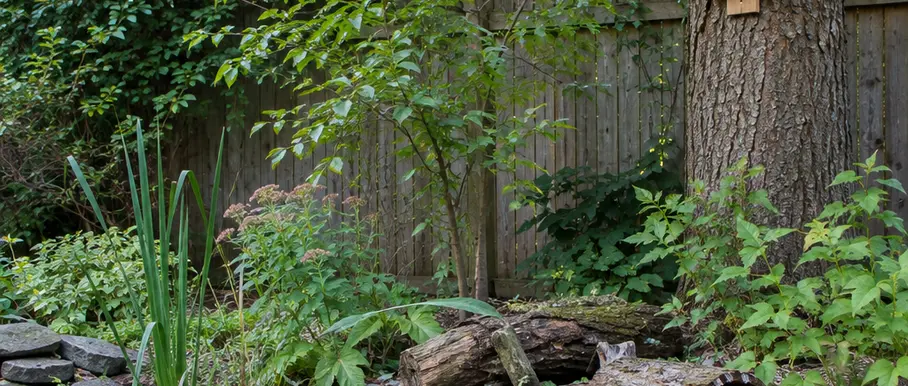
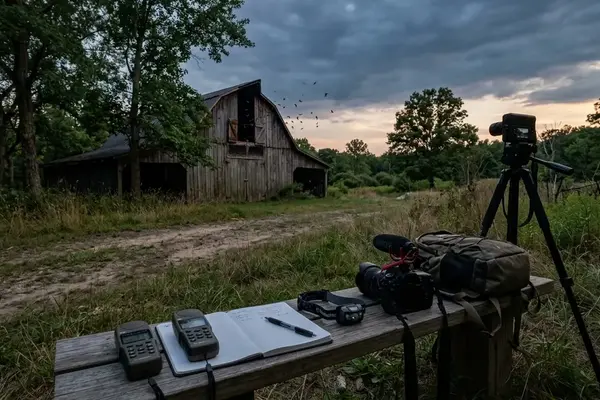
A sunset emergence count at a known roost from a fixed vantage point provides a powerful visual experience. A heterodyne or full-spectrum detector session during the 15-to-30-minute post-sunset emergence window makes the invisible acoustic world audible. Comparing guano against mouse droppings serves as a highly practical, hands-on roost-identification exercise. Guano crumbles easily to reveal shiny insect fragments, providing undeniable proof of the animal's ecological value.
Pairing Observation With Action
Each educational encounter must pair with a concrete habitat behavior. Participants can confirm six or more hours of direct sun on a mounted house. They can correct the mounting height to the optimal 12 to 20 feet. Chamber spacing can be checked to ensure it falls within the 3/4 to 1 inch requirement. Participants can also commit to an annual off-season inspection for wasp nests and seal failure, carried out strictly outside the June-to-mid-August maternity period.
Replication has basic requirements. A facility-based live-animal program depends entirely on non-releasable animals held under the appropriate federal exhibitor authorization and state wildlife permits. It requires trained handlers under strict rabies pre-exposure protocols and dedicated veterinary support. A school, garden club, or homeowner without all of those requirements should adopt the approach of observation and interpretation. They must leave the live animals to permitted professionals.
Assessing Your Local Habitat
Immersive conservation education links encounter, understanding, and stewardship. Conservation education delivers maximum value when visitors leave knowing exactly what responsible action looks like in their own environment. The transition from passive appreciation to active habitat management requires specific, localized assessment.
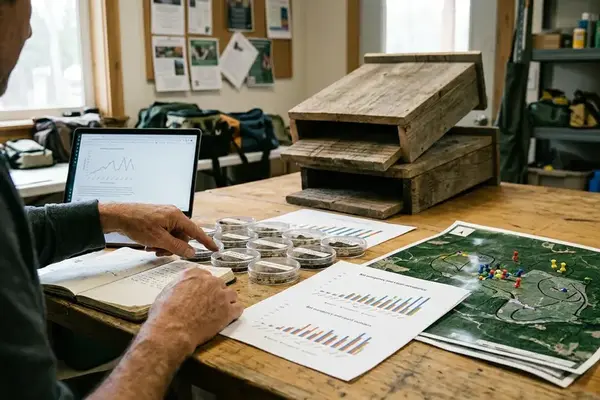
Assess one place you already steward—a yard, school grounds, garden, or community space—for responsible bat roosting habitat. Check the sun exposure to ensure the location receives the necessary solar radiation for pup development. Measure the potential mounting height and evaluate the mounting surface. Calculate the distance from tree cover to protect emerging bats from aerial predators. Note the distance from artificial lighting, which can disrupt natural emergence patterns. Confirm the proximity to a natural water source within roughly a quarter mile.
Schedule this assessment and any subsequent mounting between February and April. This timing ensures the house is weathered and available before the spring arrival. Hold any necessary roost exclusion work to the pre-maternity spring window or the late-August through October window after pups are volant. Banded records document little brown bats surviving past 30 years in the wild, making a well-positioned roost a potentially decades-long habitat feature.
Join the Conversation
No comments yet.
Join the Discussion