
The First Rule: If the Bat Changes Behavior, You Are Too Close
Most people who walk up to a roost mean well. They want to know whether the bat house is working, whether the barn gap is active, or whether the evening flyers over the garden are using the old maple.
That curiosity can turn into pressure fast. A step closer. A bright phone screen. A flashlight held a little too long at the opening. Then the bats stop behaving normally, and the observation has already changed the thing it meant to understand.
I use one field rule before any notebook comes out: if the bat changes behavior because of you, you are too close.
This method is for homeowners, gardeners, educators, and conservation volunteers who want to watch bat activity without turning a roost into a stage. It is not designed to identify every bat. It will not establish colony size. It is a watch-and-record approach, built around restraint.
Summary: Success is not a full data sheet. Success is bats emerging, flying, and returning as they would have if you had stayed inside.
The Low-Disturbance Bat Watch Protocol at a Glance
The protocol works because it removes improvisation. The moment people start deciding in the field, they tend to move closer, change angle, whisper instructions, or add light. The roost pays for that curiosity.
The sequence
- Choose one observation question.
- Scout the site in daylight.
- Set a fixed observation point.
- Arrive before dusk.
- Remain quiet and still.
- Record only visible and audible cues.
- Stop if disturbance signs appear.
- Leave without approaching the roost.
- Interpret the notes conservatively afterward.
The controlled variables are simple: observer distance, light level, noise, arrival time, weather notes, viewing angle, and session length. Keep those steady and your notes become more useful from one evening to the next.
This method can confirm evening activity at a bat house, tree cavity, bridge crevice, barn gap, or garden corridor. It cannot handle bats, diagnose disease, or replace a professional survey.
Step 1: Decide What You Are Trying to Learn Before You Go Outside
A good bat watch starts with a narrow question. One question. Not three.
Ask something you can answer from a fixed place without chasing movement across the yard:
- Are bats emerging from this bat house?
- Which side of the yard do they use first?
- Does activity begin before or after full darkness?
Roost observation and foraging observation are different jobs. If you watch a suspected roost, your position should let you see an opening without blocking it. If you watch foraging, your station may face a garden edge, pond, or tree line where bats make repeated passes.
Do not mix them in the same session unless you are willing to mark the result as uncertain.
Make the daylight sketch
Before dusk, sketch the suspected roost, observer station, trees, fences, water, porch lights, and flight corridors. The sketch does not need art. It needs truth.
Quick Tip: Write the question at the top of the page. When the urge to move closer shows up, the question tells you whether moving would actually help or only satisfy curiosity.
Step 2: Scout the Site in Daylight, Not During Emergence
Daylight scouting prevents clumsy dusk decisions. Walk the area while you can see your footing. Find holes, slick grass, low branches, loose boards, property boundaries, and the place where you can stand or sit without drifting toward the roost.
Then look for angles that do three things:
- They do not block the roost exit.
- They do not put you beneath the opening.
- They do not require crossing the expected flight path.
Light matters. Note porch lights, security lights, streetlights, greenhouse lamps, and vehicle headlights. The method avoids adding new light. It uses what the site already gives you.
The best angle often has contrast behind it: a pale evening sky behind a bat house, or an open gap between trees where silhouettes read cleanly. On a heavy overcast night with no usable contrast, postpone. Guessing in the dark creates confident notes from weak evidence.
Step 3: Prepare a Field Kit That Keeps You Still, Quiet, and Consistent
Every item in the kit should reduce movement. If it makes you fumble, glow, rustle, or shift positions, leave it behind.
Basic kit
- Notebook or waterproof field card
- Pencil
- Watch or phone timer
- Dim red-filtered light for notes only
- Binoculars, if you already know how to use them in low light
- Folding chair
- Layered clothing
- Simple site sketch
A consumer bat detector can add acoustic context, but it does not make the watch more certain by itself. Visual observation alone can still document timing, direction, and behavior.
Control the phone before you step outside. Silence notifications. Dim the screen. Avoid flash. Do not keep raising a bright rectangle toward the roost.
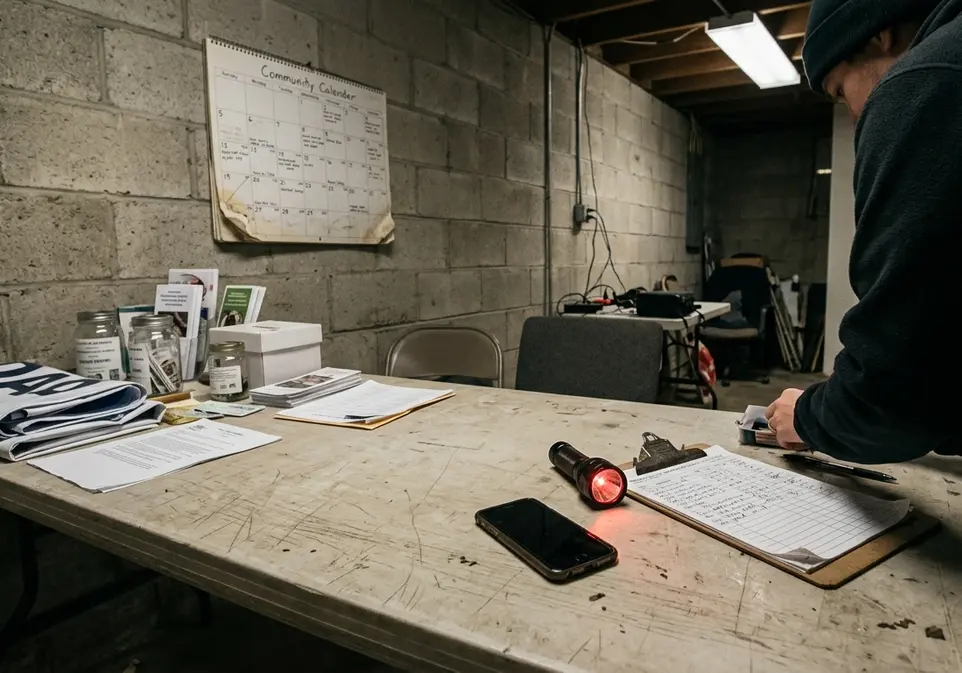
Your standard record should include date, start time, relationship to sunset, cloud cover, wind description, temperature if available, precipitation, moonlight impression, observer position, and nearby disturbance.
Note: Binoculars help only when they stay quiet in your hands. Unfamiliar optics in low light add movement, and movement is exactly what this kit is meant to prevent.
Step 4: Set Your Observation Station and Then Stop Moving
Distance is hard to judge in fading light, so I prefer landmarks over estimates. Use the same fence post, garden bench, driveway edge, or tree line each time. A repeatable station makes later notes comparable.
Choose a place where you are not beneath, beside, or directly in front of the roost opening. Stand or sit sideways to the roost rather than squarely facing it. That small change often reduces the feeling of pressure at the exit.
Pets, children, and extra observers belong only if they can stay still and quiet. If they cannot, they should not be in the immediate area.
Do not prompt activity
Never shine lights at the roost, tap the bat house, clap, play calls, throw objects, or use flash photography. Those actions do not reveal natural behavior. They create disturbance and contaminate the notes.
Step 5: Run the Dusk Watch the Same Way Every Time
Arrive before expected activity. The aim is to become part of the background before bats emerge, not to enter during the most sensitive window.
Use the pre-watch period well. Write the starting conditions. Confirm that porch conversations have stopped, pets are inside or settled, and lights are not changing. Then wait.
Record the first confirmed bat pass separately from the first confirmed roost emergence. This distinction matters. A bat flying overhead may have come from a neighbor’s tree, a bridge crevice down the road, or a barn gap beyond your view.
What the log should capture
- Time-stamped direction of travel
- Approximate height category
- Emergence from a visible opening
- Return to the roost
- Repeated passes
- Feeding-like turns
- Disturbance events
When individuals cannot be separated, write “at least one” or “several passes.” Exact counts in poor visibility are not careful. They are invented precision.
What to Record: Useful Notes Without Pretending You Know More Than You Do
The field notes need a hierarchy. Without one, interpretation sneaks into the page as if it were observation.
Use three confidence levels
- Confirmed: directly seen events, such as a bat exiting a known opening or passing a fixed landmark.
- Likely: reasonable but unconfirmed interpretation, such as apparent foraging loops or possible re-entry.
- Uncertain: events affected by poor light, overlapping silhouettes, wind-blown leaves, swallows seen earlier in the evening, or insects near lights.
A simple note structure works: time, location in the site sketch, behavior, confidence, and notes. That is enough.
Species identification by silhouette stays off the page unless the observer has appropriate training and conditions are unusually clear. Otherwise, write “bat,” describe the behavior, and keep the claim small.
Stop Signals: When Ethics End the Watch
The stop decision is behavioral, not time-based. If bats show signs that your presence has changed the evening, the watch ends.
Red flags include non-emergence after repeated human approach, abrupt returns to the roost, unusual circling at the exit, light-driven agitation, and activity disrupted by people, pets, or noise.
Pack up quietly. Do not walk to the roost to “check.” Do not shine one last light. The last act of a low-disturbance watch is leaving without making the roost explain itself.
Keep in mind that you should never handle bats barehanded. Keep pets away from grounded bats. A bat in a living space or an injured bat moves the situation out of observation and into a call to local wildlife or public health professionals.
Read Results Carefully
Here is the example I see most often in community notes: an observer watches repeated overhead passes for three evenings and writes “colony confirmed.” The entry feels reasonable because the activity repeats. It is still too strong.
If no bat was seen emerging from or re-entering the opening, the notes support “bats observed foraging over garden” or “bat activity recorded near suspected roost.” They do not support “colony confirmed.”
A quiet night deserves the same caution. Zero activity does not prove abandonment. Weather, season, reproductive stage, insect availability, and viewing angle can all suppress detection on a given evening.
This is where discipline protects both the bats and the record. Repeated activity near a feature does not prove occupancy. Without directly observed emergence or re-entry, the strongest defensible statement is “activity in the area.”
When to Call for Help
A non-invasive watch is not a population estimate, health assessment, species inventory, or exclusion plan. It is a way to observe without making the roost worse.
Call qualified help when the situation involves bats in occupied living spaces, suspected maternity roost conflicts, grounded or injured bats, potential rabies exposure, construction near an active roost, or protected-species legal questions.
Acoustic detectors, thermal cameras, and formal emergence counts can support standardized work, but they need trained interpretation. In untrained hands, they can generate confident-looking data that outruns the observation.
For broader monitoring context, national efforts such as the North American Bat Monitoring Program show how careful bat work depends on consistent methods and cautious interpretation.
For this narrow purpose, the method favors restraint over certainty.
A Repeatable Field Template
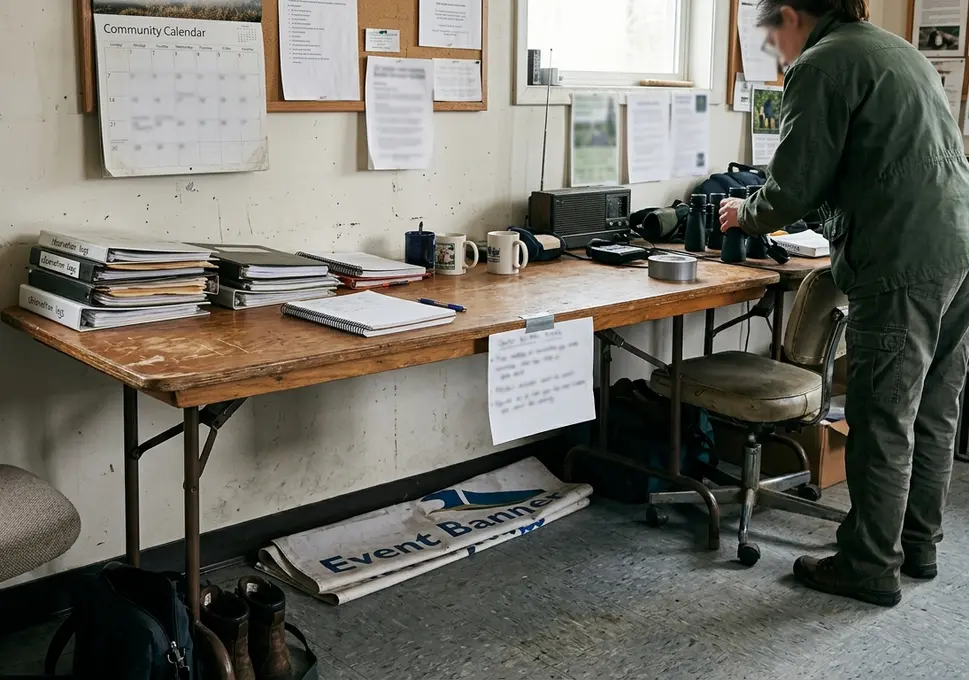
Use the same order every time. The template keeps the watch grounded when the evening gets interesting.
- Question: What single thing are you trying to learn?
- Site sketch: Mark roost, station, lights, trees, fences, water, and flight corridors.
- Observer station: Name the landmark, not a guessed distance.
- Start time: Record when you settled, before activity begins.
- Conditions: Note clouds, wind, precipitation, moonlight impression, and temperature if available.
- First bat pass: Record time, direction, and confidence.
- Confirmed emergence: Record only if directly seen from a visible opening.
- Disturbance signs: Note people, pets, noise, light changes, or altered bat behavior.
- End time: Leave without approaching the roost.
- Interpretation: Keep the conclusion no stronger than the observation.
Educators using this in school gardens, nature centers, or public programs near places such as the Cranbrook Institute of Science should treat the template as a behavior guide first and a data sheet second. Organization for Bat Conservation (OBC) outreach has long shown that public curiosity can be turned toward stewardship when the rules are clear.
Reuse the template across evenings only when conditions are genuinely similar. A calm warm night and a windy cold night do not tell the same story about a roost. They tell you how much weather can shape what you are able to see.
Summary: Watch from a fixed place, keep the claim small, and let normal bat behavior be the measure of a good night.


Join the Conversation
No comments yet.
Join the Discussion