
Bats Hunted Above Plants Long Before Garden Sprays
Insect-eating bats hunted over vegetation long before modern garden pesticides existed. That history gives a familiar evening scene some depth: moths move above vegetable beds, a bat cuts across the fading sky, and a gardener watches from the path with good reason to welcome it.
The harder question waits until daylight. Did that hunting change what happened to the crop?
Take a raised bed of brassicas. Adult moths may cross the bed while bats forage overhead; later, caterpillars may chew the leaves. Connecting those events requires attention to prey identity, insect development, and fresh feeding damage. A bat sighting starts the inquiry.
I keep the garden record organized around the distance between an overhead flight and a spray bottle. Each step needs its own observation: hunting activity, relevant prey, pest presence, crop injury, and the eventual management decision. That approach gives bat conservation a practical place in garden pest ecology while keeping the crop itself in view.
Which Moths and Beetles Matter to the Vegetable Bed?
A useful prey record connects a consumed insect to a locally relevant crop pest. “Moth” or “beetle” offers a starting category; a closer identification can reveal whether the insect has a damaging life stage associated with the plants being grown.
For the brassica bed, the distinction between adult and larva matters immediately. A flying adult moth and a leaf-chewing caterpillar occupy different places in the damage sequence. Removing an adult before egg laying could interrupt that sequence. Existing caterpillars, meanwhile, remain a scouting concern.
Match the Insect to Its Damaging Stage
Record the closest identification the observation or dietary method supports. Then ask which life stage feeds on the crop, whether that pest occurs locally, and whether its timing fits the garden observations. Beetle records need the same scrutiny: the group name alone says little about consequences for a particular planting.
Keep adult moth presence and larval feeding in separate fields. This preserves the developmental gap between an insect flying over a bed and damage appearing on its leaves. It also prevents every moth seen at dusk from becoming an assumed brassica pest.
What Bat Passes, Feeding Buzzes, and Diet Records Count
Different field monitoring methods answer different questions. Choose the question before buying equipment or adding another column to the notebook.
- Direct dusk observation: records visible bat activity during a defined watch. Note where bats travel and whether they repeatedly circle the bed.
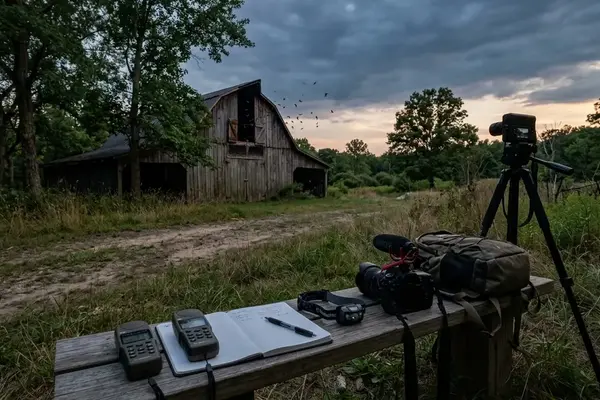
- Acoustic monitoring: records detected calls during the observation period. Use a consistent detector position and recording window when comparing sessions.
- Terminal feeding buzzes: capture the rapid call sequences associated with attempted prey capture. Keep these separate from ordinary passes.
- Dietary identification: examines consumed prey. Molecular analysis of droppings can identify insect taxa through their DNA.
- Prey biomass estimates: address the amount of prey consumed, a different question from whether a particular insect appears in a dietary sample.
Bat passes measure detected activity rather than insects eaten, so keep pass counts separate from pest-control outcomes. A circling bat can generate repeated recordings.
Keep Sample Collection With Researchers
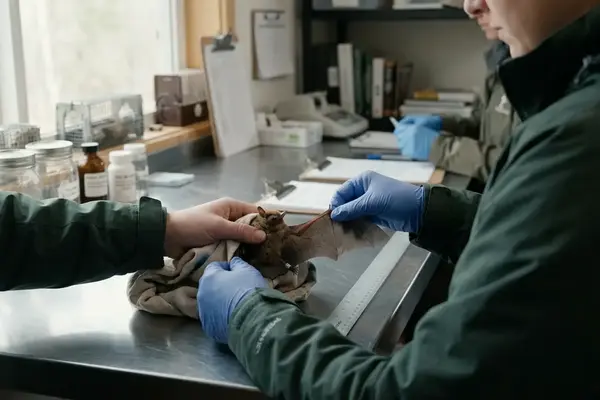
Confine homeowner monitoring to visual or ultrasonic dusk sessions and daytime plant inspections. Leave guano DNA sampling beneath roosts to permitted wildlife researchers, without handling bats or disturbing occupied cavities.
Read dietary results with the same discipline used for field notes. A prey occurrence identifies something consumed; a biomass estimate addresses how much. Neither belongs in the notebook under “leaves saved.”
Trace the Route From Night Flights to Brassica Damage
The assessment runs through a sequence: bat activity, consumption of relevant prey, pest abundance, crop injury, and pesticide use. A useful garden record keeps those observations distinct while making their timing easy to compare.
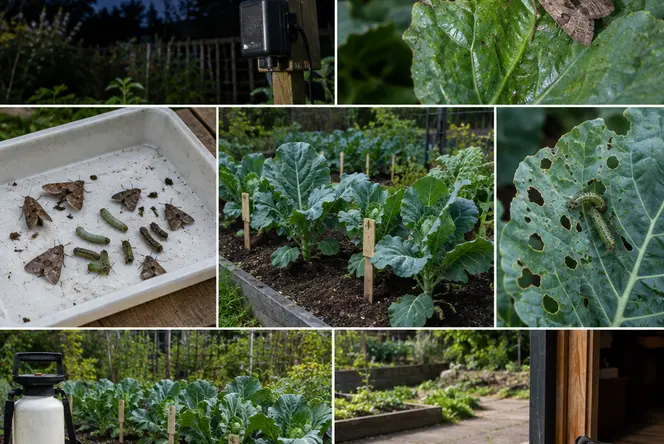
Mark the same brassica plants for repeat inspections. Check their leaves consistently, including the undersides, and distinguish newly chewed tissue from older feeding scars. Returning to the same plants makes a change in damage easier to interpret than inspecting whichever leaf first catches the eye.
Keep Separate Entries for Each Link
- Dusk bat passes: record observed or detected activity during the watch.
- Terminal feeding buzzes: record acoustic evidence of capture attempts separately.
- Adult moth presence: note insects near the crop without assuming their identity.
- Fresh larval feeding scars: track new injury during subsequent inspections as insects develop.
- Delayed spray applications: record the decision, its reason, and the next inspection.
Alongside these entries, note season, weather, crop growth stage, other predators, and pest-management actions. Cool or wet conditions can change both insect flight and bat activity. A newly installed crop barrier also changes the interpretation of later leaf damage.
The notebook becomes more useful when an apparent improvement prompts a question: what else changed in this bed?
Let Fresh Crop Injury Set the Spray Decision
A moth above the brassicas is a reason to inspect. Start with pest identification, examine current damage, and assess the plant’s condition before choosing a response.
Compare fresh chewing with the earlier inspection. Look for eggs or young larvae on leaf undersides. Record whether injury is spreading and how the affected leaves relate to the part of the crop being harvested. These observations give a delayed treatment a practical basis and a clear review point.
Give a Spray Delay a Follow-Up
If inspection supports waiting, write down the reason and schedule the next check. Repeated observations of pest presence and fresh injury can support delaying or avoiding a routine application. Record any later treatment just as carefully, including the pest and crop condition that prompted it.
Bat conservation belongs alongside crop inspection, physical barriers, and targeted garden management. Maintain dark travel routes by switching off unnecessary exterior floodlights or using motion-controlled lighting. Keep bat roost habitat and flight access in view when arranging garden infrastructure.
For education outreach, explain the distinction clearly: welcoming bats supports species conservation; checking leaves guides the immediate crop decision. Both activities belong in responsible stewardship.
Separate Monitoring Effort From Garden Outcomes
A detector purchase, an evening watch, and an undamaged leaf represent different kinds of entries. Separating them makes the practical costs of stewardship easier to understand.
Record Time by Its Purpose
- Bat observation: log time spent watching or recording, plus time reviewing acoustic files. Pair this effort with activity observations.
- Plant inspection: log scouting time and the marked plants examined. Pair it with pest presence and fresh crop injury.
- Habitat upkeep: record maintenance of dark routes and bat house stewardship tasks separately from monitoring.
- Management review: record time spent checking earlier entries and deciding whether to intervene.
Separate spending in the same way. Optional acoustic equipment serves activity monitoring. Habitat upkeep serves roost or foraging conditions. Pest-control supplies serve a specific crop-management action. Application records then document pesticide reliance without turning equipment expenditure into an ecological result.
A reusable sheet can hold these categories without becoming an accounting project. The useful comparison is between effort and the question it helps answer. If reviewing recordings consumes the available scouting time, protect the plant inspection first: it supplies the evidence needed for the next crop decision.
Build a Dusk-to-Daylight Record for One Bed
Start with one marked planting bed. Use a roughly 30-minute visual or ultrasonic dusk session and inspect the same 5 to 10 tagged plants during daylight. Treat those choices as a repeatable routine so successive entries describe comparable effort.
Give each entry these fields:
- Date and observation period: identify the dusk watch and its paired plant inspection.
- Weather and crop stage: note conditions and the plants’ development.
- Bat activity: separate visual sightings, acoustic passes, and feeding buzzes.
- Pest identity: distinguish adult insects, eggs, and larvae.
- Fresh plant damage: describe new injury separately from old scars.
- Other influences: note predators, barriers, lighting changes, and habitat work.
- Management action: record treatment, a decision to wait, or continued observation, with the next check attached.
This keeps the evening wildlife watch connected to the leaves, harvest, and management choices that matter in the garden.
Before the next dusk watch, mark your brassica inspection plants and prepare the first record with separate spaces for bat passes, feeding buzzes, adult moths, fresh chewing, and the spray decision.

Join the Conversation
No comments yet.
Join the Discussion