
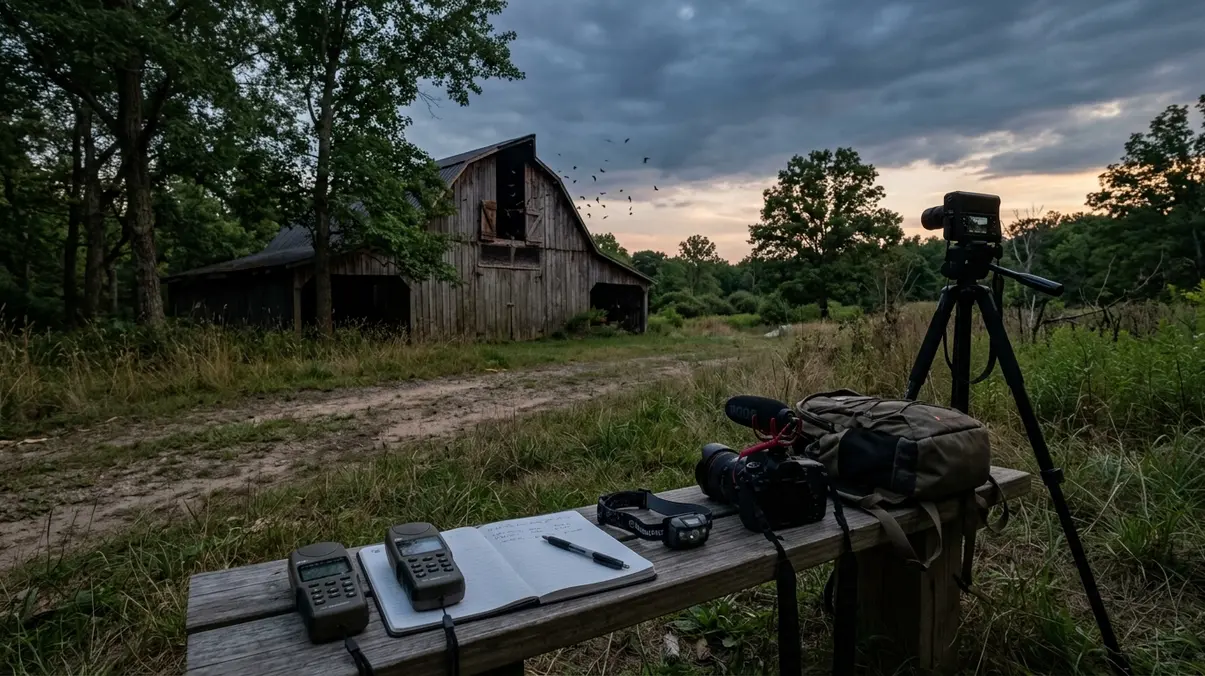
Establishing the Baseline Protocol
A fixed counting protocol produces better results than sharp eyesight or improvised teamwork. When two people watch one gable vent with no shared rules, the disagreement almost never comes from eyesight. It comes from one person subtracting re-entries in their head and the other ignoring them, or one starting at sunset and the other at first flight. Six recurring error sources drive the structure of a workable survey. These include unmapped secondary exits, light falling below the silhouette threshold, bats circling the eaves before departing, re-entry within the count window, observers changing tally rules mid-session, and adjacent counters sharing a sightline on openings less than 3 meters apart.
Visual emergence counts give a usable baseline, but they undercount colonies in complex structures with concealed internal voids. The usable silhouette window at temperate latitudes runs from roughly 10 minutes before official sunset until 45 to 60 minutes after—after which most exits fade into the darkness and can no longer be resolved against the sky without optics.
Daylight Scouting and Equipment Selection
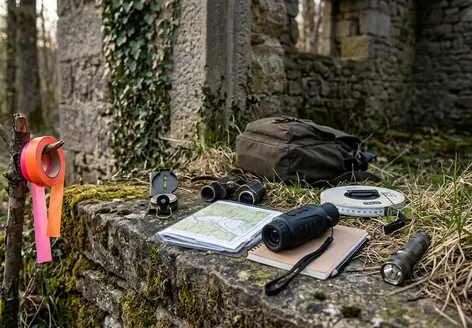
Scouting requires a separate daylight visit 24 to 72 hours before the count. Walking a building perimeter with a torch 20 minutes before emergence guarantees observers will discover a second exit too late to staff it. The working order involves photographing each elevation in full daylight. Mark every crevice, soffit gap, ridge-tile lift, vent grille, and bat-house chamber slot on a printed map.
Pack a specific kit for each team. Bring one 4-digit mechanical hand tally counter per observer, a weather-resistant clipboard, and pencils. Ink fails in drizzle. Carry a single agreed timepiece, a printed protocol form plus one spare, a red-filtered headlamp used only for footing and paperwork, and a silenced charged phone for the emergency contact.
Preventing Inflated Site Totals
The characteristic failure of this survey is double-claiming. Two volunteers watching soffit vents barely 2 meters apart, sharing one patch of western sky, each log the same bat that loops the gable twice before leaving. The site total inflates without either observer noticing anything went wrong.
Aligning with Regional Monitoring Windows
Scheduling defers to the receiving project first. Where a regional monitoring scheme supplies its own window, that window governs. Several programs have revised their volunteer protocols in recent years specifically to make counts comparable between sites. A locally invented schedule breaks that comparability. Standardized timing is what lets records from different roosts sit side by side in one dataset.
Arrive 30 to 45 minutes before official sunset. Begin the tally 15 minutes before sunset. Close the session after 10 consecutive minutes with no outward flight or at 75 to 90 minutes past sunset, whichever comes first. In temperate North America, the maternity-season structure supports two distinct sampling windows. The first runs roughly late May to mid-June before pups fly. The second spans mid-July to mid-August once juveniles are volant.
Record baseline conditions on arrival and again at the count's end. Note the date, official sunset time for the site, start and stop clock times, air temperature, cloud cover in eighths, wind, and precipitation. Counts made under sustained wind above roughly 16 to 19 km/h, in steady rain, in smoke haze, or with air temperature below about 10°C are flagged as non-comparable.
Positioning for Clear Silhouette Views
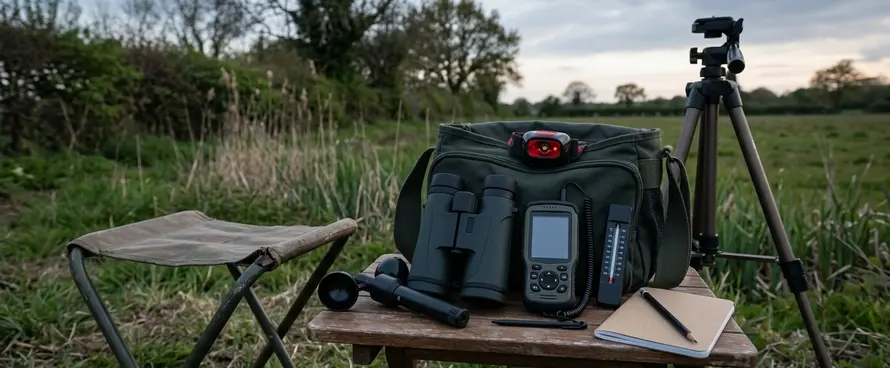
Placement is decided on the scouting visit and drawn onto the exit map. Arguing about angles in fading light costs the first minutes of emergence. Give each observer one opening and an explicit viewing boundary—a downpipe, a window reveal, or a fence post. Beyond this mark, bats belong to the neighboring counter.
Stand 5 to 10 meters back from the exit and offset 30 to 45 degrees to one side. Stay low enough to hold the opening and the first two seconds of flight in one view. Use the brighter western or north-western sky behind the exit where site geometry allows. That angle gives the contrast needed to pick out fast-moving silhouettes.
One observer may cover two openings only if both fall within a single 60-degree field of view and are at least 3 meters apart. Take positions and stop moving 15 to 20 minutes before sunset. Keep white light, camera flash, pets, and foot traffic outside a 10-meter radius of the opening for the whole session.
Tallying Outward Crossings
Record ambiguity directly on the sheet; avoid resolving it silently in your head. Observers commit to one tally method at the start. Choose a mechanical counter or a five-bar gate on paper. Switching mid-session loses the running total. Count a bat at the moment it clearly crosses outward from the assigned opening into open flight.
The recorder marks the tally at 5-minute intervals from the start time. Annotate each interval with context. Note a vehicle sweeping headlights across the wall, a person walking under the exit, or a predator such as a cat or owl present. Peak emergence at many temperate roosts falls within 15 to 35 minutes after sunset. This is when bursts too rapid to resolve are most likely. Bracket these moments and label them 'rate exceeded, count is a floor for this interval'.
At close, each observer states their own total aloud before any discussion. The recorder writes all totals separately.
Documenting the Field Context
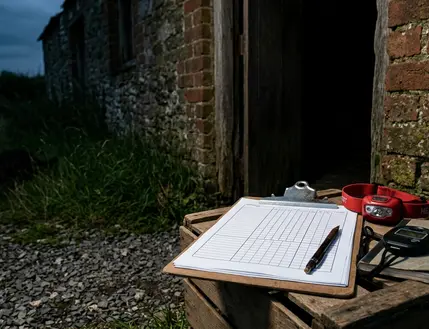
The field sheet ensures the raw tally remains unedited by later reflection. Fill columns for outward count, re-entry, and interval notes in pencil at the roost. A separate comments block, completed after the session ends, holds interpretation, corrections, and anything the observers agreed on during the debrief. Zero counts are entered on a full sheet with all conditions recorded. They document that monitoring occurred even when no emergence was observed.
Every sheet carries specific details. Include the roost type, the specific opening identified by the scouting map label, observer names and positions, assigned roles, start and stop times, sunset time, weather fields, outward tally, re-entry log with times, unresolved events, and a one-line confidence code. Code confidence as clear view, partly obstructed, or highly uncertain with a stated reason such as 'branch across lower third of exit from 21:14'. Avoid numeric error margins. Write up sheets within 12 to 24 hours of the count while interval notes are still legible in context.
| Field | What to enter | Worked entry |
|---|---|---|
| Site & roost type | Property reference plus structure type | Rear garden, south-facing bat house, three-chamber |
| Opening observed | Specific exit mapped during daylight scout | Bottom slot, primary chamber |
Defining the Count Boundary
What the sheet can honestly claim ends at the roost skin. The figure covers outward crossings of the mapped openings inside the recorded clock window. Bats that stayed in for the night, slipped through an unmapped ridge-tile lift, or departed during the seconds a car's headlights washed out the wall sit outside the number entirely. File the result as a minimum observed emergence.
Data Submission and Seasonal Repetition
Choose submission targets before the first count. Databases differ in required fields, and a form designed around the wrong scheme forces retro-fitting. Prioritize an established regional bat monitoring scheme first. A project-specific roost register comes second, and a general biodiversity recording platform ranks last. Enter the observed total exactly as tallied.
Retain the original paper sheet or unedited digital capture for at least 3 to 5 years. This allows a transcription error found in the database to be checked against the field record. Two counts per seasonal window on separate nights within a 5 to 7 day span yield trend information that is easier to interpret. Repeat these in the same windows across successive years.
Commit to the exact same observation stations and timing windows year over year. Standardizing your physical position and calendar dates removes the largest variables in field data, so a drop from 62 bats one July to 30 the next reads as a change in the colony rather than a change in where you stood.






Join the Conversation
No comments yet.
Join the Discussion