
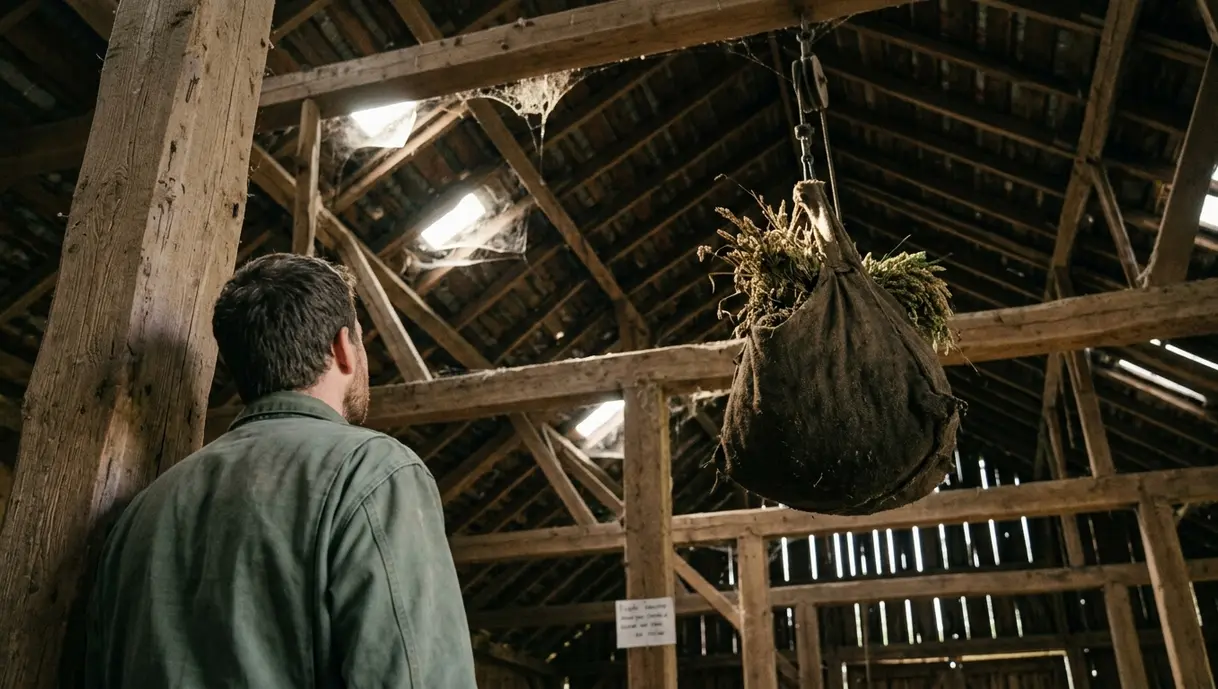
How Mosquitoes Took the Headline While Crop Moths Stayed Hidden
For decades, the public case for backyard bats rested on mosquitoes. Mid-century feeding trials placed captive bats in enclosures stocked with a single prey species. Outreach materials later carried the resulting consumption claim into garden-center brochures and bat house packaging, especially from the mid-1990s through the mid-2010s.
The shorthand was memorable. It also drew attention away from larger nocturnal insects moving through gardens and fields.
A bat crossing tomato rows at dusk may be pursuing the adult hawk moth associated with a later hornworm infestation. Over sweet corn, the target could be a night-flying moth capable of laying corn earworm eggs. Guano DNA work eventually helped bring moths and beetles into public discussions of bat diets, but growers still tend to meet these pests first as caterpillars.
Timing creates the blind spot. Bat emergence in many temperate garden settings begins about 15 to 40 minutes after sunset, with the heaviest foraging during the next 60 to 90 minutes. Many crop-pest moths begin flying in that same window. A gardener may discover hornworm feeding only after the larva reaches its third to fifth instar, roughly 10 to 20 days after an adult laid the egg.
The hawk moth seen on the wing and the stripped tomato stem found later belong to one infestation viewed from opposite sides of the dusk handoff.

The Nighttime Handoff From Adult Moth to Crop-Eating Caterpillar
Growers usually enter the moth life cycle at the damage stage: chewed foliage, frass beneath a tomato plant, or kernels eaten at the tip of an ear. Rewind the sequence and the connection becomes clearer. An adult moth flies, lays eggs, and dies. The eggs hatch into larvae, the larvae feed and grow through several instars, and mature larvae pupate before emerging as adults.
Insect-eating bats generally pursue the winged adult. They do not pick hornworms from tomato leaves.
Tomato hornworms are larvae of five-spotted hawk moths, while tobacco hornworms develop into tobacco hawk moths. Hornworm larvae feed for about three to four weeks before dropping into soil to pupate. Overwintering pupae may remain there from roughly September through May; emerging adults often fly during the hour after sunset.
Corn earworms follow the same broad sequence on a faster summer schedule. At 25–30°C, eggs hatch in about two to four days. Larvae pass through five or six instars over roughly 14 to 25 days, then pupate in soil for about 10 to 25 days. Two to four generations may occur during one growing season.
Count Adults Carefully
Intercepting a reproductive moth can remove one egg-laying adult from the crop environment. It cannot be translated into a guaranteed number of saved tomatoes or corn ears. The moth may already have laid eggs, and many other forces shape larval survival.
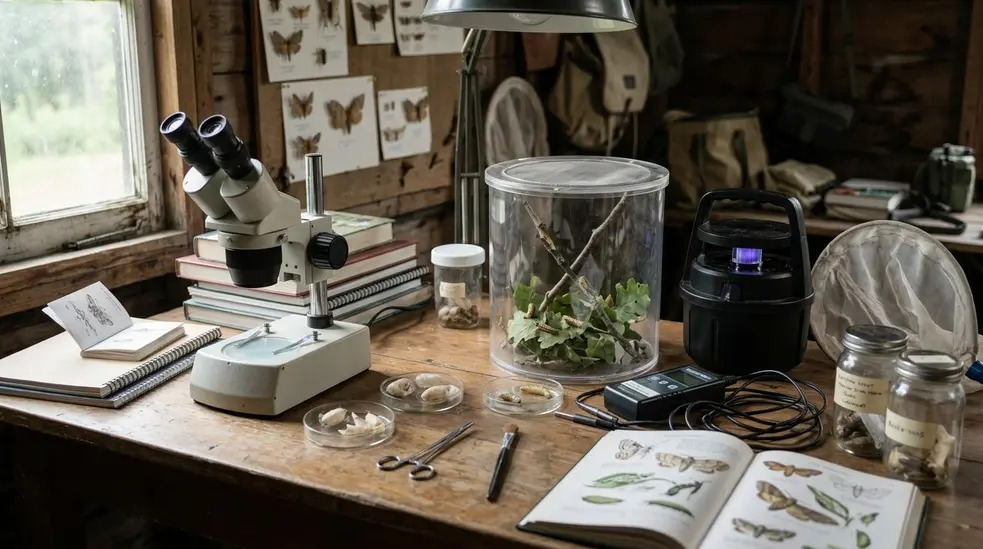
Where Bat Predation May Enter Two Familiar Pest Cycles
The practical question is precise: which flying stage is available to a bat, and how does that stage relate to the damage found during daylight?
| Pest noticed by the grower | Flying adult stage | Typical plant damage | Possible point of bat predation |
|---|---|---|---|
| Tomato hornworm | Five-spotted hawk moth | Rapid loss of tomato foliage, clipped shoots, frass, and occasional fruit feeding | Adult flight around dusk, before or during egg laying |
| Tobacco hornworm | Tobacco hawk moth | Heavy feeding on tomato and related plants | Adult nocturnal flight through growing areas |
| Corn earworm | Night-flying corn earworm moth | Feeding through silks and destruction of the tip 2–5 cm of an ear; fruit damage can occur on tomatoes | Adult movement and egg-laying flights near susceptible crops |
Separate the Two Hornworms
Tomato and tobacco hornworms are commonly confused. Tomato hornworms carry about eight V-shaped white marks and a dark horn. Tobacco hornworms usually show about seven diagonal white stripes and a reddish horn. Their adult moths span roughly 90–120 mm across the wings, placing them among the larger prey items a small insectivorous bat might attempt.
Corn earworm moths lay eggs singly. A female may deposit several hundred to a few thousand during an adult flight life of roughly 10 to 14 days. Bat predation enters this cycle during adult flight; crop scouting still has to detect eggs and larvae already present.
How Echolocation Turns Crop Edges Into Hunting Space
A foraging bat emits calls and reads the returning echoes from vegetation, ground surfaces, and moving insects. The pursuit unfolds in phases. Search calls commonly run at about 5–15 per second. Once a target draws attention, the call rate rises through the approach and compresses into a terminal buzz of roughly 150–200 pulses per second during the final fraction of a second before an attempted capture.
Attempted matters. Many noctuid moths possess tympanal ears that can register an approaching bat at 20–30 metres. They may turn or dive before the bat, whose effective detection range for a moth-sized target is commonly around 3–10 metres, has locked on.
Garden structure changes the contest. Open-air foragers crossing fields tend to use lower, longer calls in the 20–40 kHz range. Species adapted to hedgerows and cluttered beds use shorter, higher calls that can exceed 100 kHz. Wing shape and flight behavior also influence whether a bat works above an orchard, along a crop edge, or between dense plantings.
I treat a hedgerow as both habitat and flight geometry: it can hold insects, shelter movement, and form a navigable edge. That still gives no basis for assuming every passing bat is feeding on the pest currently troubling the crop.
What Bat-Driven Pest Suppression Can Actually Establish
Suppression means one source of pressure on a pest population. It does not promise eradication or replace inspection of leaves, silks, fruit, and stems.
Researchers approach the relationship through several methods, each with a firm inferential ceiling. Full-spectrum acoustic recorders may run from sunset to sunrise for roughly 5–10 nights per site in a season. Their files reveal bat activity and foraging buzzes. They cannot identify the prey species captured.
Guano analysis addresses diet more directly. A typical workflow may pool 20–50 pellets from a roost or capture event and amplify a mitochondrial COI fragment roughly 150–180 base pairs long. That genetic material can identify insects consumed, while leaving unanswered how many came from a particular garden or field.
Exclosure comparisons test local outcomes by changing animal access to plots. Published agroforestry and row-crop work has sometimes run these comparisons over two or three consecutive growing seasons, with netting opened at night and closed by day, or the reverse. The result remains tied to that crop, season, bat community, and plot design.
Scale Sets Meaning
A result from tropical cacao or large-acreage corn reaches a fenced vegetable garden as a hypothesis. Small experimental cages, local pest complexes, and different bat assemblages limit how confidently the effect size can travel.
This evidentiary boundary matters when discussing work associated with bat conservation institutions such as the Organization for Bat Conservation (OBC) and the Cranbrook Institute of Science. Roost activity, diet evidence, and crop outcomes answer separate questions; combining them carelessly overstates the case.
Make the Garden Safer for Bats While Scouting the Crop
Start with habitat that already functions. Preserve an established roost tree where it can remain safely, reduce unnecessary nighttime lighting, and retain useful vegetation structure around growing areas. These measures protect existing routes and shelter without waiting for bats to accept a new box.
Place a Bat House for Occupancy, Not Instant Control
A bat house adds potential roosting space. Occupancy depends on construction, solar exposure, local climate, surrounding flight space, placement, and time. General installation benchmarks include a height of 12–20 feet on a pole or building wall, about 6–8 hours of direct sun, interior chamber spacing near three-quarters to one inch, and clear drop space beneath the entrance.
A well-sited box may take one or two full summers to gain occupants. Leave it through at least two complete seasons before relocating it.
- Inspect the exterior from the ground for damage or blocked entrances.
- Look for guano accumulation beneath the box.
- Run an emergence count beginning 15–30 minutes after sunset.
- Repeat ground-based checks monthly from roughly May through August.
- Avoid opening, probing, or handling the box, especially during the maternity period of about June 1 to August 15.
Roost Evidence Only
Guano beneath a box 15 feet from tomato rows documents roost use. It supplies no earworm count. Habitat stewardship stops where crop scouting starts.
After direct contact between a bat and a person or pet, contact the local health department or animal-control authority within 24 hours. Do not release or discard the animal because testing may be required.
Start With One Dusk Check Before the Next Pest Treatment
Daylight damage and nighttime moth flight should be read together. A late-instar hornworm on a stripped stem presents a different treatment target from an adult moth laying eggs over healthy plants.
Scout leaves first, followed by fruit, corn silks, and stems. Identify the pest and record its stage: egg, early instar, late instar, pupa, or flying adult. Mark where damage appears fresh. During the four- to six-week period when ears are silking or fruit is sizing, repeating this crop check twice weekly helps catch infestations while larvae remain in early instars.
Then conduct a 10- to 15-minute dusk watch. Begin roughly 15 minutes before sunset and continue, if needed, into the first 30 minutes after sunset. Note moth flight and bat passes separately; one observation establishes activity, not a confirmed predation event.
Before applying the next pest treatment, write down the insect, its life stage, the fresh damage location, and what crossed the plot at dusk.





Join the Conversation
No comments yet.
Join the Discussion