

Why Are Bats So Easy to Misunderstand?
What if the animal people fear most in their yard is actually doing quiet, essential nighttime work? Most homeowners encounter bats only as fleeting silhouettes at dusk. This observation gap makes the animals incredibly vulnerable to exaggerated stories and misplaced panic.
Bats active near homes are typically seen in the 20-40 minute window after sunset. Insect activity peaks during this time, but the light is too low for clear identification. North American homeowners encounter roughly 40 or more bat species across the continent. However, most yard sightings involve just a handful of common insectivorous species.
We focus on separating common myths from practical homeowner decisions. You can protect your household without dismissing legitimate safety concerns or harming local wildlife.
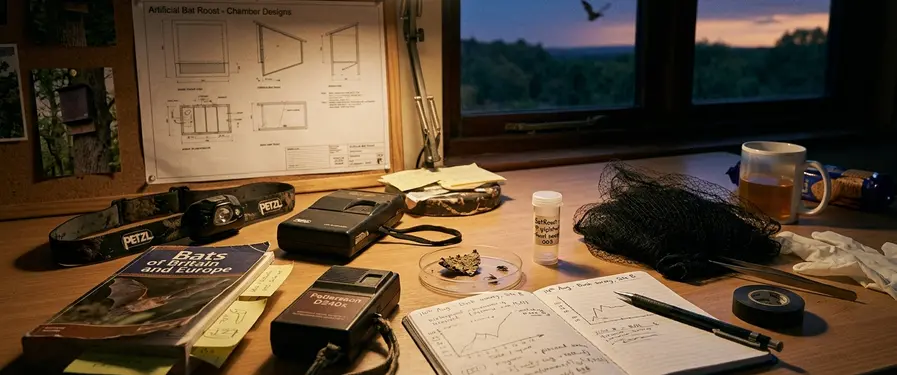
Myth 1: Every Bat Is Rabid or Looking for Trouble
Bats, like other mammals, can carry rabies. The responsible takeaway from this fact is caution, not panic. Public health post-exposure decisions are highly time-sensitive. Rabies post-exposure prophylaxis is most effective when initiated promptly after a potential exposure rather than delayed for days.
Consider a common scenario: a bat is found flying in a bedroom where someone slept. Often, the incident is dismissed as harmless because no bite is visible. This misses a critical safety threshold. Bat teeth can leave marks too small to notice. Therefore, CDC guidance on bats and rabies treats a bat found in a room with a sleeping person, a child, or anyone unable to reliably report contact as a possible exposure.
Note: Never handle a bat with bare hands. Rabies prevalence in bat populations varies by region and species, so local public health authorities—not a national average, should drive any individual exposure decision.
Myths 2–4: Bats Are Blind, Tangle in Hair, or Are Just Flying Rodents
The phrase "blind as a bat" is entirely inaccurate. Bats have functional eyes. Many also use echolocation, emitting calls and reading the returning echoes to map obstacles and prey in total darkness. When a bat makes a close pass near your head in the yard, it is navigating and hunting insects, not attacking.
The persistent myth about bats tangling in human hair stems from a misunderstanding of this rapid flight. People observe close aerial turns and assume the animal is out of control or targeting them. In reality, the bat is simply tracking a mosquito or moth that happens to be near you.
Furthermore, bats are not rodents. They belong to their own distinct mammalian order called Chiroptera. The two lineages are not closely related despite a superficial similarity in size.
Myth 5: If Bats Are Near Your House, You Have a Problem
Seeing bats overhead at dusk is normal in insect-rich yards, gardens, wooded edges, and near water. Outdoor foraging is completely different from bats roosting inside a living space, attic, wall void, or chimney.
True roost indicators require physical evidence. Look for droppings accumulating directly below a roofline or soffit gap. Listen for scratching or squeaking from a wall void at dusk. Watch for repeated emergence from the exact same exterior opening night after night.
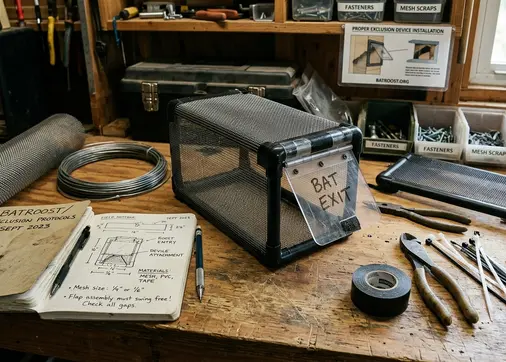
When an indoor roost is confirmed, exclusion is the proven method for removal, but timing is everything. Maternity season, when flightless pups are present, typically spans roughly late spring through midsummer in much of temperate North America. Most regions prohibit exclusion during this window.
In one unfortunate case, a homeowner sealed a soffit gap in early summer to evict a colony. They unknowingly trapped flightless pups inside, causing both animal deaths and a severe decomposition odor in the wall—the exact failure that timed one-way exclusion is designed to prevent. Proper exclusion devices are generally left in place for several days to a week to confirm all bats have left before the gap is permanently sealed.
Quick Tip: Installing a bat house does not instantly relocate an established indoor colony. Occupancy of bat houses can take a season or more, and some installations are never occupied at all.
Myth 6: Bats Are Creepy Pests With No Real Benefit
Vampire bat imagery dominates popular culture, so we must address it directly. Of more than 1,400 bat species worldwide, only three feed on blood. Those specific species are not present in the backyards of most North American homeowners.
Different bat guilds fill distinct, vital ecological roles. Insectivorous species consume vast quantities of night-flying insects. Certain tropical and desert species pollinate flowering plants or disperse seeds. These pollination benefits apply only in regions where those specialized bat species occur; a temperate suburban yard's bats are almost entirely insectivorous.
You will often see insect-consumption and economic-value statistics repeated confidently across websites without traceable sourcing. Because guaranteed numbers are difficult to verify in wild populations, it is more accurate to understand their ecological roles qualitatively. They are primary predators of night-flying insects, providing a natural balance to local ecosystems.
What Online Bat Advice Cannot Diagnose From a Distance
In our programs at the Cranbrook Institute of Science, we frequently receive requests to identify roosts from photographs. An article or a photo cannot determine whether a specific bat exposure occurred, whether a roost is currently active, or whether exclusion is legal and seasonally appropriate in your specific location.
Legal exclusion windows, protected-species rules, and rabies-exposure protocols differ heavily by state and county. The exact same action can be permitted in one jurisdiction and strictly prohibited a short distance away. Conservation framing has a hard limit here: protecting bats does not extend to tolerating them inside a living space where a contact or exposure risk exists.
While our field assessments provide a baseline for typical roosting behaviors, local public health mandates supersede any general wildlife guidance. Always consult licensed wildlife rehabilitators, county public health departments, cooperative extension offices, or qualified exclusion professionals for case-specific decisions.
A Better Way to Think About Bats
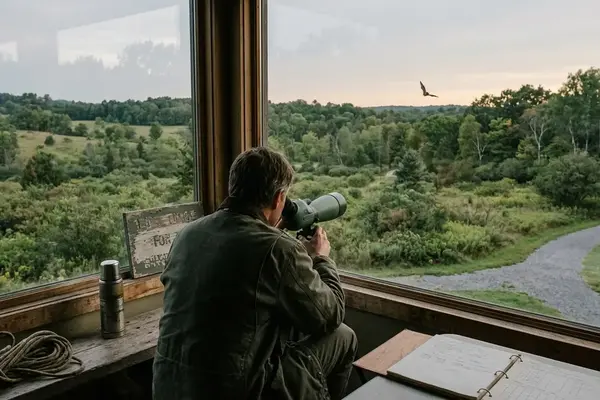
Fear usually grows where observation is missing. By understanding how bats operate, you can replace anxiety with optimal, safe practices for your property.
The required mindset shift is straightforward. Do not touch bats. Do not demonize them. Do not rely on urban legends for household maintenance decisions.
Summary: Keep this short checklist in mind for safe coexistence:
- Observe bats from a safe distance while they forage outdoors.
- Document any possible structural entry points during daylight hours.
- Follow public health guidance immediately for any indoor contact concerns.
- Choose humane habitat practices and hire certified professionals for exclusions.




Join the Conversation
No comments yet.
Join the Discussion