
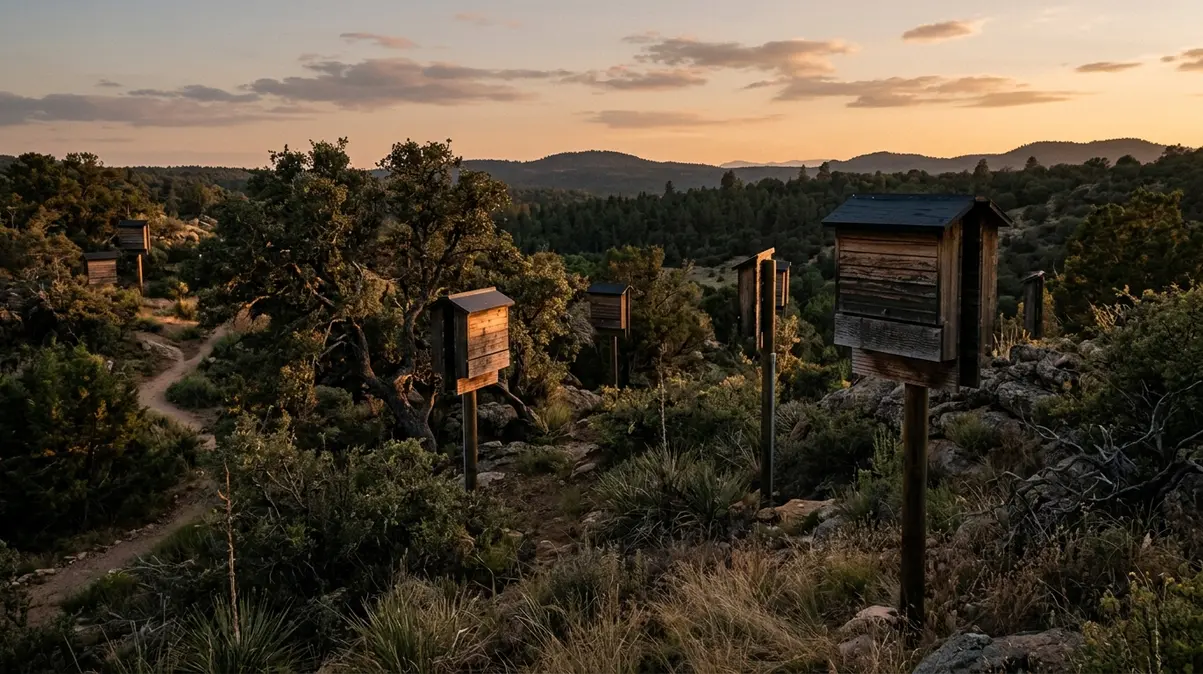
Dark Paint Changes the Heat Arriving at a Bat House
A dark-painted bat house absorbs more sunlight than a light-painted one. When does that extra warmth help a maternity colony, and when does it raise the risk of overheating?
The answer changes over the course of a day. Adults can leave a roost that grows uncomfortable; flightless pups depend on the conditions inside it. A house that warms usefully on a cool morning may keep gaining heat through a hot afternoon. I would judge the site by that daily progression, rather than by a single reading or a promise of an ideal temperature.
Stewards have three practical choices before bats move in: how much sun reaches the house, how much sunlight its exterior absorbs, and how air can move through its existing vents. Those choices interact. A dark finish on a shaded wall and the same finish on a wall exposed through the afternoon create different conditions for the colony.
Sunlight Reaches the Chamber After a Delay
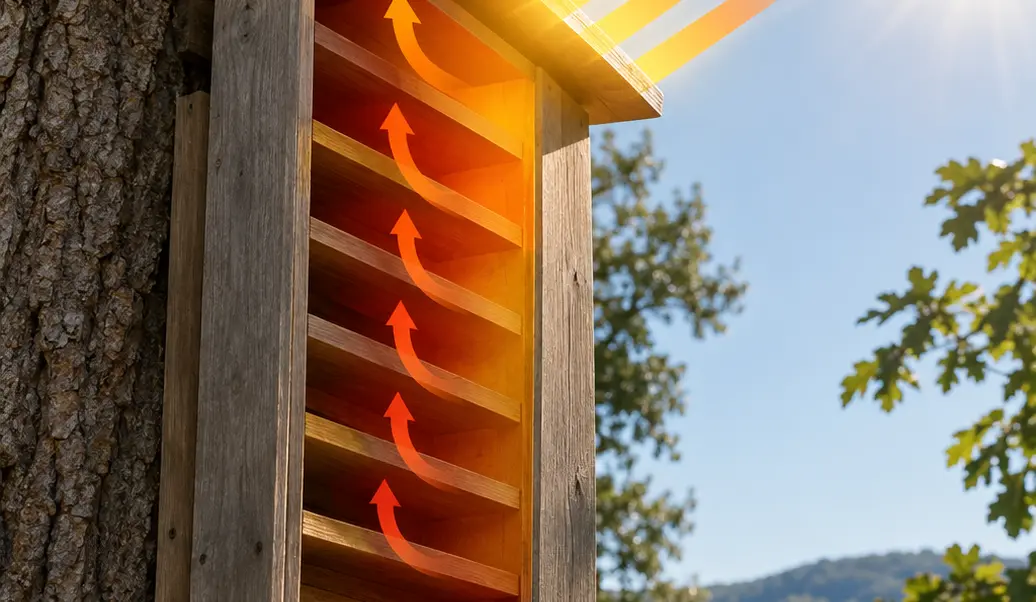
Sunlight first warms the outside surface. Heat then passes through the house material, while the enclosed air and the surfaces bats cling to respond over time. A glance at the wall when the sun is strongest cannot tell you whether the chamber has already reached its warmest point. It may still be heating.
That delay matters most when choosing between mounting sites. Morning warmth can make a house more useful during cooler periods. Prolonged afternoon exposure can keep adding heat when the surrounding air is already warm. The balance depends on climate, season, construction, and the bats using the house, so a universal chamber target would obscure the decision the homeowner actually faces.
Chambers can differ within the same house. Their position relative to the sunlit surface and to an opening affects the warmth and air movement available to bats. Ventilation may provide some relief, but an opening alone cannot guarantee that a house exposed to strong sun will stay comfortable.
Choose Paint and Vents for the Wall You Have
Start at the mounting site, before opening the paint can. Look at nearby buildings and trees. Trace when shade crosses the proposed wall, paying particular attention to the afternoon. Then compare that wall with any alternative mounting position.
On a cooler site, solar warmth may help the house retain useful heat. Where summer afternoons are intense, a dark exterior may add heat at the least helpful time. Exterior color is therefore a choice about local heat and actual exposure, rather than a rule that every bat house should receive the same paint.
Keep the built-in airflow in the decision
Inspect the house’s intended vent openings while it is still unoccupied. They allow air to move through the structure, though more airflow can also carry away warmth during cooler periods. A paint choice cannot compensate reliably for a poor site, and a vent should not be treated as an emergency fix for one.
The useful order is straightforward: assess the wall’s sunlight, consider the local warm season, check the house’s existing vent design, and only then settle on its exterior finish and mounting position. Make any construction changes before occupancy. For wooden, multi-chamber houses, this sequence offers a practical way to compare sites; other shapes and materials can heat and cool differently.
Watch the Shade Line, Not the Occupied Chamber
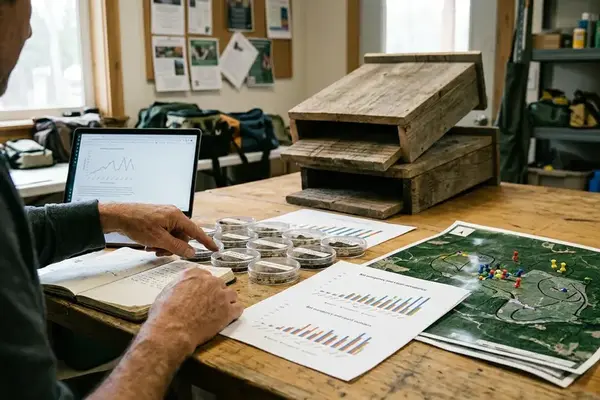
A shade record is the least disruptive place to begin. From the ground, note whether the house receives sun in the morning, around midday, and later in the afternoon. Repeat the observations as the warm season advances. Leaves fill in, and the sun’s path changes, so a wall that looks exposed in spring may have a different shade pattern later.
If chamber temperatures would help answer a specific question, plan a nonintrusive logger installation while the house is unoccupied. Positioning and retrieval belong in an unoccupied period. A thermometer held against the exterior records surface conditions, which are useful context but cannot stand in for the temperature where bats roost.
Occupied Means Observe
Do not open, repaint, or relocate an occupied maternity house as an improvised response to heat. If bats appear to face an immediate wildlife concern, seek appropriate local wildlife guidance while leaving the roost undisturbed.
The notebook still has value when the house is occupied. It can show whether a proposed change to color or placement deserves consideration once the house is empty.
A Garage Wall With Morning Sun: A Placement Plan
Consider a hypothetical homeowner with an unoccupied bat house ready to mount in early spring. A detached garage wall gets morning sun and falls into shade during part of the afternoon. Another available wall stays exposed much later in the day. The homeowner lives in a place with hot summer afternoons.
- Record the garage wall’s shade line. Check it on separate days rather than relying on one visit. Note where the proposed mounting position sits when afternoon shade arrives.
- Compare the more exposed wall. Its longer spell of direct sun could add heat when summer conditions are already hot. Keep the garage wall as the preferred site because it offers morning warmth followed by some afternoon shade.
- Choose the finish before mounting. For this hot-summer example, select a light exterior color rather than adding the heat load of a dark finish.
- Leave the intended vents intact. Check that paint does not obstruct them. Make any design decisions while the house remains empty, then mount it on the garage wall with a clear approach beneath.
- Follow the sun from outside. Note how the shade line shifts as the season progresses. If later observations show excessive exposure, wait until the house is confirmed unoccupied before reconsidering its color or position.
The homeowner can make the first set of decisions with an empty house, a view of both walls, and a shade notebook. Once bats move in, that same notebook guides the next unoccupied-season decision without disturbing pups.

Join the Conversation
No comments yet.
Join the Discussion