
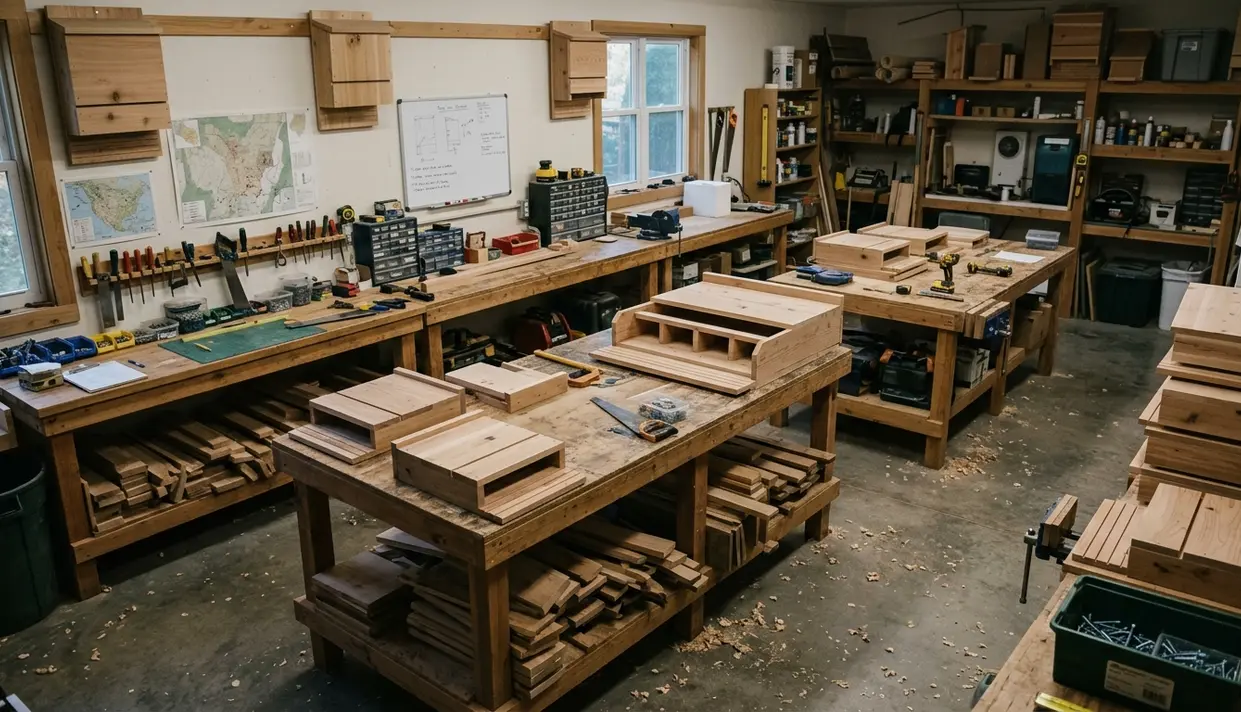
The Empty Bat House Problem Is Usually Not Random
Read emptiness as field evidence
A homeowner mounts a bat house in spring, waits through warm evenings, and sees nothing. No silhouettes. No guano. No quick reward for doing what sounded like the right conservation step.
I have stood under those boxes with people who feel quietly embarrassed by them. The box becomes a little wooden verdict on the wall. It is not.
An empty bat house usually signals a mismatch between the structure and the roost criteria bats weigh: safety, warmth, grip, approach, and surrounding food. That is a better starting point than blaming the bats or replacing the box at random.
This guide treats the empty box as a diagnostic problem. It assumes an outdoor wood or wood-composite roosting box, not an ornamental indoor display piece or a species-specific roost exception. The goal is not instant occupancy. The goal is to remove the avoidable reasons bats pass it by.
First, Make Sure You Are Not Calling It Too Soon
Patience is part of the method
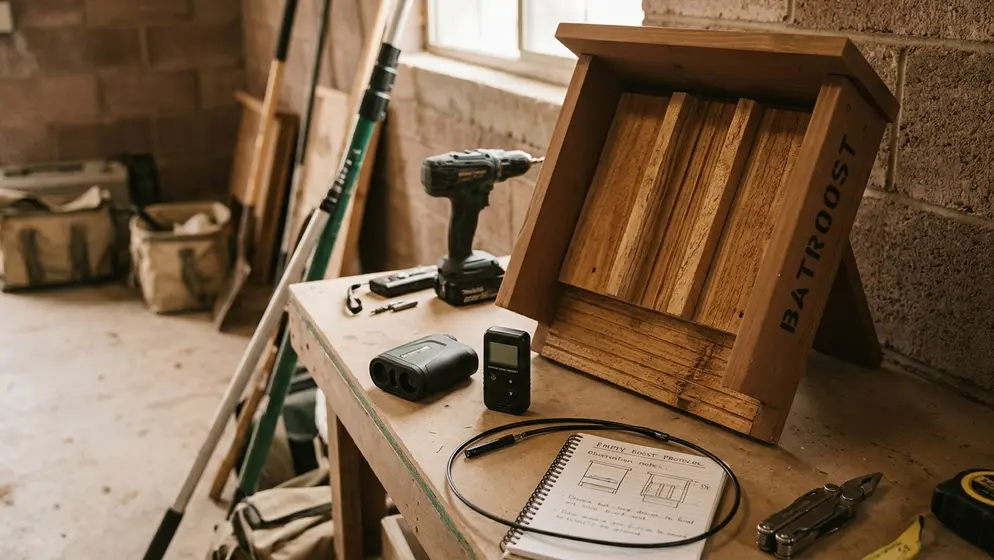
Many newly mounted houses see no use across their first full warm season, roughly April through September in temperate regions. Bats are cautious about new roosts, and they may already have a serviceable place nearby: a building crevice, dead tree, bridge joint, or rock crack.
That matters because a new bat house asks an animal to change a habit that already keeps it alive.
Bats commonly take one to two full seasons, and sometimes three, to adopt a new roost even when placement is sound. Before moving anything, establish a baseline. Watch the half hour after local sunset during warm active months. Look below the entrance for accumulating guano. Check the lower front edge for staining where bats may have crawled in and out.
Quick Tip: Do not tap the box, shine a light into the slot, or open it to check. A distant evening watch and daylight ground inspection tell you more while causing less disturbance.
The patience window stretches longer where established roosts already sit nearby. In that case, silence may mean the box has not yet become useful, not that it never will.
The Biggest Culprit: A Roost That Does Not Warm Correctly
Temperature drives many occupancy decisions
For maternity colonies raising young, warmth is not a comfort feature. It is roost function. A box that chills quickly after sunset can cost pups energy. A box that bakes in a hot southern afternoon can create the opposite problem.
Placement aiming for at least six to eight hours of direct sun is a common starting target in cooler regions. That target fails, though, if the sun never actually reaches the box face. I have seen a north-facing box repainted dark after a season of no activity. The paint changed the surface color, but the wall still sat in chronic shade. Relocation was the missing fix.
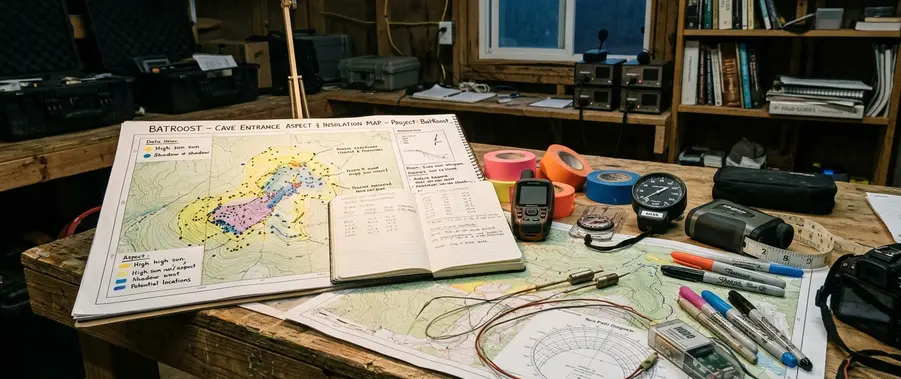
Map the sun before you move the box
Survey the site across one clear day: morning, midday, mid-afternoon, and early evening. Note when sunlight first hits the box, when shade from rooflines arrives, whether trees block the warmest hours, and how wind moves through the mounting area.
Deep shade, north-facing exposure in cooler regions, dense canopy, and building shadows all reduce the chance that the interior will hold warmth. A single-chamber box and a four-chamber box installed side by side can differ enough in thermal performance that one holds a maternity group while the other remains empty.
Note: In very hot southern climates, the advice can invert. Full afternoon sun on a dark box can overheat pups, so partial shading or a lighter exterior color may be the protective choice.
Bats Need a Clear Drop Zone and a Safe Approach
They do not enter like birds
A bat house is not a nest box with wings. Bats need room to drop, beat their wings, and swing onto the landing surface. If shrubs, wires, branches, or fences crowd the entry, the house may look usable to a person and risky to a bat.
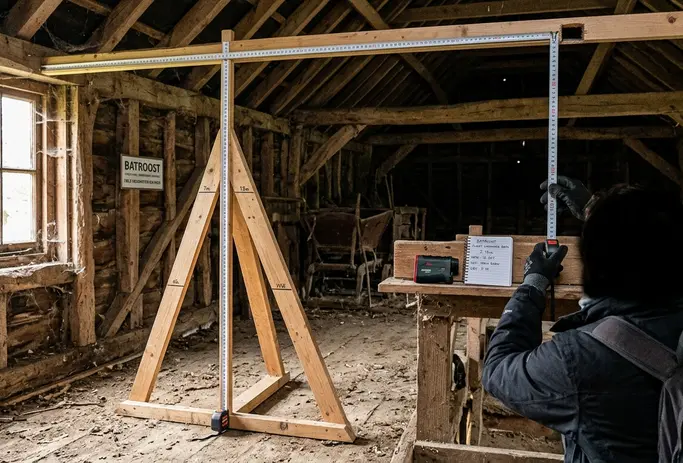
Mount the box so the entrance sits roughly 12 to 20 feet above ground, with several feet of clear vertical drop below it. Keep a zone extending at least 10 to 15 feet in front of and below the entrance free of shrubs, branches, and wires.
Stand below the box and look up. Then step back and look at the approach path. Could a bat leave cleanly? Could it return without threading through leaves or dodging a fence rail? That simple field test catches many problems.
Predator routes count too
Cats wait at the base. Raccoons climb. Snakes use rough surfaces and nearby vegetation. A tree mount may put the box in shade and give predators access. A pole mount can work better, but only if the pole stands clear of jump-off points and uses a predator baffle.
An unbaffled pole beside a wooden fence fails the same way a poor tree mount fails. The fence restores the climbing route the pole was meant to remove.
Sometimes the Box Itself Is the Problem
Decorative is not the same as functional
Once placement looks reasonable, inspect the box. Many attractive novelty bat houses lack the features that make a roost usable. The issue is not taste. It is physics, weather, and grip.
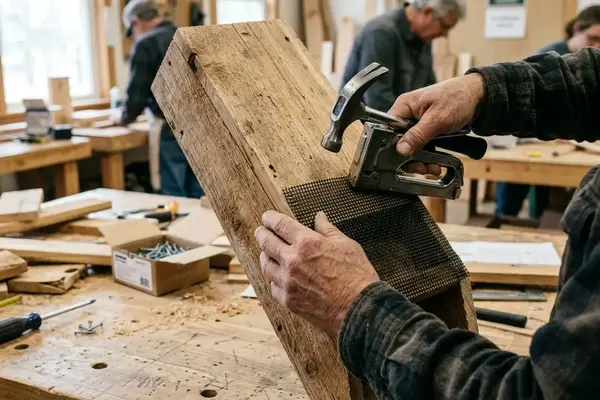
Functional roosting chambers are typically spaced around three-quarters to one inch wide. Interior surfaces need roughening, grooves, or durable mesh so bats can cling without slipping. Upper seams should seal against drafts and rain. Ventilation should match the climate rather than follow a generic pattern.
Smooth interiors, shallow decorative cavities, warped untreated wood, and gaps opened by swelling and shrinking after the first wet season all discourage occupancy. Rain leaking into the upper chamber is especially damaging because bats often select the highest protected space.
Compare chamber quality before blaming the yard
This is where I slow people down. If the box is too shallow, slick inside, or leaking from the top, better sun will not fix the core defect. Repair it if the structure is sound. Replace it if the design never offered a real roosting chamber.
Exterior color remains climate-bound. Darker finishes can help northern installations hold heat, but the same finish may become a liability in hot regions. There is no single correct color across the map.
A Good Bat House Still Needs a Bat-Friendly Landscape
The box is only one part of habitat
A structurally strong bat house in a sprayed, treeless lot asks bats to commute into a poor bet. Roost selection does not stop at the wood. It includes the nearby feeding and travel landscape.
Insect-eating bats commonly forage within a few kilometers of a roost, so water and night-flying insect abundance within that radius matter more than the box hardware alone. Native plants, reduced mowing where appropriate, trees or edges for navigation, and water in the broader landscape all improve the context.
Reducing or eliminating broad-spectrum pesticide use across a yard supports the moth and beetle prey that draw bats through an area. This is not an overnight fix. Native plantings and restored edges may take several growing seasons to raise local insect activity enough to influence roost choice.
Summary: A bat house does not automatically attract bats. It becomes more persuasive when the surrounding landscape offers food, safe commuting routes, and lower chemical pressure.
Readers who first learned about roosting through Organization for Bat Conservation (OBC) education at the Cranbrook Institute of Science often arrive with the right instinct: habitat work must sit beside box design. The practical step is to apply that idea to one yard feature at a time.
Human Attention Can Accidentally Make the Site Less Appealing
Monitoring should be quiet
People often love the idea of bats too loudly. They gather under the box at dusk, shine lights, call neighbors over, or tap the side because they want proof. From the bat’s side of the equation, that attention can read as disturbance.
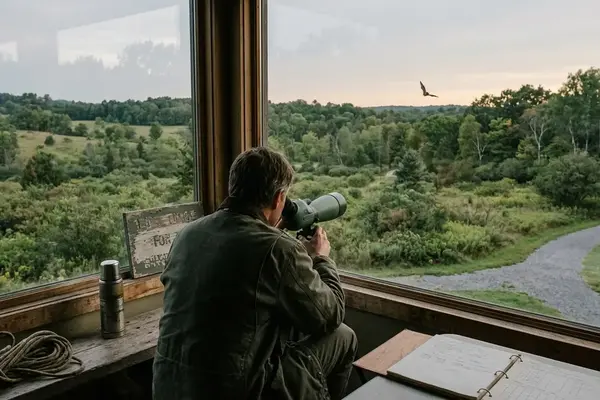
Keep lights, tapping, and dusk gatherings away from the area during the spring-through-summer maternity period, when disturbance carries the highest cost. Observe from a distance at sunset. During daylight, check the ground below for guano without touching the box. Keep pets away from the base.
Time maintenance for absence
Repairs, repainting, and relocation should happen when bats are not present. In temperate regions, that usually means the cold-season window from late autumn through late winter. The safe window narrows where some bats overwinter in or near structures, so confirm local seasonal absence before work begins.
If you need outside installation detail, the Penn State Extension guidance on bat houses is a useful reference point for practical placement considerations.
The point is simple: monitor enough to learn, not enough to make the site feel occupied by humans.
A Practical Troubleshooting Order Before You Replace It
Work from cheapest evidence to bigger changes
Do not start with a new box. Start with sequence. The common faults are often visible without buying anything.
- Confirm timing and observation method. Has the box been up through at least one full warm season, roughly April through September, without knocking or opening it to check? Have you watched the half hour after sunset and checked for guano below the entrance?
- Assess sun exposure. Map morning, midday, mid-afternoon, and early evening conditions on a clear day. Do not rely on memory.
- Check flight clearance. Look for several feet of vertical drop and an open approach at least 10 to 15 feet in front of and below the entrance.
- Inspect predator access. Look for climb routes from trees, fences, walls, shrubs, and unbaffled poles.
- Evaluate construction quality. Check chamber spacing, grip texture, sealed upper seams, rain leaks, warping, and climate-appropriate ventilation.
- Review surrounding habitat. Consider native plants, pesticide use, water access in the broader landscape, and commuting edges.
Change only one major factor at a time when possible. If you relocate, repaint, prune, and replace the box all in one weekend, you may improve the site but lose the lesson. Document each change with the date, photos, shade notes, weather, maintenance work, and signs of bat activity. Review results across at least one full warm season before judging the change.
There is one exception to the slow approach. If a box has several disqualifying faults at once, such as deep shade, a cluttered approach, and a leaking seam, incremental tweaking becomes theater. A full relocation and rebuild is more honest.
An empty bat house is frustrating because it feels personal. It is usually technical. Treat it that way, and the next decision becomes clearer.

Join the Conversation
No comments yet.
Join the Discussion