
The Woodland Can Change Before Bats Return
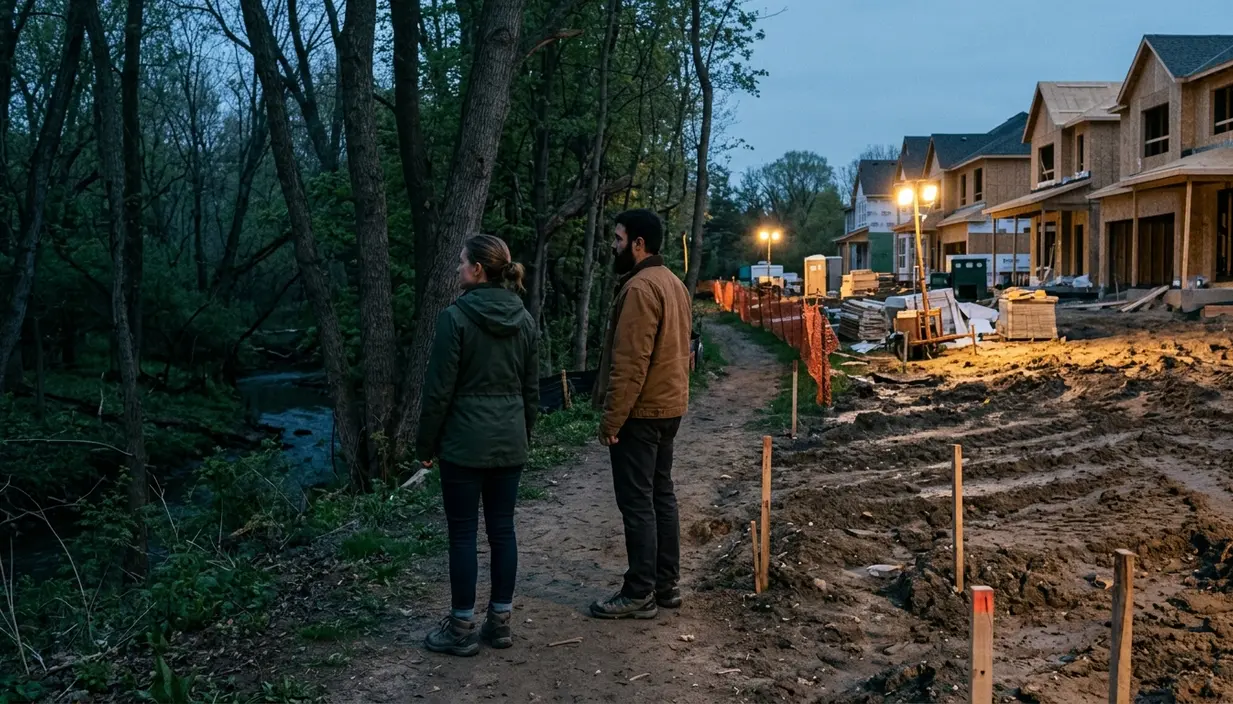
Picture a hypothetical wooded parcel at the edge of a growing suburb. Removal flags mark mature trees, including a trunk with a cavity and another with peeling bark. New lot lines approach a stream. On the lighting plan, poles follow the narrow strip of woodland that will remain.
The plans describe separate jobs. For a bat returning to a summer roost, they describe a changed landscape.
A tree-roosting bat may lose its shelter, the wooded route it follows toward water, and the darker conditions along that route. Replacement saplings begin a long growing process; they cannot immediately provide the cavities and loose bark already present in older trees.
White-nose syndrome gives bat conservation an urgent biological emergency. Suburban sprawl advances through quieter decisions: a clearing boundary, a road alignment, a lighting specification. Those decisions deserve attention while someone can still move a line on a drawing.
I would put the two threats beside each other at the start of any neighborhood discussion. Understanding how each works helps residents ask for useful changes before construction fixes the outcome.
A Winter Infection and a Disappearing Summer Landscape
White-Nose Syndrome Drains Winter Reserves
White-nose syndrome is a disease caused by the cold-loving fungus Pseudogymnoascus destructans. It grows on exposed skin, particularly wing membranes, under conditions found in caves and mines where bats hibernate.
A hibernating bat survives on stored energy. Infected bats rouse from torpor more often than normal, spending fat reserves they need to carry them through winter. That disruption puts survival at risk before spring feeding resumes.
Disease response therefore includes protecting hibernation sites from disturbance and following measures that reduce the movement of the fungus between sites.
Development Changes Where Bats Can Live
Suburban sprawl changes the places bats use. Woodland clearing removes potential roosts. Roads and dispersed buildings divide vegetation. Outdoor lighting changes conditions along woodland edges and water, including routes bats may use between shelter and feeding areas.
These changes reach into the active season, when bats need roosts and access to feeding habitat. A bat that survives hibernation still needs somewhere to return.
The distinction matters for practical planning: protecting a cave entrance and retaining a wooded stream corridor address different parts of a bat's life. Each needs its own work plan.
Compare What Each Threat Changes and What Can Be Protected
Persistence deserves particular attention. Disease requires continuing response and hibernation-site stewardship. Clearing mature woodland leaves a physical loss that planting cannot quickly repair. Successive approvals can also turn a connected landscape into scattered remnants.
| Factor | White-nose syndrome | Suburban sprawl |
|---|---|---|
| Mechanism | Fungal infection during hibernation; repeated arousals consume stored fat | Clearing, roads, dispersed buildings, and expanded outdoor lighting reshape habitat |
| Habitat or life stage | Hibernating bats in affected caves and mines | Summer roosts, feeding habitat, and travel routes |
| Persistence | Requires ongoing disease response and stewardship at hibernation sites | Mature roost features take a long time to replace; fragmentation accumulates |
| Geographic pattern | Widespread across eastern and central North America, with detections farther west | Follows development outward and along roads, parcel by parcel |
| Available actions | Gear decontamination, seasonal access restrictions, and appropriate entrance protection | Retain roost trees, protect connected woodland, and reduce lighting near habitat |
Compare local species and exposure before choosing projects: a population using an infected hibernation site and one facing imminent woodland clearing need different immediate actions.
Keeping those actions distinct helps volunteers see what their effort protects. A winter closure protects hibernating bats from disturbance. A retained stream corridor preserves part of the landscape available when bats become active again.
Follow One Bat Route Through the Subdivision Plan
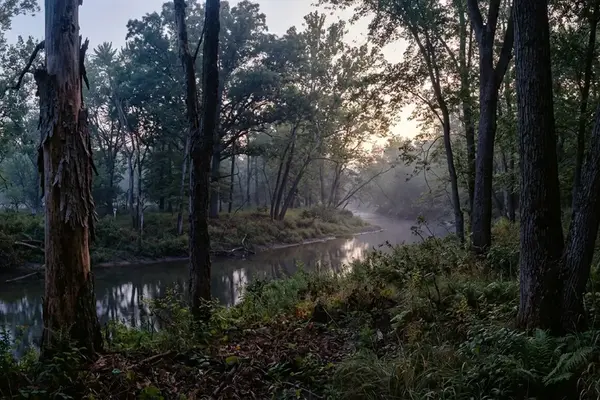
Return to the hypothetical parcel and trace a single route: a cavity tree near the stream, a wooded bank, then a pond edge used for feeding. Now place the proposed houses, road, and lights over that route.
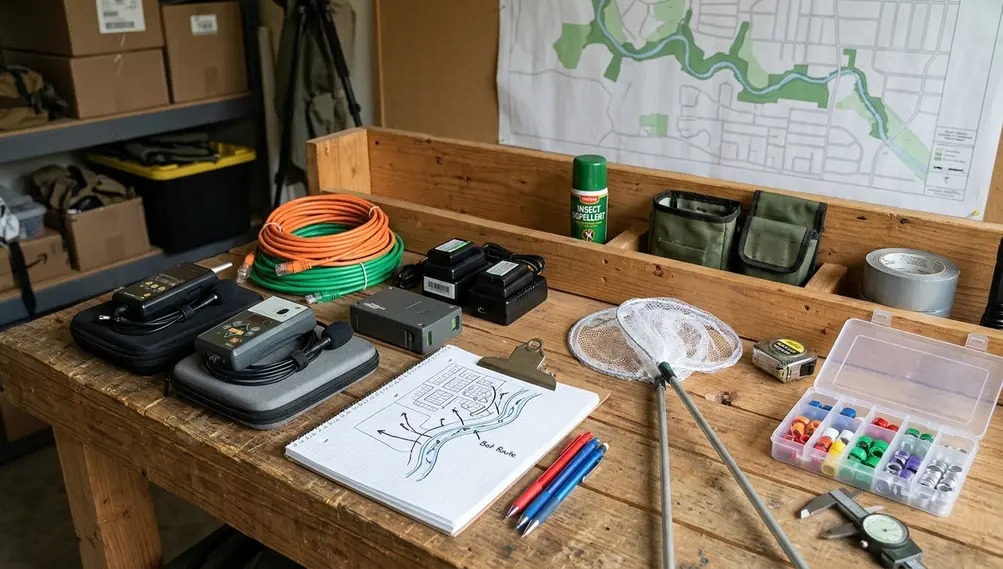
In the conventional layout, building pads replace cavity trees. Rear lawns extend toward the stream, interrupting its wooded cover. At the road crossing, pole lights illuminate the remaining gap.
The route breaks at separate points. Losing the roost removes a starting place. Cutting streamside vegetation interrupts cover. Lighting changes conditions at the crossing. Woodland-adapted bats that follow tree lines may hesitate to cross open gaps.
An alternative layout keeps the same hypothetical homes while retaining connected streamside woodland. Cavity trees remain within that buffer. A short, unlit crossing carries the road over the stream, with fixtures set back from its edge.
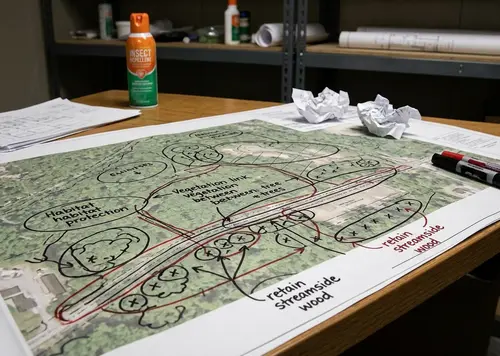
Compare the drawings by following the route with a finger. Does continuous vegetation connect the roost area to the pond? Small ornamental plantings scattered across front yards do not recreate that connection. The useful question is what remains linked after construction.
Bring Roost Trees and Dark Routes Into Planning Early
Start while the clearing and lighting plans can still change. Homeowners and neighborhood groups can make their requests specific enough for a planner or designer to act on.
- Identify existing habitat features. Mark mature trees with cavities or loose bark, wooded stream edges, hedgerows, and connections between larger woodland patches. Record visible features from lawful access without disturbing potential roosts.
- Review clearing and lighting together. Compare removal boundaries with retained vegetation. Mark proposed road lights and wall fixtures near woodland and water. Look for places where several small changes would interrupt the same route.
- Raise concerns before approval. Bring a marked site plan to the hearing or submit it with written comments. Circle trees, draw vegetation links, and identify the fixtures that affect those links.
- Request connected habitat retention. Ask for specific drawing revisions: retain the streamside woodland, keep potential roost trees within it, and move or reduce nearby lighting. Seek commitments tied to the relevant plan sheets.
Check Roosts Before Cutting
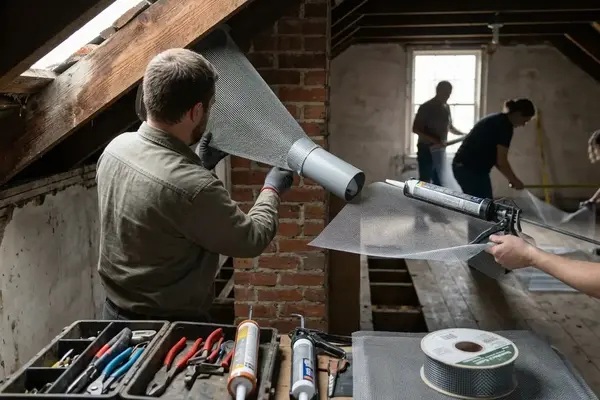
Arrange a qualified assessment of potential roost trees before scheduling work, and follow applicable wildlife protections and local clearing guidance. Flightless young are particularly vulnerable when a roost tree comes down. A convenient construction date should never substitute for checking the tree and the required timing.
For lighting, request shielded fixtures aimed at the surface that needs illumination, warmer-colored sources, and controls that switch lights off when the space is unused. Keep light away from retained woodland routes wherever possible.
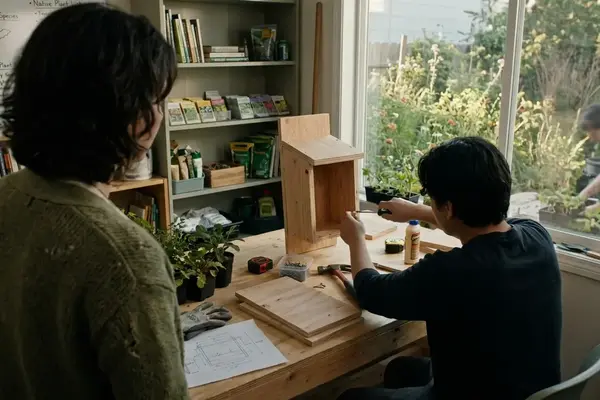
A bat house beside the retained buffer can supplement existing cavity trees. Include inspection and repair in bat house stewardship, while keeping protection of the mature tree line at the center of the plan.
Give Habitat Protection Its Own Budget Line
Conservation plans should carry separate, continuing workstreams for disease response and habitat protection. Equal strategic priority means both receive deliberate decisions, named responsibilities, and follow-through. It does not require matching spending amounts.
One workstream covers hibernation-site stewardship and disease response. The other covers habitat acquisition, development review, and corridor protection. This structure keeps a visible disease emergency from consuming every planning conversation while woodland decisions pass unnoticed.
Compare Deliverable Projects
Put concrete proposals beside each other: a suitable winter gate and monitoring at a hibernation site; an acquisition or conservation easement protecting a threatened stream corridor; shielded fixture retrofits along a woodland trail; or annual inspection and repair of an existing bat house project.
For each proposal, ask what it protects, when the decision becomes urgent, and who will maintain the result. Field monitoring methods should match the project, whether volunteers are checking roost equipment or recording lighting changes along a retained corridor.
Keep implementation records that people can check later: signed retention commitments linked to plan sheets, fixture inventories before and after changes, and maintenance schedules with named responsibilities. These records give education outreach something concrete to explain and help the next volunteer continue the work.
A protected corridor needs someone watching the plan through construction. A maintained roost project needs someone returning after installation. Budget for that continuity.
Act Before the Next Woodland Approval
Disease response addresses a serious threat inside hibernating bats. Land-use decisions determine whether those bats return to available roosts, connected cover, and feeding habitat.
Find the Pending Decision
Check the local planning agenda or public notices for a subdivision, road widening, or lighting proposal near woodland or streams. Review the drawings and submit specific habitat comments before the approval vote.
Make connected bat roost habitat a standing conservation priority alongside white-nose syndrome response, starting with the next development proposal before clearing begins.
Join the Conversation
No comments yet.
Join the Discussion